The history of the Royal Netherlands Navy spans more than five centuries, from the early naval organization of the late fifteenth century and the powerful fleets of the Dutch Republic to the modern fleet operating within NATO and international coalitions. Throughout its history, Dutch naval power has evolved in response to changing political circumstances, maritime interests, technological developments and the demands of warfare.
This timeline follows the development of the Dutch Navy through major wars, naval engagements, historical events and the evolution of important warships and ship classes. It also highlights the development of submarine warfare, naval aviation, naval weapons and maritime technologies, from the age of sail to the modern Royal Netherlands Navy.
1488 – 1713 – The Dutch Republic and the Rise of Naval Power
8 January 1488,
The beginning of Dutch Naval Organisation
Maximilian I issued an ordinance concerning the Admiralty in the Netherlands. The ordinance is regarded as an important foundation of Dutch naval organization. A permanent national fleet did not yet exist, but the ordinance marked an important step toward organized naval administration.
1568,
The Eighty Years’ war
The Dutch Revolt against Spanish rule begins. Naval warfare becomes an important part of the struggle for Dutch independence.
1572,
Capture of Brielle
The Watergeuzen capture Brielle. The event becomes an important turning point in the Dutch Revolt.
1588,
The Dutch Republic
The Dutch Republic emerges as a major European maritime power. Naval forces increasingly protect Dutch coastal waters, merchant shipping and
overseas trade.
1607,
Battle of Gibraltar
A Dutch fleet under Jacob van Heemskerck defeats a Spanish fleet at Gibraltar. The victory demonstrates the growing ability of Dutch naval
forces to operate far from home waters.
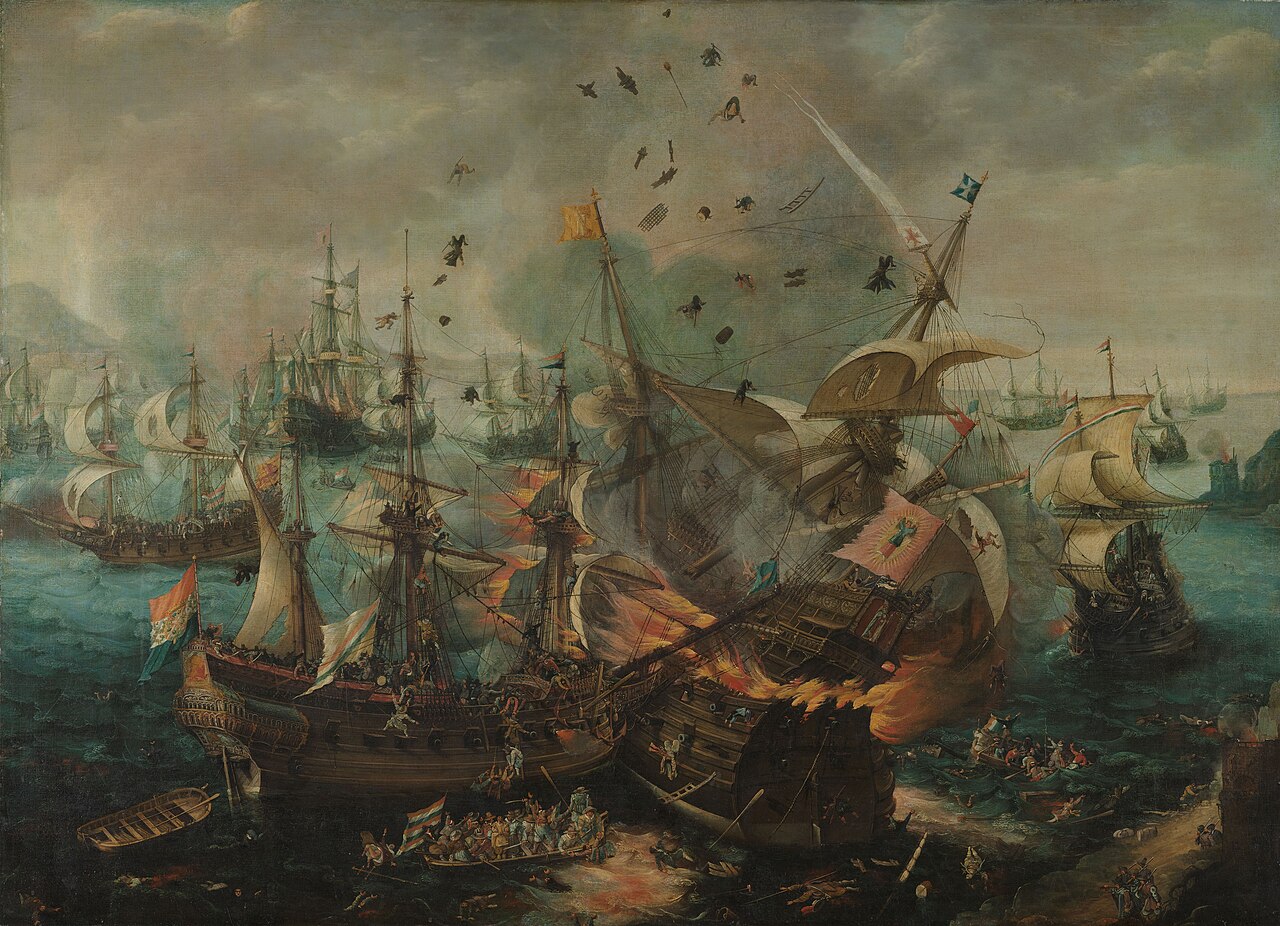
1628,
Piet Hein Captures the Spanish Treasure Fleet
Admiral Piet Hein captures the Spanish treasure fleet in the Caribbean. The enormous prize provides the Dutch Republic with substantial financial resources.
1639,
Battle of the Downs
A Dutch fleet under Lieutenant-Admiral Maarten Tromp defeats a major Spanish fleet in the English Channel. Spanish naval power suffers a severe blow.
1648,
Peace of Münster
The Peace of Münster formally ends the Eighty Years’ War. Spain recognizes the independence of the Dutch Republic.
1652,
First Anglo-Dutch War
The Dutch Republic enters its first major naval war with England. The protection of merchant shipping becomes a central mission of the fleet.
The First Anglo-Dutch War
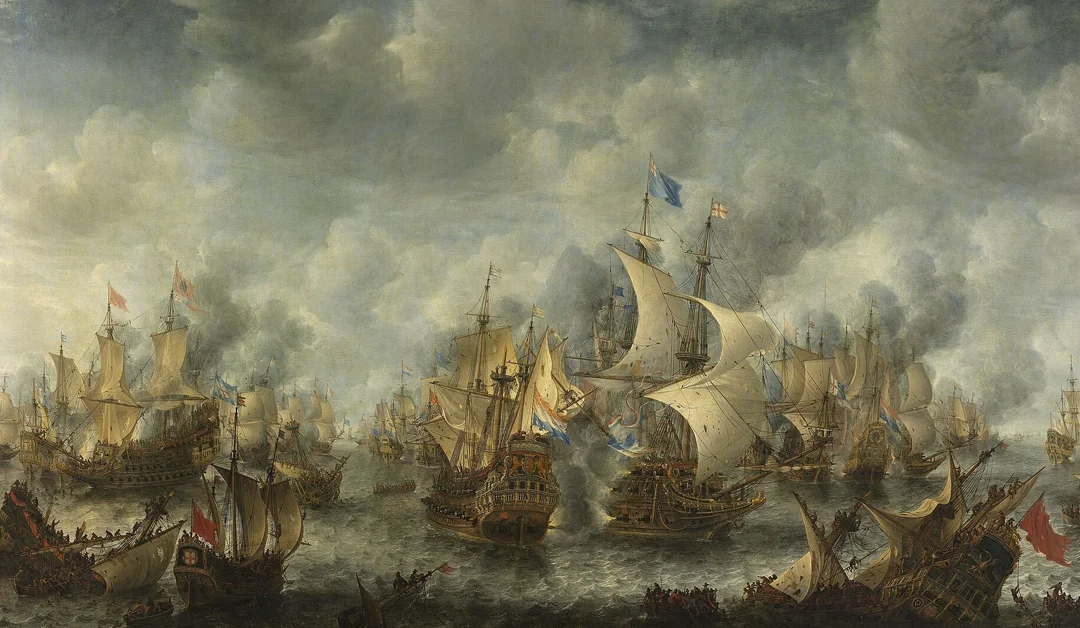
The First Anglo-Dutch War was a conflict fought entirely at sea between the navies of the Commonwealth of England and the United Provinces of the Netherlands, also known as the Dutch Republic. The war was caused by disputes over maritime shipping rights and political disagreements, including Parliament’s passage of the 1651 Navigation Act that prohibited Dutch ships from carrying English cargo. The conflict started with small-scale attacks on merchant ships but escalated into full-fledged fleet battles that took place on the high seas. During the war, the English Admiral, Robert Blake, developed the Sailing and Fighting Instructions for the English Navy, which introduced a new style of fighting on the high seas. In 1653, the English fleet blockaded the Dutch coast, leading to the decisive Battle of Scheveningen (July 31, 1653), which was won by the English.The war ended with the Treaty of Westminster, which was signed on April 15, 1654, between Oliver Cromwell, the Lord Protector of the English Commonwealth, and the States General of the United Netherlands.
1653,
Battle of Scheveningen
The Dutch fleet fights the English fleet off the Dutch coast. Lieutenant-Admiral Maarten Tromp is killed during the battle.
1650s,
The Ship of the Line
The Dutch Navy develops increasingly powerful sailing warships designed to fight in the line of battle. Ships of the line become the principal capital ships of European naval warfare.
1665,
Second Anglo-Dutch War
War breaks out again between the Dutch Republic and England.
1666,
Four Days’ Battle
The Dutch fleet under Michiel de Ruyter fights the English fleet in one of the largest naval battles of the seventeenth century. The Dutch achieve a major victory.
1667,
Raid on the Medway
Dutch forces under Michiel de Ruyter attack the English fleet at
Chatham. The Raid on the Medway becomes one of the most successful offensive operations in Dutch naval history.
1672,
The Year of Disaster
The Dutch Republic is attacked by France, England and other enemies. The Dutch Navy becomes essential to the survival of the Republic.
Ship of the line
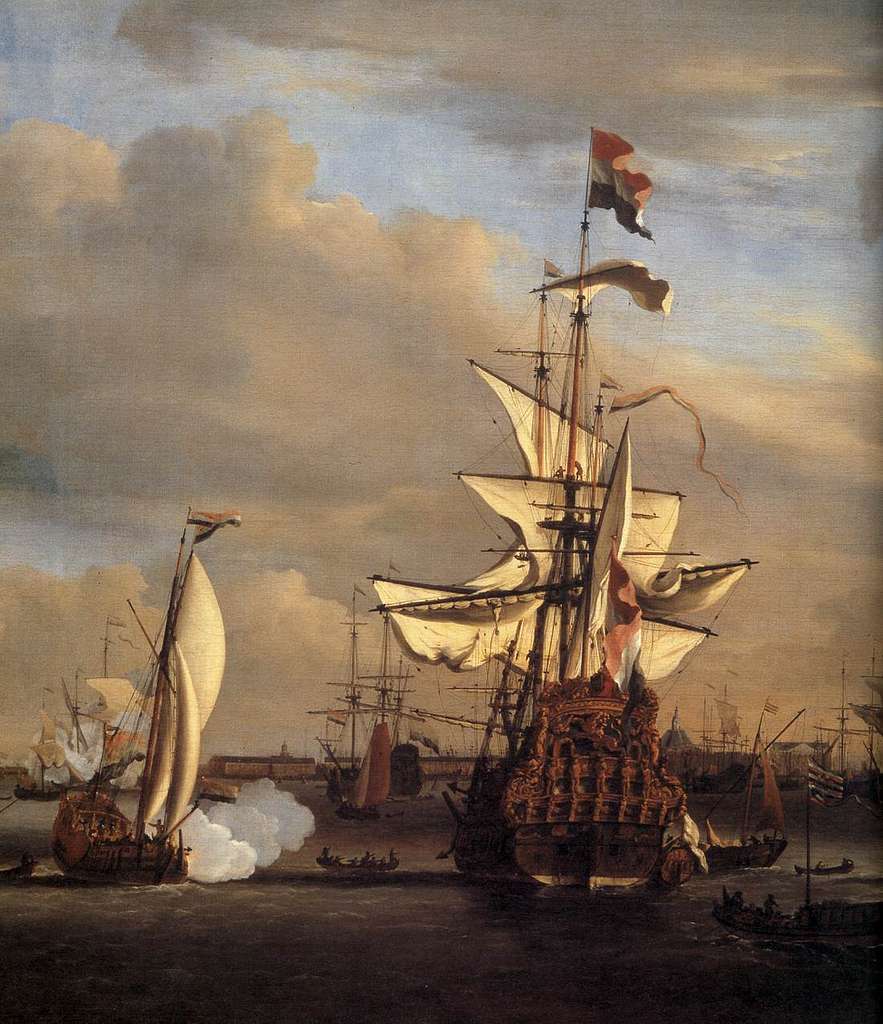
A ship of the line is a type of naval warship constructed during the Age of Sail from the 17th century to the mid-19th century. The ship of the line was designed for the naval tactic known as the line of battle, which involved the two columns of opposing warships manoeuvering to volley fire with the cannons along their broadsides. In conflicts where opposing ships were both able to fire from their broadsides, the faction with more cannons firing – and therefore more firepower – typically had an advantage.
1673,
Battles against the Anglo-French Fleet
The Dutch fleet fights the combined English and French fleets in a series of major naval engagements.
1688,
The Glorious Revolution
Stadtholder William III becomes King of England. The Dutch and English navies subsequently cooperate against France.
1692,
Battle of Barfleur and La Hogue
The Anglo-Dutch fleet defeats the French fleet in major engagements during the Nine Years’ War.
1702,
War of the Spanish Succession
The Dutch Republic enters another major European conflict. Dutch naval forces operate closely with British naval forces.
1704,
Battle of Málaga
An Anglo-Dutch fleet fights the combined French and Spanish fleet at Málaga.
1773,
Treaty of Utrecht
The War of the Spanish Succession ends. The Dutch Republic remains an important maritime power, although British and French naval power increasingly surpasses that of the Netherlands.
1713 – 1914 – From the Dutch Republic to the modern navy
1713,
A Changing maritime power
Following the Treaty of Utrecht naval power gradually declines relative to Britain and France. The fleet nevertheless remains essential for protecting Dutch trade, fisheries and overseas interests.
1780,
Fourth Anglo-Dutch War
The Dutch Republic enters war with Great Britain.
1795,
Batavian Republic
French revolutionary forces invade the Netherlands. The Dutch Republic is replaced by the Batavian Republic and the naval administration is reorganized.
1797,
Battle of Camperdown
A Dutch fleet under Vice-Admiral Jan Willem de Winter suffers a major defeat against the British fleet.
1806,
Kingdom of Holland
Napoleon establishes the Kingdom of Holland under his brother Louis Napoleon. Dutch naval forces are reorganized under the new kingdom.
1810,
French Annexation
The Netherlands is incorporated into the French Empire and Dutch naval forces become part of the French imperial system.
1813 – 1815,
Restoration of Dutch Independence, Kingdom of the Netherlands
French rule collapses and the Netherlands regains its independence. The naval forces are reorganized under the restored Dutch monarchy. The Kingdom of the Netherlands is established. The Dutch Navy becomes the naval force of the new kingdom.
1830,
Belgian Revolution
The Belgian Revolution leads to the separation of Belgium from the Netherlands. Dutch naval forces participate in the resulting blockade and military operations.
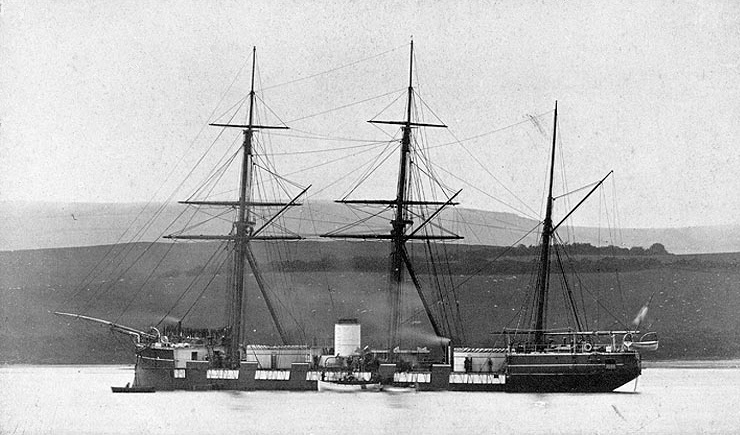
The first Dutch Turret Ram ironclad
The combination of turrets and a ram was all the rage in 1865. The concept of turrets had been proven in the US Civil War. So the same year, the Dutch naval staff looked in particular at Scorpion-class ironclad turret ships* originally ordered by the Confederate States Navy in Britain.They used two Coles turret, by then he “hottest” technology to replace traditional broadside guns, even mounted on rails for extra traverse.
HNLMS Prins Hendrik der Nederlanden was ordered from Laird & Son Co. by the Royal Netherlands Navy as an enlarged version of this design. The Scorpion class indeed were initially planned for breaking the US blockade in shallow and riverine waters, and notably operate the Mississippi. Obviously, the Dutch admiralty wanted a sea-going ship.
1850s,
The Age of Steam / Ironclad warfare
Steam propulsion becomes increasingly important. Traditional sailing warships gradually give way to steam-powered vessels. The Netherlands begins introducing armoured steam-powered warships. Ironclads represent a major technological transition from wooden sailing warships to modern armoured naval vessels. In 1867 The ironclad Prins Hendrik der Nederlanden enters service. The ship represents the Dutch transition into the era of armoured steam warships.
1866 – 1907,
Development of Naval Mines
The Dutch Navy begins experimenting with naval mines in 1866. Mine warfare gradually becomes an important part of Dutch coastal defence.
1873,
Aceh War
The Netherlands begins its long war against the Sultanate of Aceh in the Dutch East Indies. The Navy becomes heavily involved in operations throughout the Indonesian archipelago.
1870s,
Torpedo Warfare
The Netherlands adopts the torpedo as an important naval weapon. Torpedo boats and torpedo-armed warships become increasingly important.
1882,
The Loss of Zr.Ms. Adder
The monitor Adder sinks off the Dutch coast with the loss of its entire crew.
1906,
First Dutch Minelayer / Mine service
The steam gunboat Hr.Ms. Hadda is converted into the first Dutch minelayer. The M1907 becomes the first Dutch-produced naval mine. 1907 is regarded as the founding year of the Dutch Mine Service.
1914,
The First World War Begins
The First World War begins. The Netherlands remains neutral and mobilizes its armed forces.
1914 – 1918 – World War I and naval neutrality
1914,
The First World War Begins / naval mobilization
The First World War begins. The Netherlands remains neutral and mobilizes its armed forces. The Royal Netherlands Navy increases patrols, coastal defence and surveillance operations. Dutch warships patrol the North Sea and Dutch coastal waters while maintaining Dutch neutrality.
1916,
Mine Warfare
Naval mines become increasingly important during the First World War. The Dutch Navy maintains minefields and develops mine-clearing capabilities.
The Marine Luchtvaartdienst (MLD)
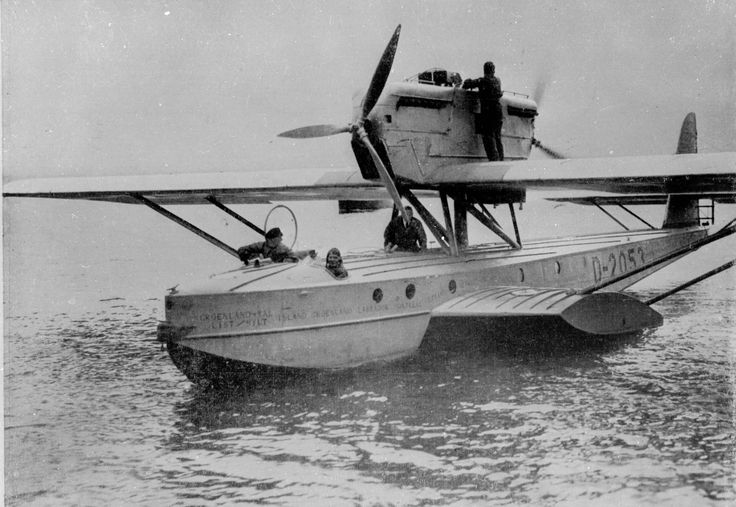
The initial plans for an aviation service for the Dutch Navy emerged in 1913, aimed at enhancing reconnaissance capabilities. In July 1914, the Navy received its first aircraft, a new Farman HF.22 to train naval pilots as maritime aviators. Operations and training were conducted jointly with the Royal Army’s aviation service, utilizing Soesterberg Air Base and the De Mok naval air station on Texel.
The Naval Aviation Service (MLD) was formally established on August 18, 1917. At the time, a separate naval aviation service was considered justified because maritime aviators required specific maritime operational skills. That same year, the MLD relocated first to Veere and subsequently to De Kooy Airfield near Den Helder. Initially, the MLD was primarily equipped with Dutch-made aircraft from manufacturers such as Van Berkel, Fokker, Koolhoven, and Spyker. From 1926 onwards, foreign aircraft types were introduced, including the renowned Dornier Wal, which saw extensive service in the Dutch East Indies.
1917,
Marine Luchtvaartdienst
The Marine Luchtvaartdienst (MLD) is established, marking the formal
beginning of Dutch naval aviation. Aircraft increasingly become an
important tool for maritime reconnaissance, coastal surveillance and anti-submarine warfare.
1918,
End of World War I
The First World War ends. The Netherlands has remained neutral, but the conflict demonstrates the growing importance of submarines, mines, aircraft and wireless communications.
1919 – 1939 – Interwar Navy
1919,
Marine Radiodienst
The Dutch naval telegraph service is renamed the Marine Radiodienst. Radio communication becomes increasingly important to naval operations.
1920s,
Defence of the Dutch East Indies
The defence of the Dutch East Indies becomes the central strategic priority of the Royal Netherlands Navy. In 1925 The light cruisers Java and Sumatra enter service. They become important units of the Dutch fleet in the Dutch East Indies.
1920s, 1930s
Naval expansion
The Dutch submarine fleet expands rapidly. Submarines become a major component of the defence of the Dutch East Indies. The Admiralen-class destroyers enter service, providing increased speed, torpedo power and surface warfare capability. The Marine Luchtvaartdienst expands its aircraft and facilities. Naval
aircraft become an important component of reconnaissance and maritime warfare.
1934–1935,
K XVIII submarine
The K XVIII submarine undertakes a long voyage from the Netherlands to the Dutch East Indies, demonstrating the increasing range of Dutch submarine operations.
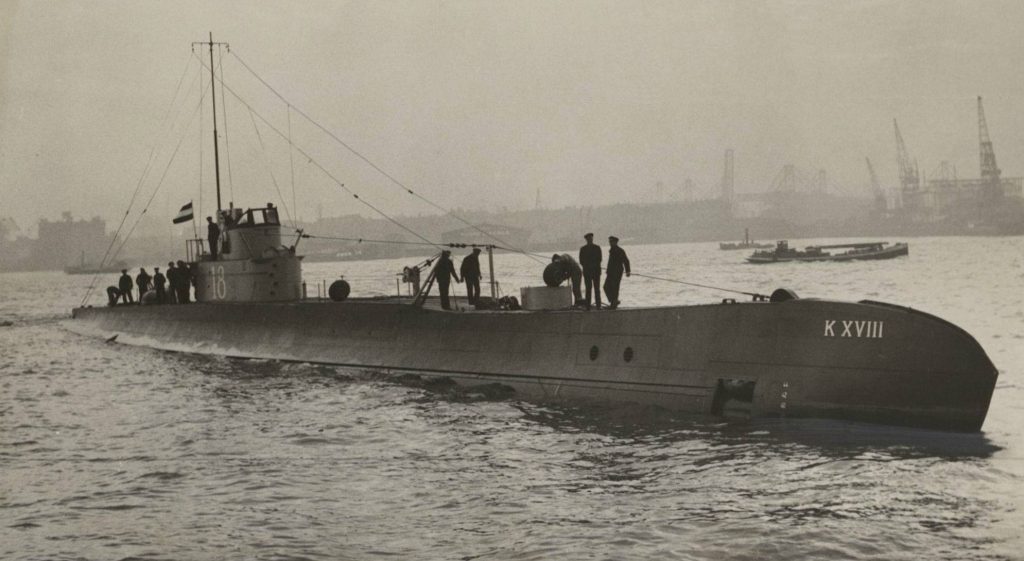
HNLMS K XVIII Dutch submarine
HNLMS K XVIII was a Dutch submarine of the K XIV class. The K XVIII was built by the Fijenoord shipyard in Rotterdam. Like all other K-class submarines, the K XVIII was acquired by the Dutch Ministry of the Colonies to serve as a patrol vessel in the Dutch East Indies. On November 14, 1934, the K XVIII departed from Den Helder for the Dutch East Indies, arriving in Surabaya on July 11, 1935. During the voyage to the Dutch East Indies, the K XVIII took a significant detour via South America and Australia. Midway through the journey, the K XVIII served as a navigational beacon for the Fokker F.XVIII *Snip* during KLM’s first transatlantic flight.
1937,
Development of the Mine Service
The Dutch Mine Service receives a more formal organizational structure as mine warfare becomes increasingly important.
1939,
Project 1047 Battlecruisers
The Netherlands develops plans for a powerful class of battlecruisers known as Project 1047. The ships are intended primarily for the defence of the Dutch East Indies.
1939 – 1945 – World War II
1939–1940,
Naval Mobilization
Dutch warships patrol coastal waters, protect shipping and prepare minefields.
1939–1940,
Naval Mobilization and German invasion
Dutch warships patrol coastal waters, protect shipping and prepare minefields. Germany invades the Netherlands on 10 May 1940. Many Dutch naval personnel and surviving ships escape to Britain and continue the war alongside the Allies.
1940,
Royal Netherlands Navy in Britain
Dutch naval forces establish themselves in Britain and increasingly operate alongside the Royal Navy.
1941,
Dutch Submarines in the Pacific
Dutch submarines operate against Japanese forces in the Far East and become an important part of Allied naval operations.
1941 – 1942,
Dutch Submarines in the Pacific / ABDACOM / Battle of the Java sea
Dutch submarines operate against Japanese forces in the Far East and
become an important part of Allied naval operations. Dutch naval forces
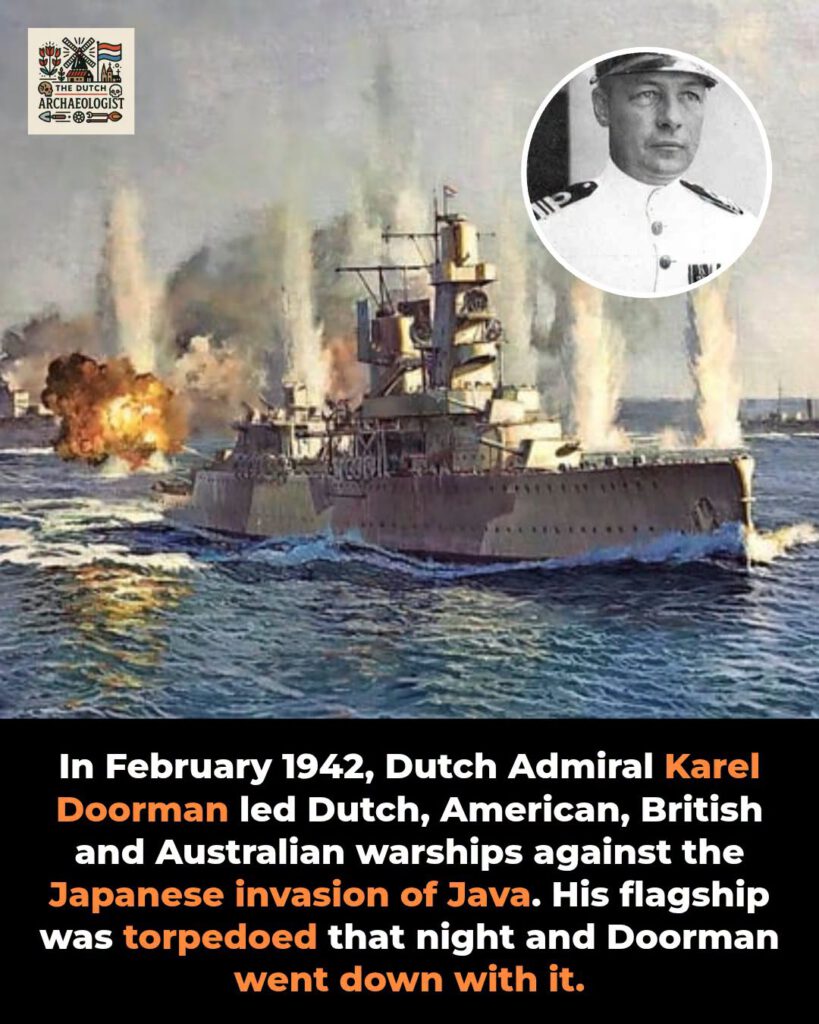
join the American-British-Dutch-Australian Command to defend the Dutch East Indies and surrounding waters. On 27 February 1942, the Allied
Combined Striking Force under Rear Admiral Karel Doorman engages a
Japanese invasion force. The Allied fleet suffers a major defeat. The
cruisers De Ruyter and Java are sunk during the Java Sea campaign. Rear
Admiral Karel Doorman dies aboard De Ruyter.
1942,
Fall of the Dutch East Indies
Japanese forces complete the conquest of the Dutch East Indies. Many Dutch naval personnel become prisoners of war.
1944,
Liberation of the Netherlands
Dutch naval personnel participate in Allied operations supporting the liberation of the Netherlands.
1945,
End of the War in Europe
Germany surrenders in May 1945. Dutch naval forces begin returning to Dutch waters while other units continue operations in the Far East.
1945,
End of the Pacific War
Japan surrenders in August 1945. The Second World War ends, but the Royal Netherlands Navy immediately faces a new conflict in the Dutch East Indies.
1945 – 1949 – Indonesian War of Independence
1945,
Return to the Dutch East Indies / Indonesian Revolution
Dutch naval forces return to the Dutch East Indies and transport troops, equipment and supplies. The proclamation of Indonesian independence leads to armed conflict. The Royal Netherlands Navy becomes responsible for controlling maritime
routes and supporting Dutch military operations.
1946,
Post-War Naval Expansion / Amphibious Warfare
The Royal Netherlands Navy rapidly rebuilds its forces in the Dutch East Indies. Landing ships and landing craft become increasingly important for moving troops and equipment between the islands.
1947, 1948,
Operation Product / Operation Kraai
The Netherlands launches its first major military offensive against the Indonesian Republic. Naval forces provide transportation, logistics and maritime support. A second major Dutch military offensive is launched. Naval forces again provide transportation and logistical support.
1948,
Marine Corps Expansion
The Royal Netherlands Marine Corps expands its amphibious capabilities and becomes an increasingly important element of Dutch naval operations.
1949,
Transfer of Sovereingnty
The Netherlands transfers sovereignty to the United States of Indonesia in December 1949. The Indonesian War of Independence ends.
1949 – 1962 – NATO and the Cold War Navy
1949,
NATO
The Netherlands becomes a founding member of NATO. The Royal Netherlands Navy begins reorganizing around the defence of Western Europe and the North Atlantic.
1950,
Post-War Fleet Modernization
A major fleet modernization program begins. Destroyers, frigates, submarines, minesweepers and naval aircraft are introduced.
1950 – 1953,
Korean War
The Netherlands contributes naval forces to the United Nations effort in Korea.
1948,
Karel Doorman
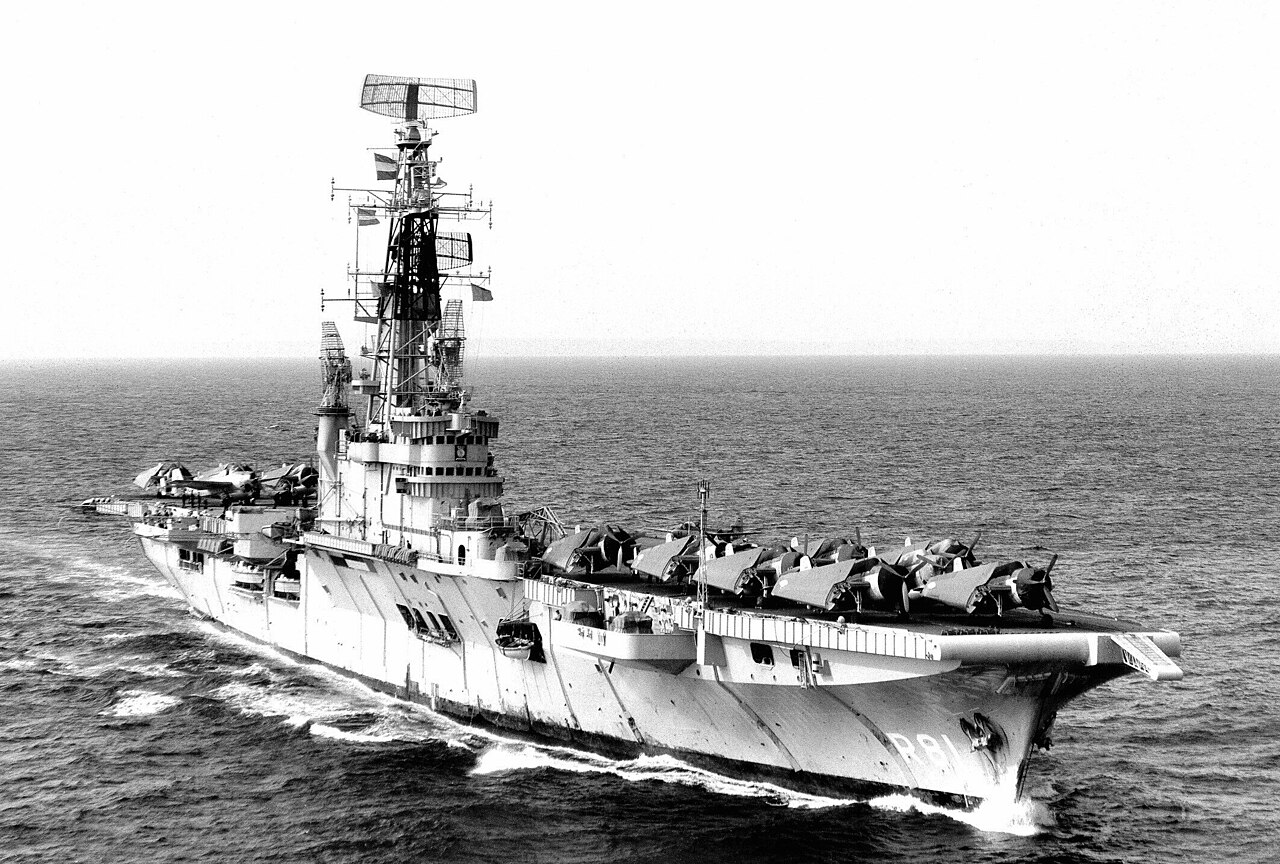
The former British aircraft carrier HMS Venerable is acquired by the Netherlands and renamed Hr.Ms. Karel Doorman. The Karel Doorman provides the Dutch Navy with a major naval aviation capability, operating fighters, attack aircraft and anti-submarine
aircraft. The Karel Doorman undergoes a major modernization including an angled flight deck and other modifications allowing the carrier to operate modern aircraft.

1950s,
Anti-Submarine Warfare
The Soviet submarine fleet becomes the principal naval threat to NATO. The Royal Netherlands Navy develops a strong specialization in anti-submarine warfare.
1954,
New Dutch Naval Infrastructure
The completion of the Nieuwe Haven in Den Helder provides improved facilities for the expanding post-war fleet.
1960,
Dolfijn-Class Submarines
The first Dolfijn-class submarines enter service. The class represents a major advance in Dutch conventional submarine design.
1960 – 1962,
Dutch New Guinea / End of New Dutch Guinea
Tensions with Indonesia over Dutch New Guinea increase. Dutch warships, submarines and naval aircraft are deployed to the region. An international agreement transfers administration of Dutch New Guinea to the United Nations. Dutch forces withdraw from the territory.
1962 – 1989 – The NATO fleet and Cold War technology
1960s
NATO anti-submarine warfare / Naval helicopters
Anti-submarine warfare becomes the principal mission of the Royal Netherlands Navy. Dutch frigates, submarines, helicopters and maritime patrol aircraft operate extensively within NATO. Helicopters become increasingly important for anti-submarine warfare, allowing Dutch frigates to detect and attack submarines beyond the range of their shipboard sensors.
1965
Van Speijk-Class Development
The Netherlands begins introducing modern frigates based on the British Leander design. The first Van Speijk-class frigates enter service. They provide modern anti-submarine and general-purpose capabilities.

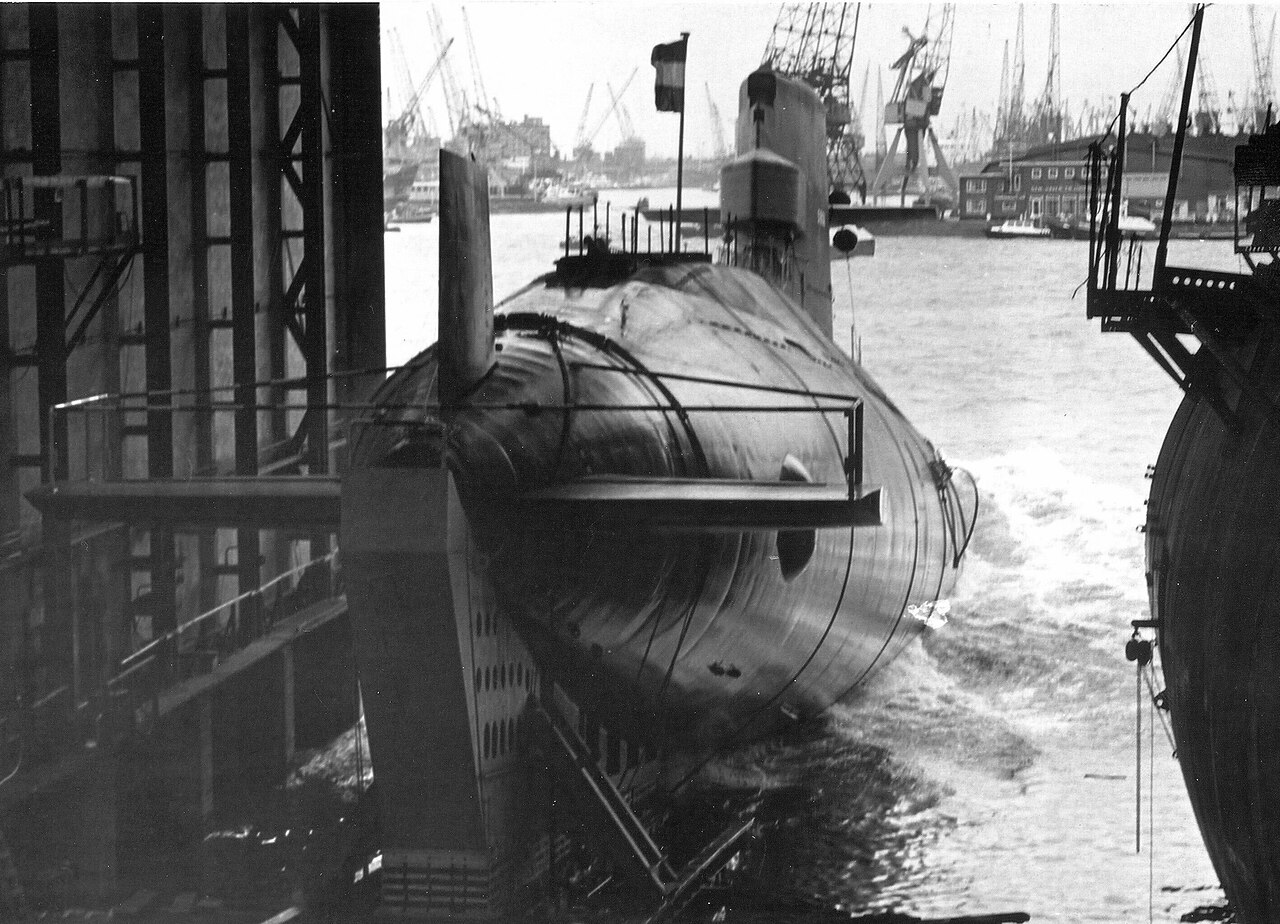
1972
Zwaardvis-Class Submarines
The Zwaardvis-class submarines enter service. They provide improved speed, endurance and weapons capabilities.
1975
Tromp-Class Frigates
The Tromp-class guided-missile frigates enter service. Their advanced air-defence and command capabilities represent a major step forward in Dutch naval technology.
1978
Kortenaer-Class Frigates
The first Kortenaer-class frigates enter service. Designed primarily for anti-submarine warfare, the class becomes one of the principal Dutch Cold War frigate classes.
1979
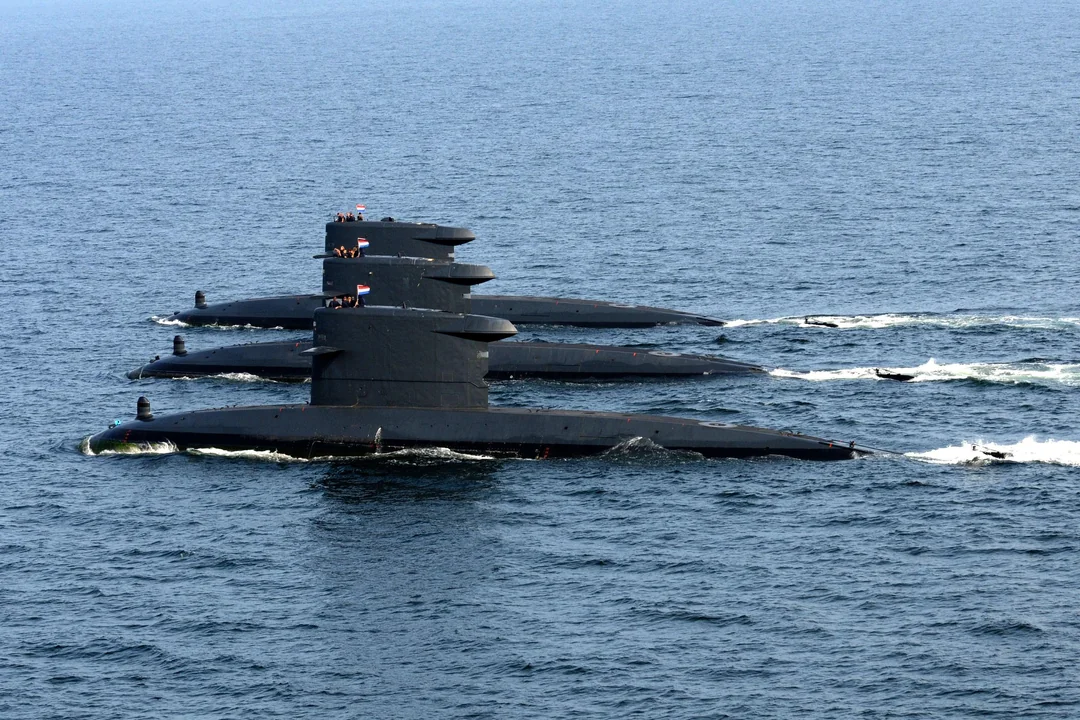
Walrus Submarine
The keel of the first Walrus-class submarine is laid. The new class
introduces advanced submarine technology and becomes the future backbone of the Dutch submarine service. The Walrus submarine program experiences major cost and construction
problems. Despite the difficulties, the class becomes one of the most capable conventional submarine designs of its generation.
1979,
Walrus-Class Submarines
The keel of the first Walrus-class submarine is laid. The new class introduces advanced submarine technology and becomes the future backbone of the Dutch submarine service. The Walrus submarine program experiences major cost and construction
problems. Despite the difficulties, the class becomes one of the most capable conventional submarine designs of its generation.
1983,
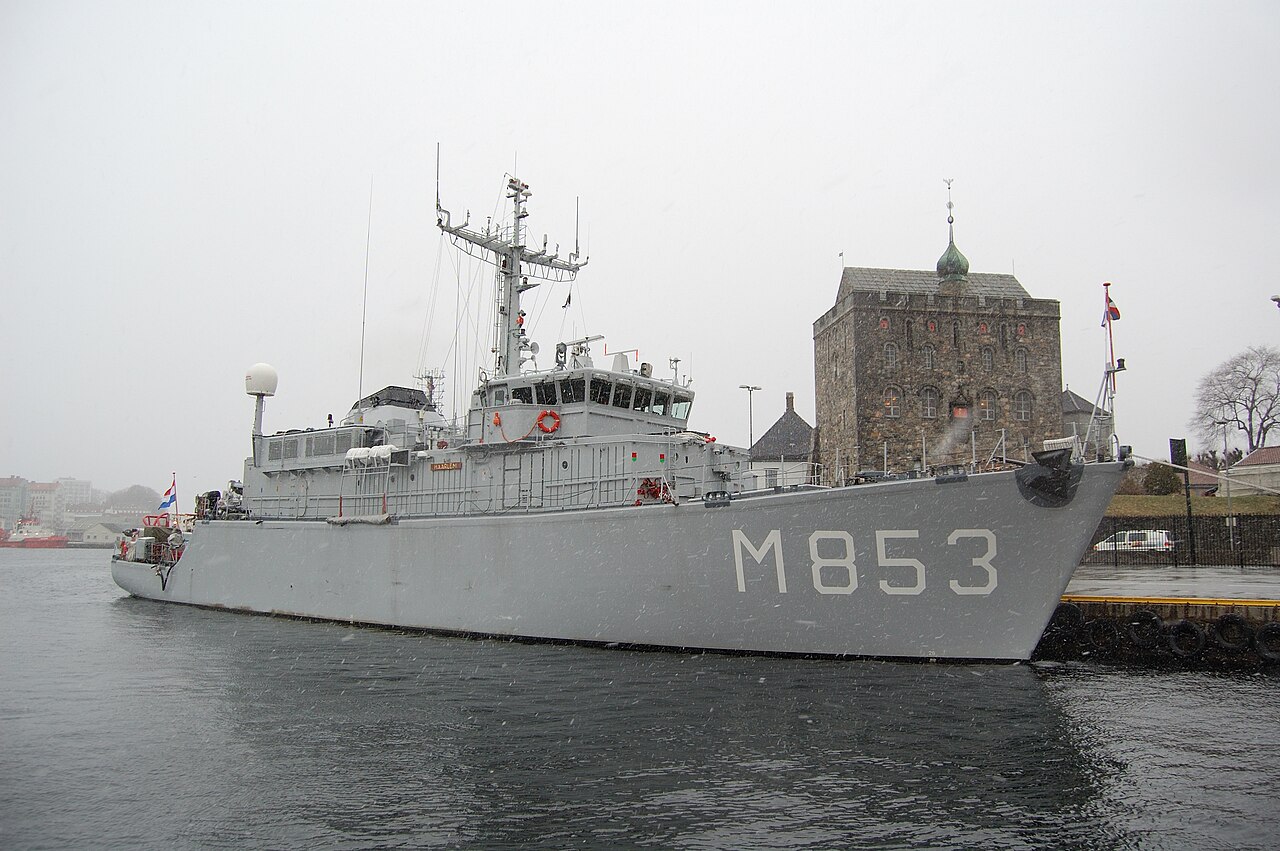
Alkmaar-Class Minehunters
Hr.Ms. Alkmaar enters service as part of the Tripartite minehunter program with Belgium and France. The ships use glass-reinforced plastic construction rather than traditional wooden hulls.
1989 – 2026 – The modern Royal Netherlands Navy
1989 – 1991,
From Cold War to Expeditionary Navy
The collapse of the Soviet Union changes the strategic environment. The Royal Netherlands Navy shifts from primarily territorial and NATO maritime defence toward crisis management, peacekeeping and expeditionary operations.
1990 – 1991,
Gulf War
Dutch naval forces deploy to the Persian Gulf region and participate in international maritime operations. Dutch minehunters participate in international mine-clearing operations following the Gulf War.
1993, 1999,
Former Yugoslavia / Kosovo War
Dutch naval forces participate in multinational maritime operations enforcing sanctions and arms embargoes in the Adriatic. Dutch naval forces participate in NATO maritime operations connected with the Kosovo conflict.
2002, 2003,
Operation Enduring Freedom / Iraq War
Dutch frigates operate in the Arabian Sea and Indian Ocean conducting maritime security and surveillance missions. Dutch naval forces contribute to maritime security operations in the Persian Gulf.
2006,
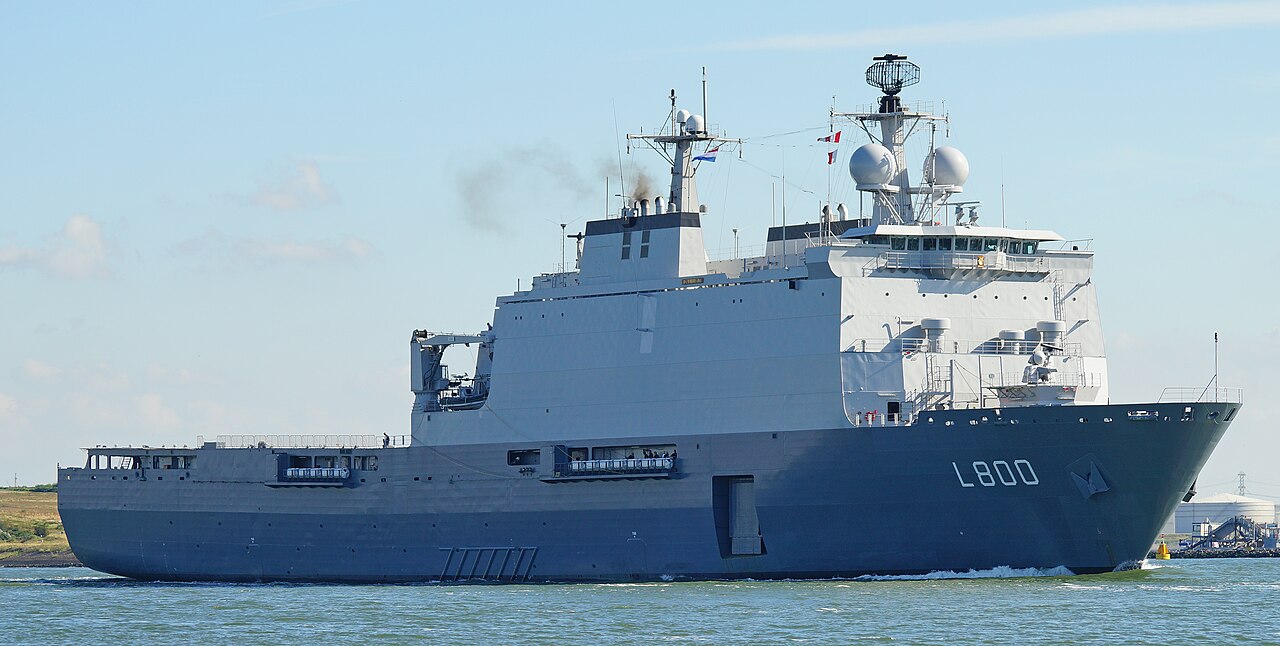
Rotterdam-Class Amphibious Ships
The Rotterdam-class amphibious transport docks strengthen the expeditionary capabilities of the Royal Netherlands Navy and Royal Netherlands Marine Corps.
2008 – 2009,
Anti-Piracy Operations
Dutch frigates participate in international anti-piracy operations off the coast of Somalia.Dutch naval vessels continue maritime security and escort operations in the Gulf of Aden and Indian Ocean.
2010,
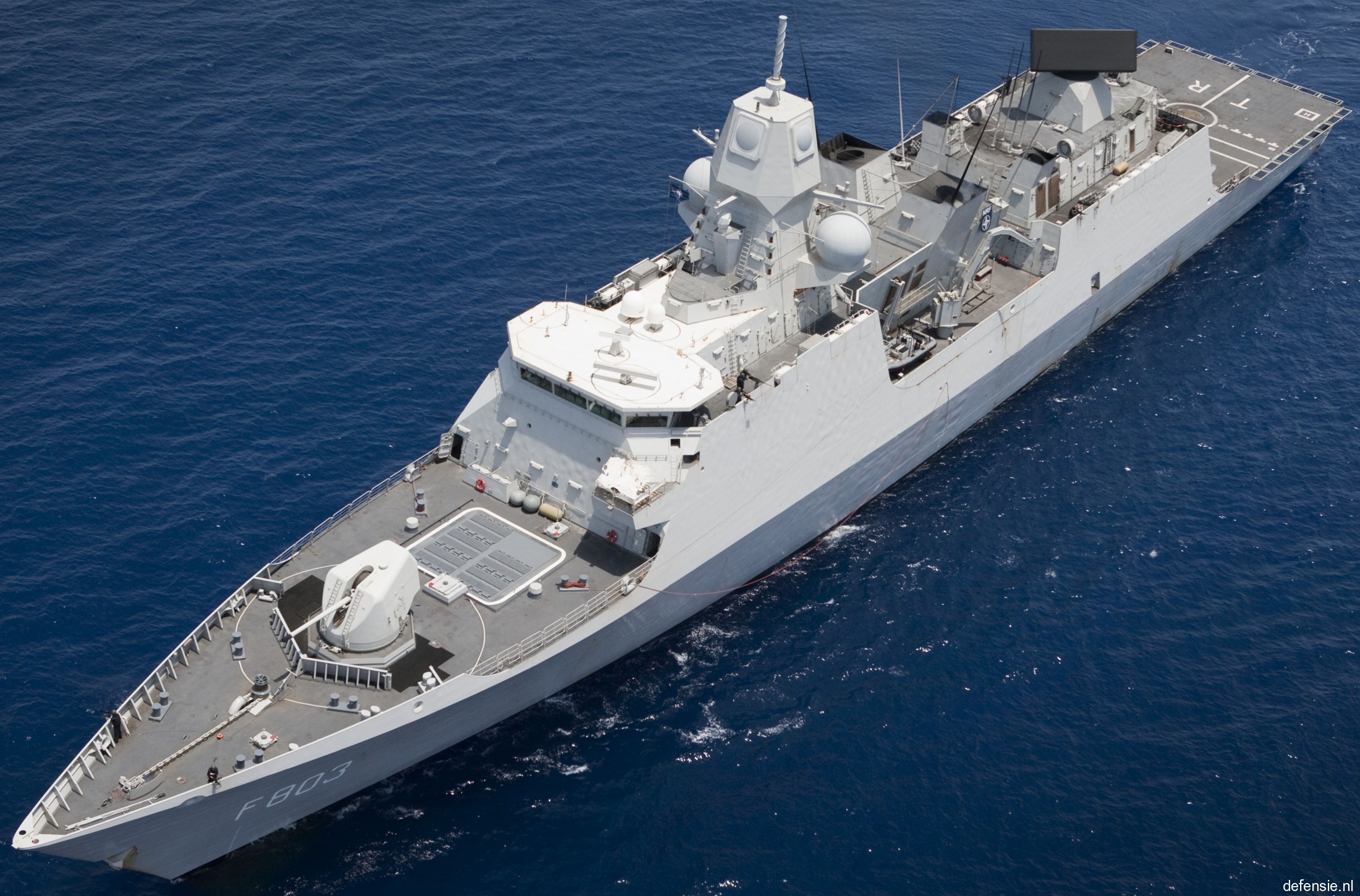
De Zeven Provinciën-Class
The De Zeven Provinciën-class air-defence and command frigates provide
advanced radar, missile and command capabilities. They become among the
most capable surface combatants of the Royal Netherlands Navy.
2015,
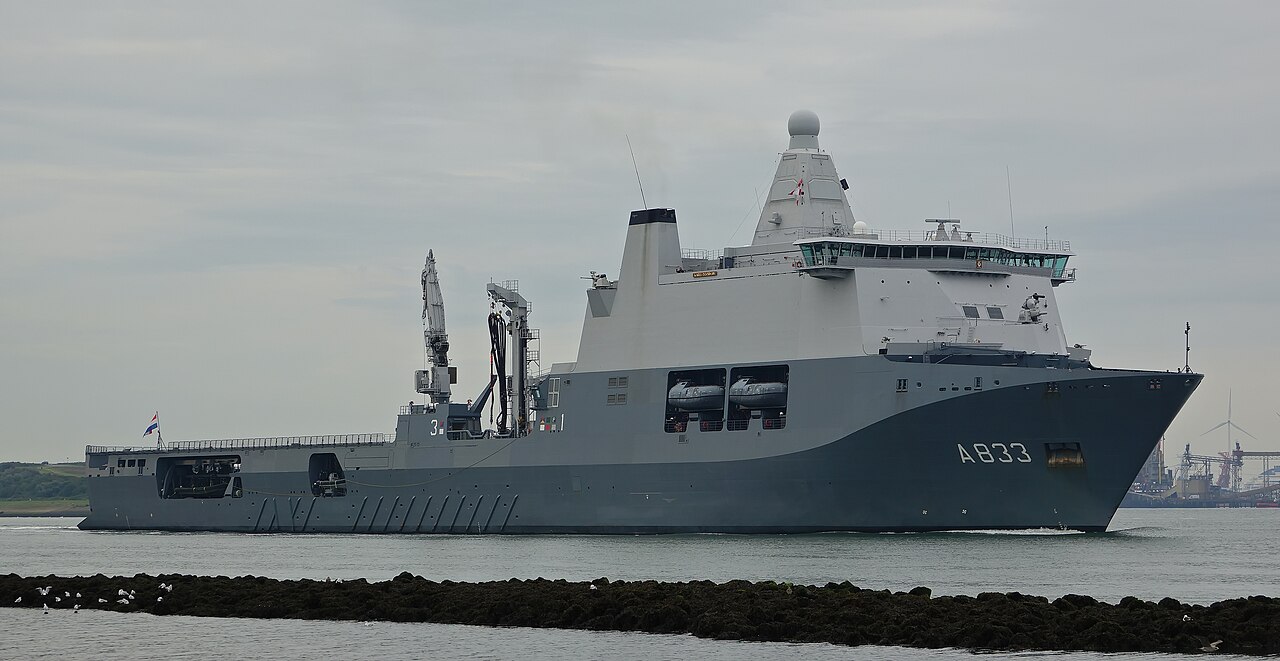
Karel Doorman
The Joint Logistic Support Ship Karel Doorman enters service. The ship
provides replenishment at sea, strategic sealift, amphibious support and logistical support.
2018,
Major Fleet Renewal
The Royal Netherlands Navy begins a major period of fleet modernization. New frigates, mine countermeasure vessels, support ships and submarines are planned to replace ageing Cold War-era systems.
2020s,
Unmanned Naval Warfare
The Royal Netherlands Navy begins introducing unmanned systems for reconnaissance, mine detection and mine clearance. This represents a major change from traditional minehunting operations.
2023,
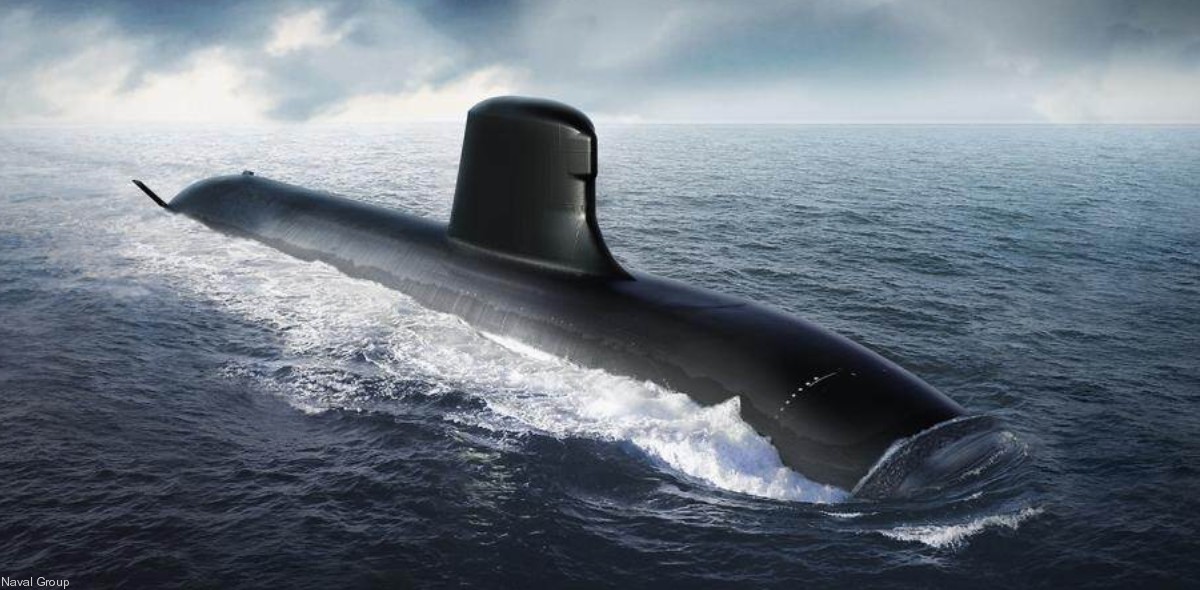
Future Fleet Development / Orka-Class Submarines
The Netherlands plans a new generation of anti-submarine warfare frigates, mine countermeasure vessels, support ships and submarines. The Netherlands selects Naval Group to build four new submarines. The future Orka-class will replace the Walrus-class and provide the Netherlands with a modern conventional submarine capability.
The Orka class submarines
In 2013 the Royal Netherlands Navy (RNLN) started the preparation process for the replacement of the Walrus-class submarines. The Orka-class submarine is a future submarine class currently planned for the Royal Netherlands Navy (RNLN). The submarines will replace the aging Walrus class. They will be the first submarines of the RNLN that are built at a foreign shipyard. As of 2024 they are planned to enter service in 2035. In March 2024, it was announced that the French Naval Group had won the tender for the class.
2025,
Vlissingen-Class Mine Countermeasure Vessels
The new Dutch-Belgian mine countermeasure program enters its next phase. Six vessels are being built for the Netherlands and six for Belgium.
2026,
Future developments
The Netherlands is developing a new generation of anti-submarine warfare frigates to replace the ageing M-class frigates. Anti-submarine warfare remains one of the most important specialist capabilities of the Royal Netherlands Navy. The De Zeven Provinciën-class frigates will eventually be replaced by a new generation of air-defence and command ships.
The Netherlands is developing a new generation of anti-submarine warfare frigates to replace the ageing M-class frigates. Anti-submarine warfare remains one of the most important specialist capabilities of the Royal Netherlands Navy.