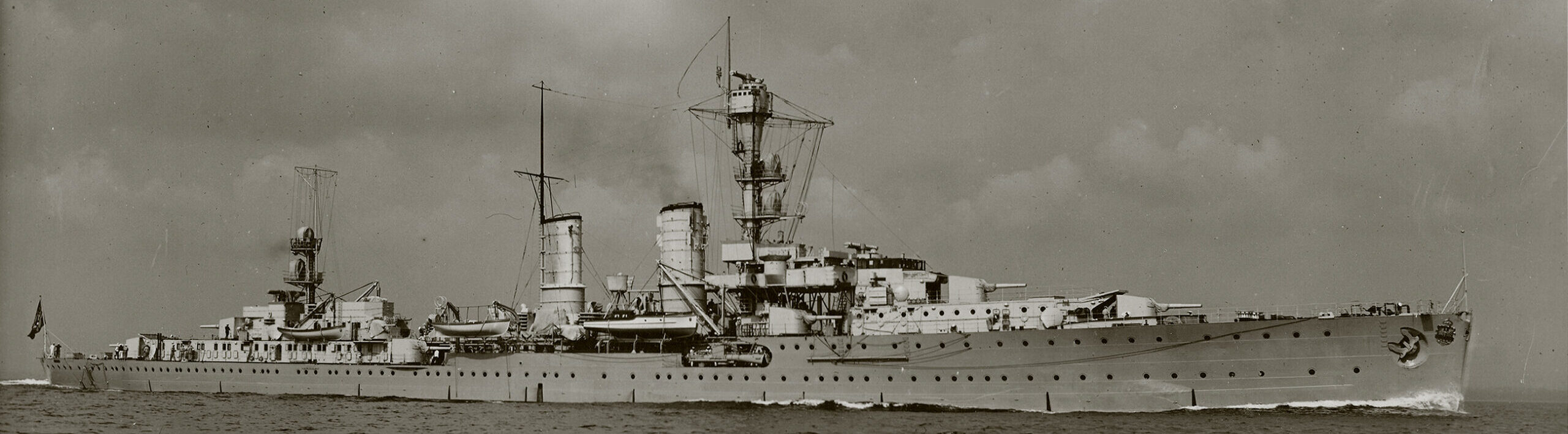
The history of German cruisers spans from the late 19th-century Imperial Navy to the end of World War II, evolving from colonial station ships to powerful, modern warships designed for fleet action and commerce raiding. German cruiser design
often emphasized armor and survivability over maximum firepower compared to their foreign counterparts.
- Armored Cruisers: Early designs like the Prinz Adalbert and Roon classes led to the formidable Scharnhorst class (Scharnhorst and Gneisenau). These ships achieved legendary status as part of the East Asia Squadron under Admiral Maximilian von Spee, notably winning the Battle of Coronel before being lost at the Battle of the Falkland Islands in 1914. The final armored cruiser, Blücher, was an intermediate step toward battlecruisers but was sunk at the Battle of Dogger Bank in 1915.
- Light Cruisers: The Gazelle and Bremen classes were the first true German light cruisers. Many saw action during World War I, including the Emden, which had a famous career as a commerce raider in the Indian Ocean before being caught and destroyed.
Interwar Period and the Reichsmarine
The Treaty of Versailles severely restricted the German Navy (renamed the Reichsmarine), limiting it to six light cruisers under 6,000 tons displacement.
- Post-WWI Cruisers: The first new cruiser, the Emden (commissioned in 1925), was built to an outdated design based on late-war blueprints. It was followed by the Königsberg and Leipzig classes, which featured innovative designs like all-welded hulls and triple main gun turrets, though they suffered from structural compromises to stay within treaty limits.
- Deutschland-class “Pocket Battleships”: Germany built three Deutschland-class armored ships—Deutschland (later renamed Lützow), Admiral Scheer, and Admiral Graf Spee—which the British famously nicknamed “pocket battleships”. They were technically within treaty limits by standard displacement definitions but were heavily armed with six 28 cm (11 in) guns, making them ideal, powerful commerce raiders. Admiral Graf Spee was scuttled after the Battle of the River Plate in 1939.
World War II and the Kriegsmarine
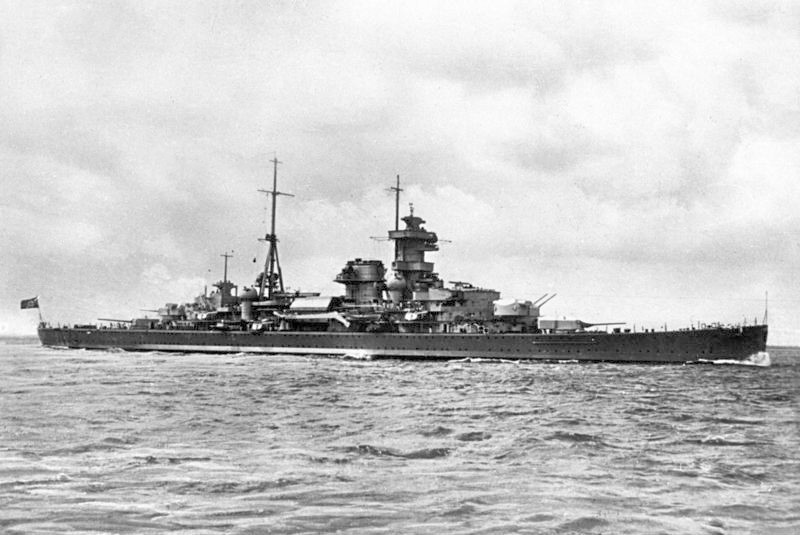
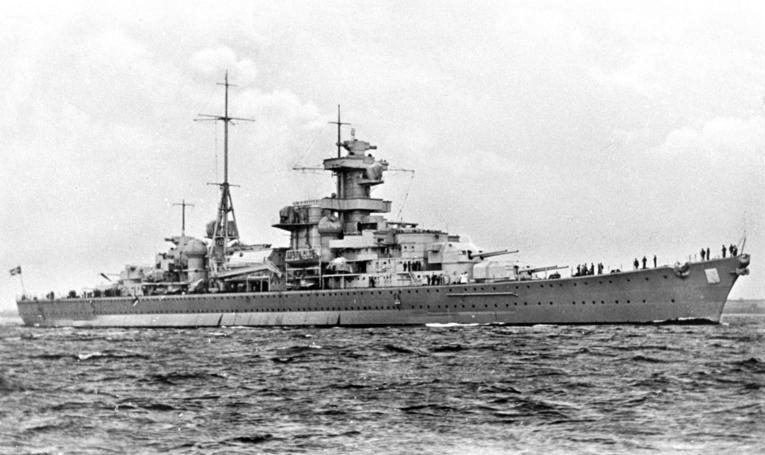
With the rise of the Kriegsmarine and the repudiation of the Treaty of Versailles, Germany began a more ambitious naval rearmament program, including the Admiral Hipper class of heavy cruisers.
- Heavy Cruisers: The Deutschland class ships served as commerce raiders; the Admiral Graf Spee was scuttled after the Battle of the River Plate, and the Admiral Scheer was the most successful raider. The subsequent Admiral Hipper class consisted of five ships, though only three (Admiral Hipper, Blücher, Prinz Eugen) were completed and saw extensive action, notably during the invasion of Norway in 1940 where Blücher was sunk by coastal defenses.
- Light Cruisers: The interwar light cruisers were primarily used for mine-laying and escort duties in the early war, with most lost during the conflict.
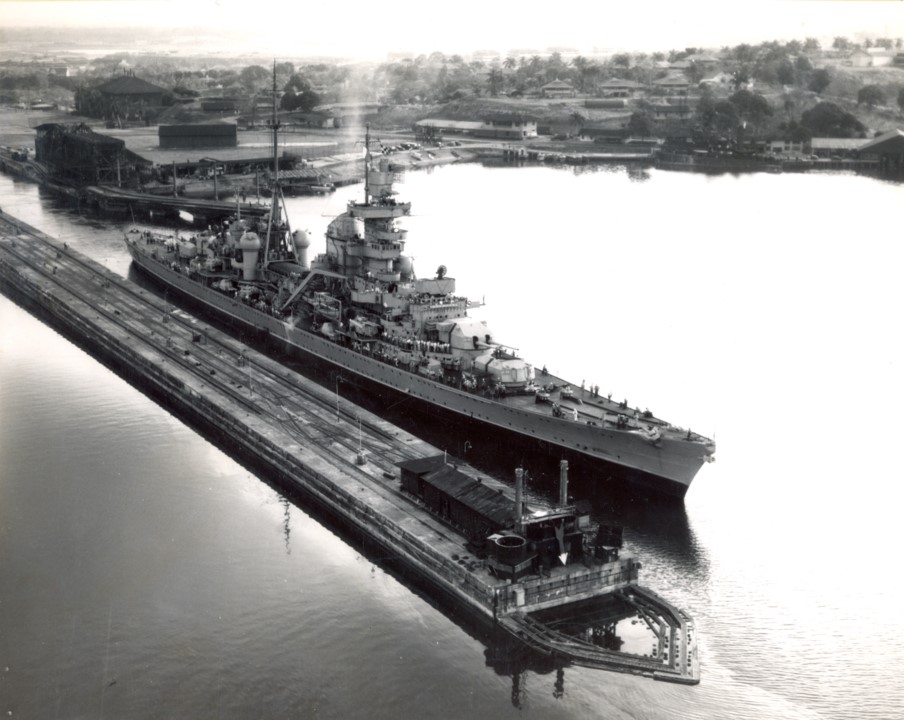
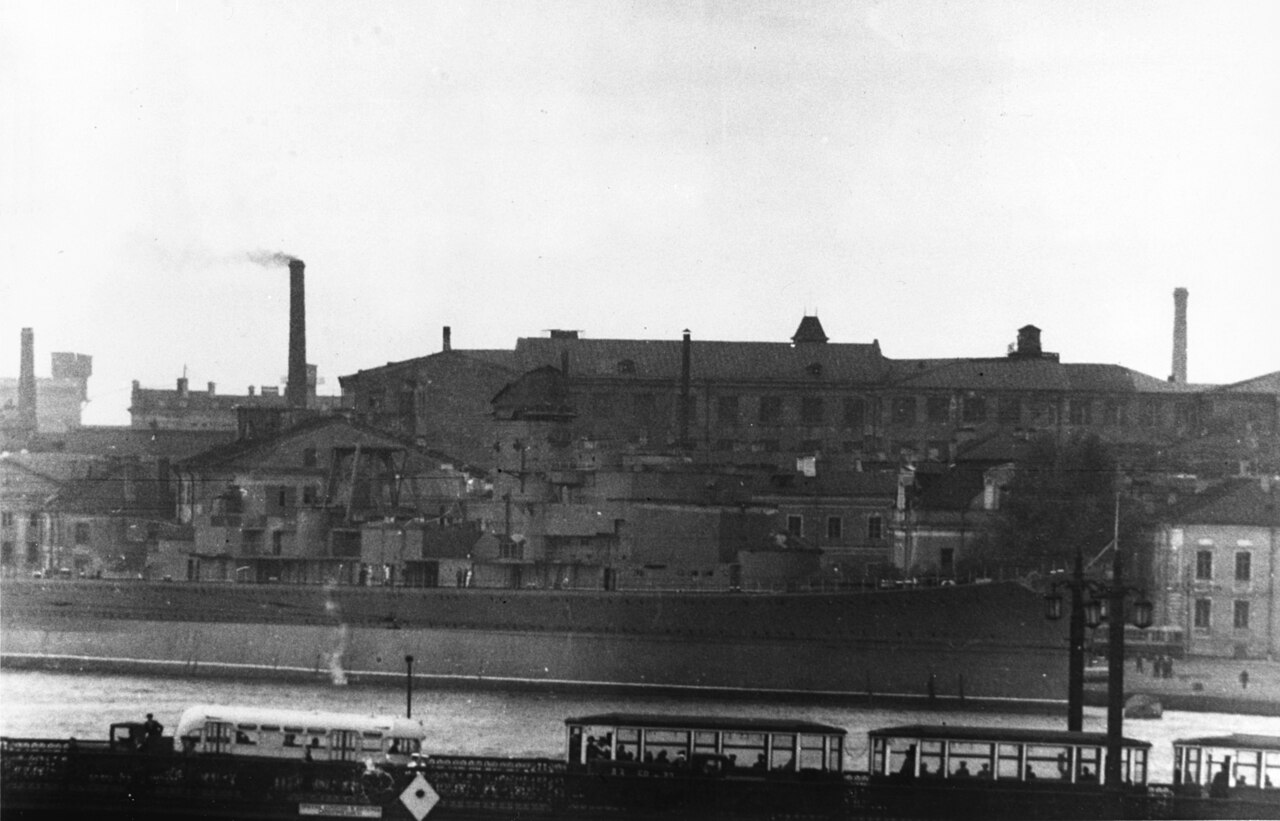
At the end of the war, only two German cruisers survived: Prinz Eugen was ceded to the US Navy and used in nuclear tests, and Nürnberg was seized by the Soviets, serving in the Soviet Navy as Admiral Makarov until around 1960, marking the end of the history of German cruisers.
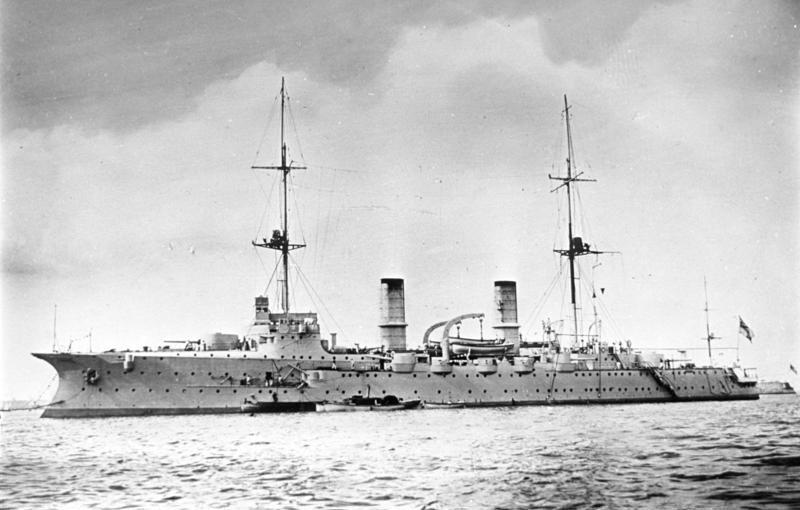
Protected cruisers
The German Imperial Navy (Kaiserliche Marine) built a series of protected cruisers in the 1880s and 1890s, starting with the two ships of the Irene class. The Navy only completed two additional classes of protected cruisers, comprising six more ships: the unique Kaiserin Augusta, and the five Victoria Louise-class ships. The type was then superseded by the armored cruiser at the turn of the century, beginning with Fürst Bismarck. Because of limited budgets in the pre-Tirpitz era, the German Navy attempted to build vessels that could serve as overseas cruisers and scouts for the fleet, though the ships were not satisfactory. The protected cruiser designs generally copied developments in foreign navies.
Irene class
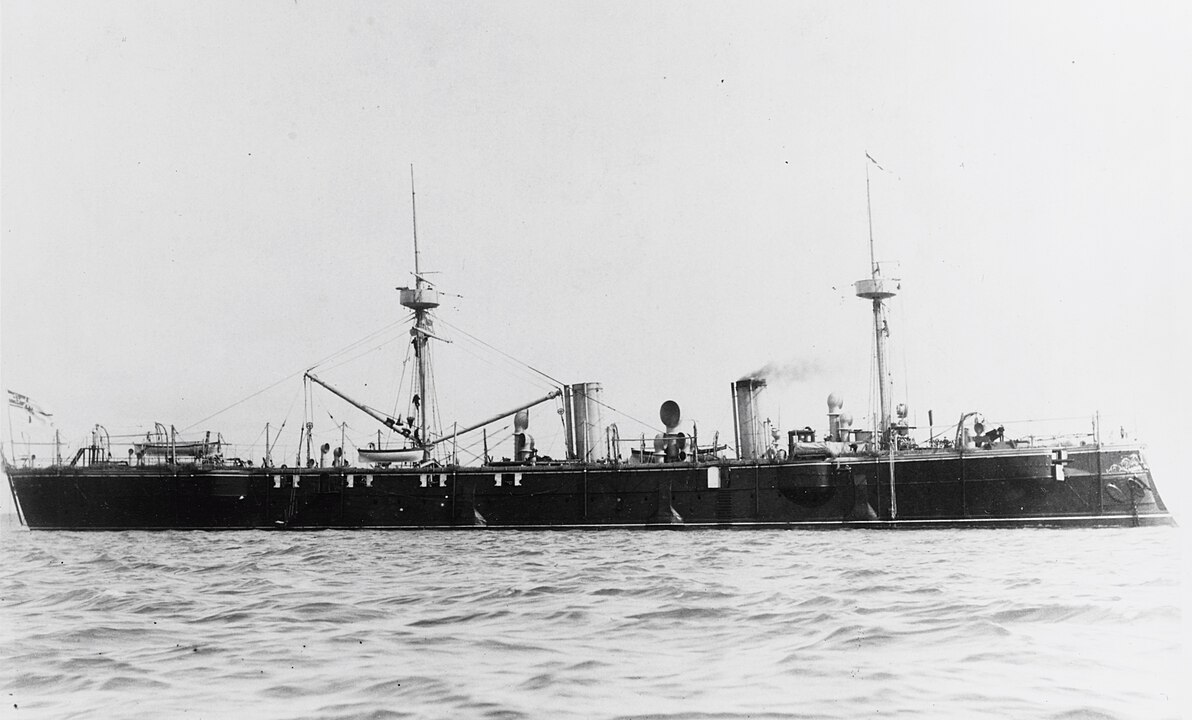
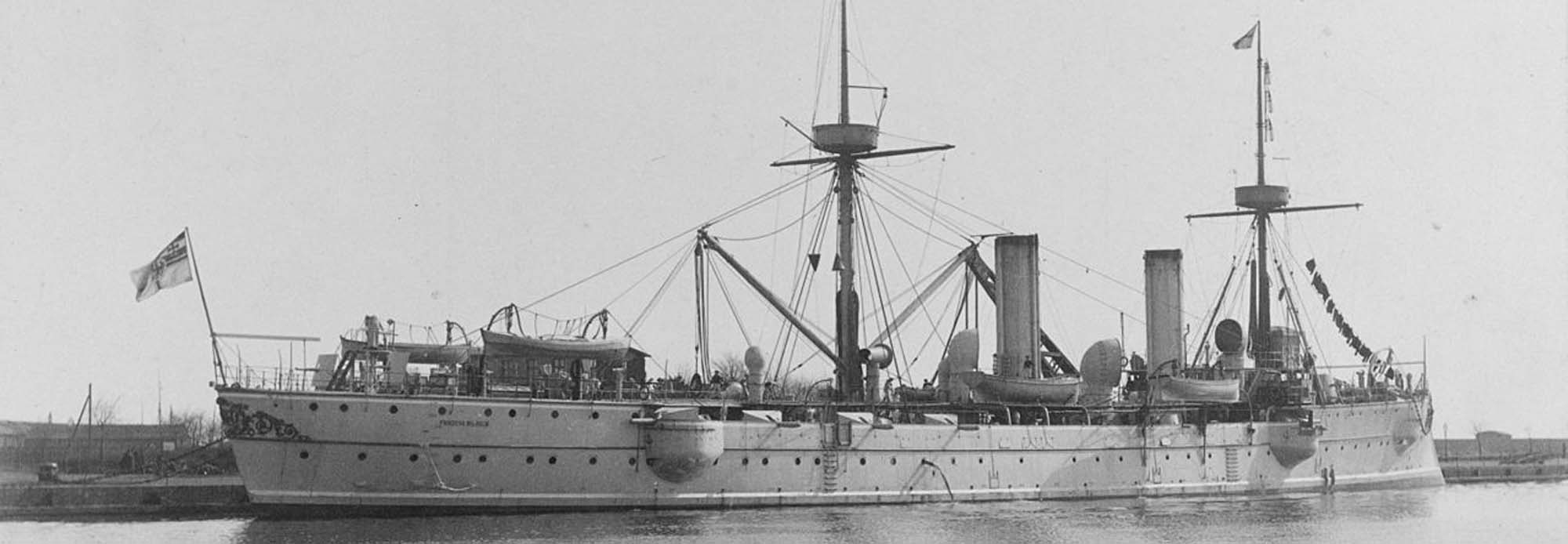
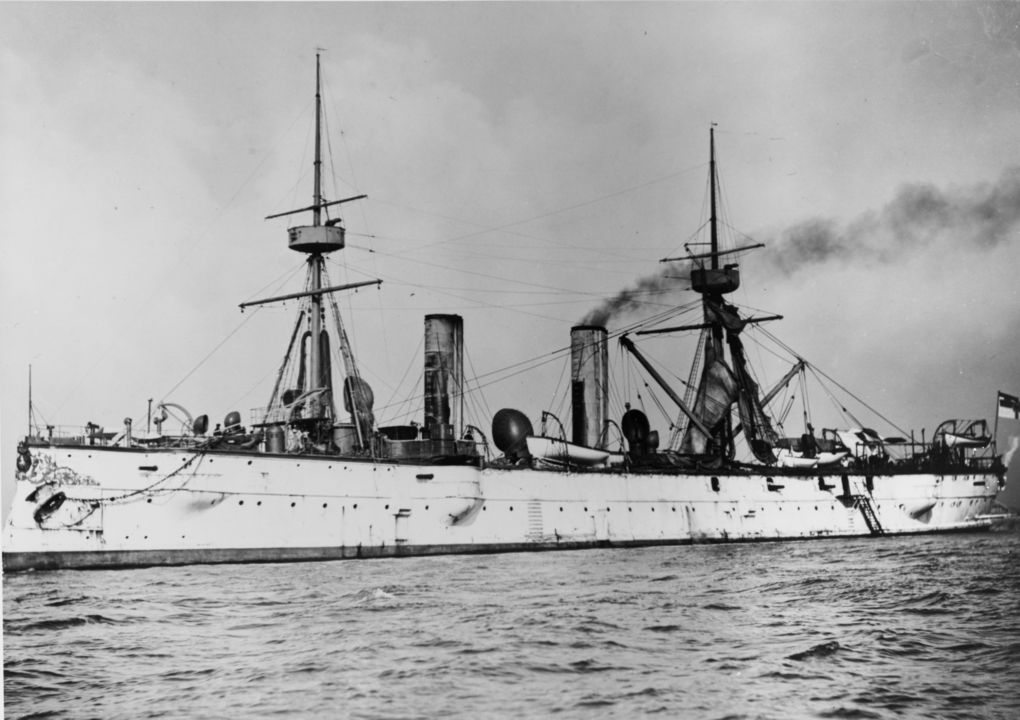
The Irene class was a class of protected cruisers built by the Imperial German Navy (Kaiserliche Marine) in the late 1880s. The class comprised two ships, Irene and Prinzess Wilhelm. They were the first protected cruisers (“Kreuzers”) built by the German Navy and the first protected cruisers in Germany. They were quite an improvement over the late 1870-1880s Bussard class, later reclassed as gunboats.
Name | Class | Commissioned | Decommissioned | Notes |
SMS Irene | Irene class | 25-05-1888 | 17-02-1914 | U boat depot ship in 1914, scraped in 1922 |
SMS Prinzess Wilhem | Irene class | 13-11-1889 | 17-02-1914 | Mine hulk ship in 1914, scraped in 1922 |
SMS Kaiserin Augusta
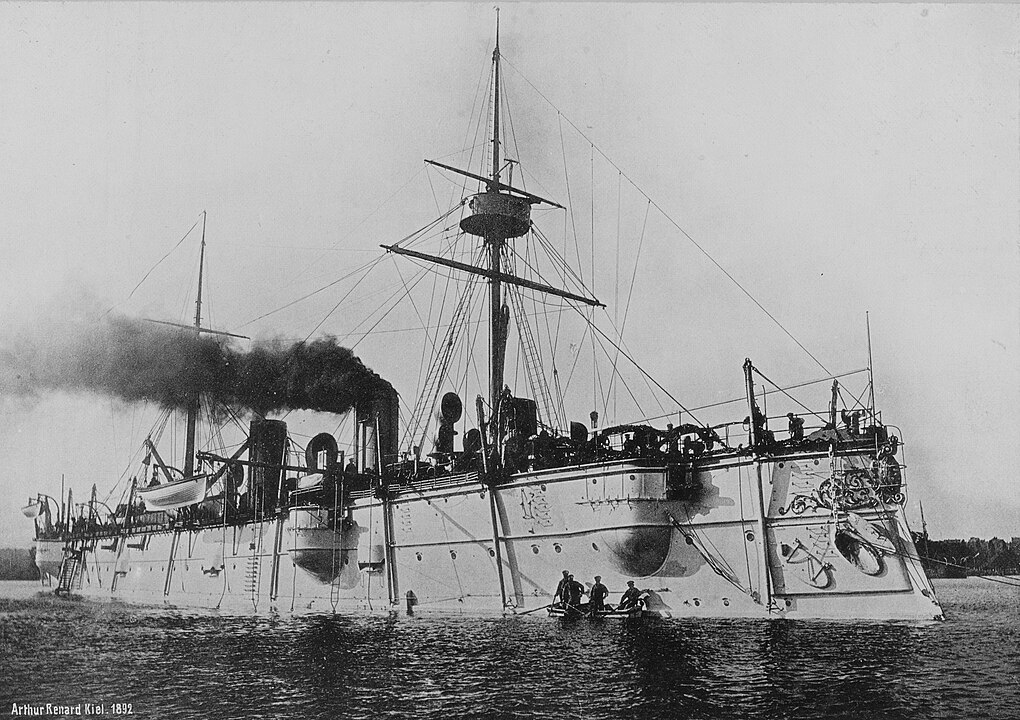
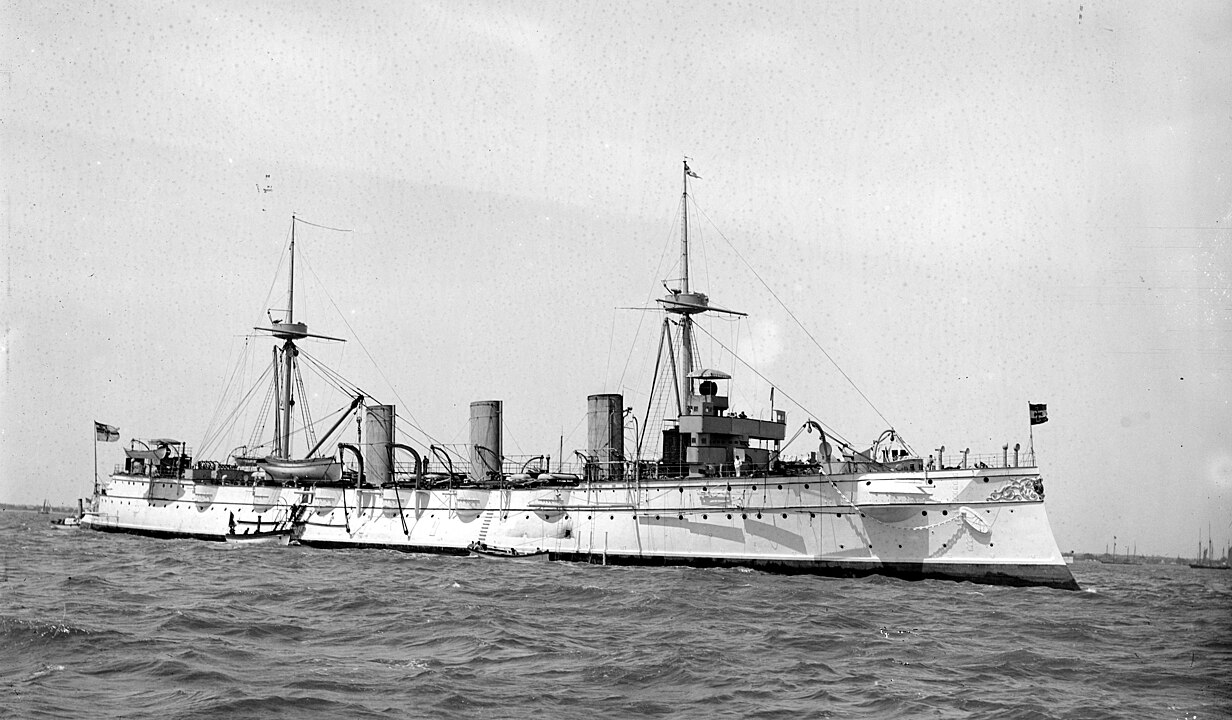
SMS Kaiserin Augusta was a unique protected cruiser, built for the German Kaiserliche Marine (Imperial Navy) in the early 1890s. Named for Empress Augusta. Owing to budgetary restrictions, Kaiserin Augusta was designed to fill both fleet scout and colonial cruiser roles. Kaiserin Augusta served abroad between 1897 and 1902, primarily in the East Asia Squadron. In 1902, she returned to Germany for an extensive overhaul that lasted until 1907, after which she went into reserve. Following the outbreak of World War I in 1914, Kaiserin Augusta was mobilized to serve as a gunnery training ship.
Name | Class | Commissioned | Decommissioned | Notes |
SMS Kaiserin Augusta | -- | 17-11-1892 | 14-12-1918 | Scraped in 1920 |
Victoria Louise class
Name | Class | Commissioned | Decommissioned | Notes |
SMS Victoria Louise | Victoria Louise | 20-02-1899 | 07-11-1914 | Scraped in 1923 |
SMS Hertha | Victoria Louise | 23-07-1898 | 16-11-1914 | Scraped in 1920 |
SMS Freya | Victoria Louise | 20-10-1898 | 27-08-1914 | Scraped in 1921 |
SMS Vineta | Victoria Louise | 13-09-1899 | 16-11-1914 | Scraped in 1920 |
SMS Hansa | Victoria Louise | 20-04-1899 | 26-10-1914 | Scraped in 1920 |
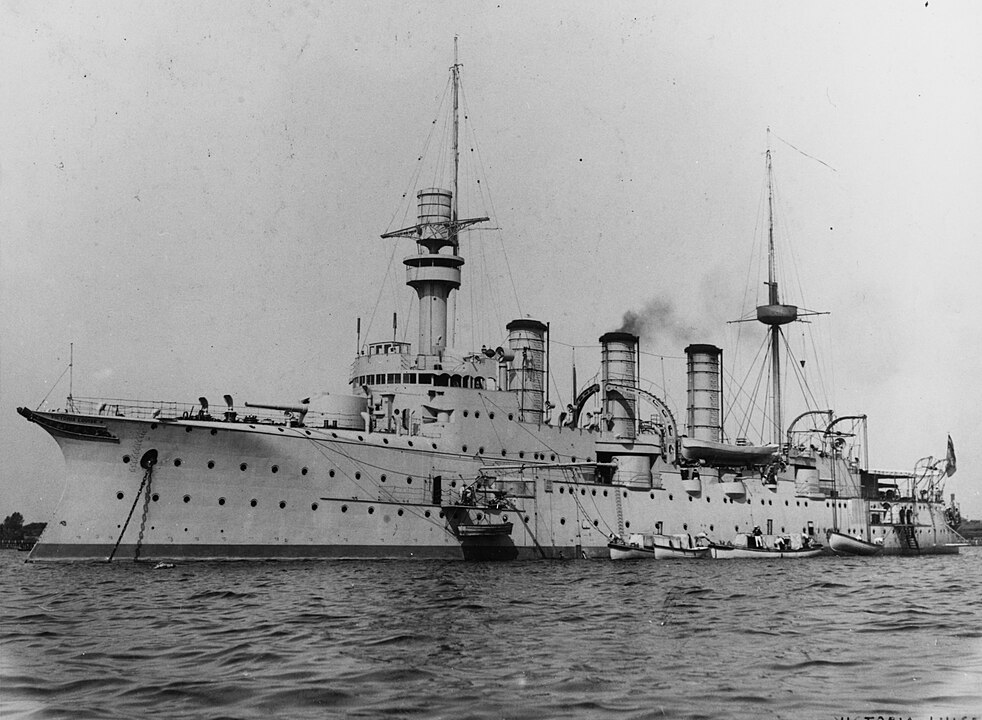
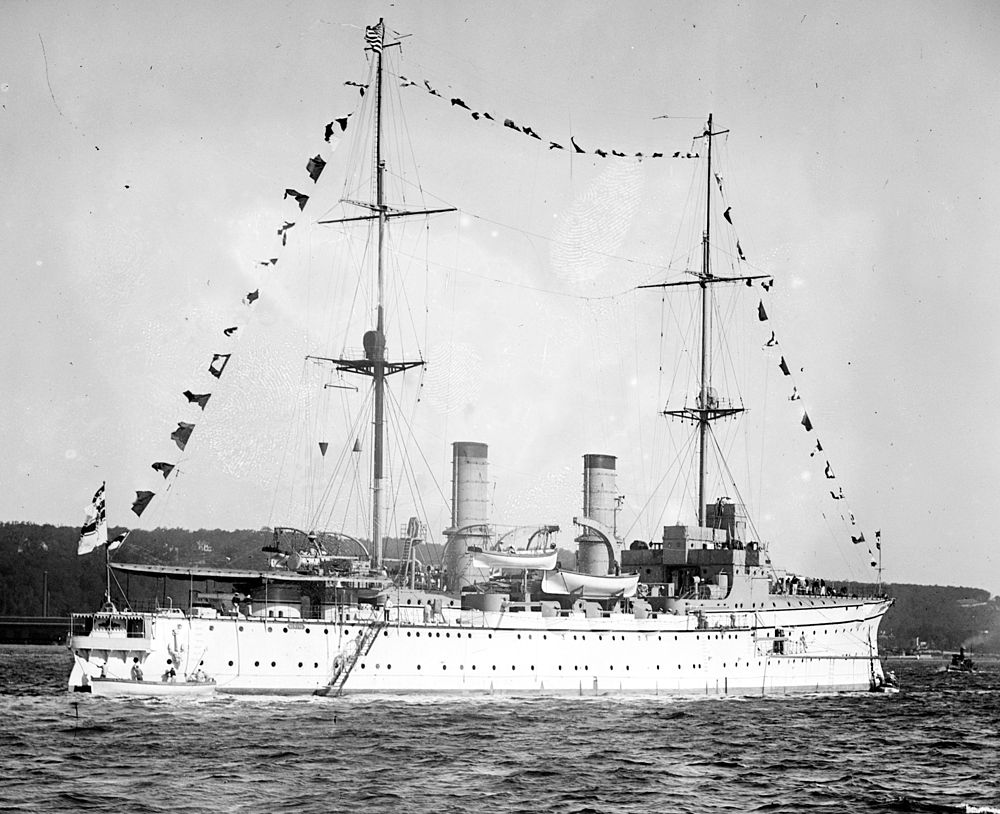
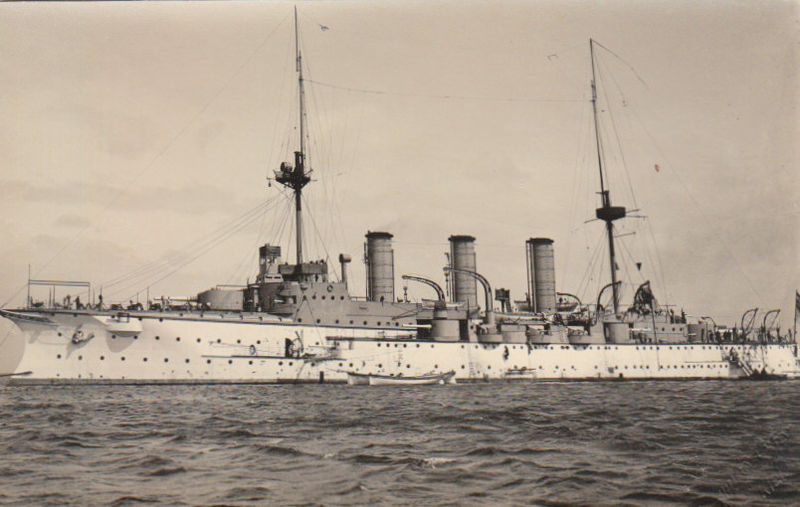
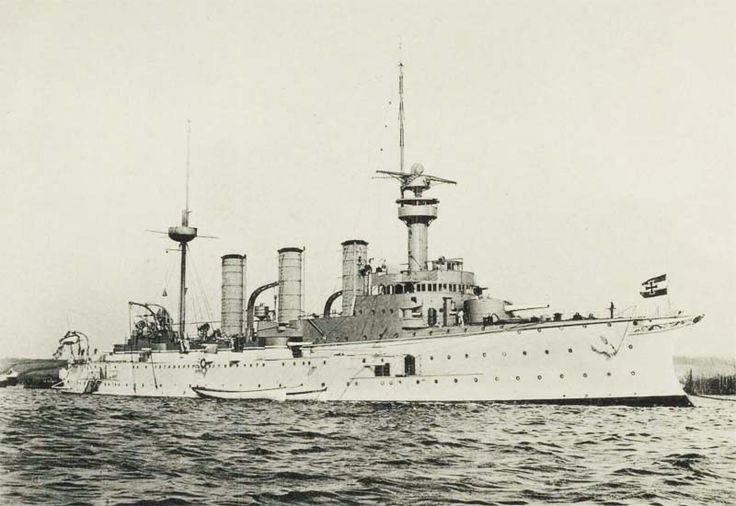
The Victoria Louise class of protected cruisers was the last class of ships of that type built for the German Imperial Navy. The class design introduced the combined clipper and ram bow and the blocky sides that typified later German armored cruisers. The class comprised five vessels, Victoria Louise, the lead ship, Hertha, Freya, Vineta, and Hansa. The ships were laid down in 1895–1896, and were launched in 1897–1898 and commissioned into the fleet over the following year. All five ships were modernized between 1905 and 1911, after which they
served as training ships for naval cadets. After
the end of the conflict, Victoria Louise was converted into a merchant ship, but was broken up in 1923. The other four ships were scrapped in 1920–1921.
Unprotected cruisers
Unprotected cruisers in the Imperial German Navy represented early steel-hulled warships without deck armor over engines and boilers, built primarily for extended overseas deployments to protect colonial possessions and conduct commerce warfare. Constructed between 1887 and 1894, these nine vessels marked a shift from sail-dependent frigates and corvettes toward steam-powered cruisers, though retained auxiliary sailing rigs for endurance on long voyages. They displaced between 1,300 and 4,000 tons, carried 8 to 10 medium-caliber guns, and achieved speeds of 13 to 17 knots, suiting them for station duties in Africa, China, and the Pacific rather than fleet actions.
Schwalbe class
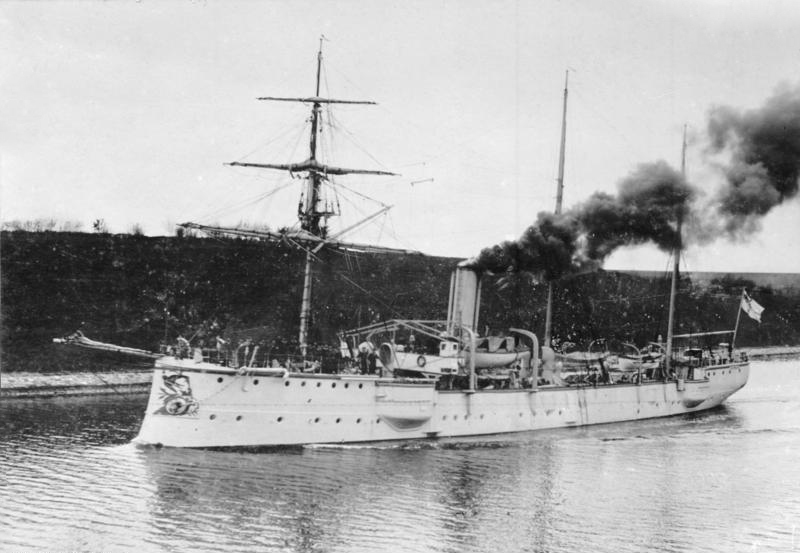
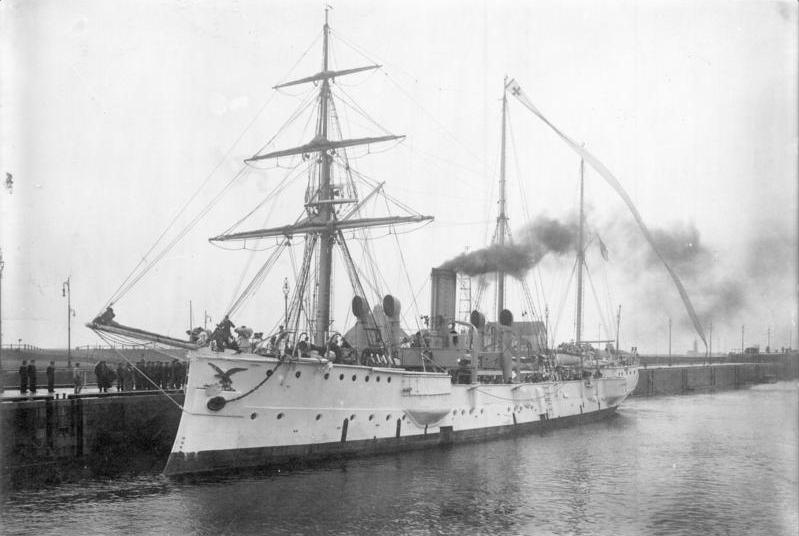
The Schwalbe class comprised two small cruisers designed as avisos for colonial policing: SMS Schwalbe, launched on 21 September 1887, and SMS Sperber (originally Hyäne), launched on 19 September 1888. Each displaced 1,359 long tons, mounted eight 10.5 cm guns, and served extensively in German East Africa and the Far East until decommissioning in the early 1900s.
Name | Class | Commissioned | Decommissioned | Notes |
SMS Schwalbe | Schwalbe class | 08-05-1888 | 13-12-1902 | Scraped in 1922 |
SMS Sperber | Schwalbe class | 02-04-1889 | 06-07-1911 | Scraped in 1922 |
Bussard class
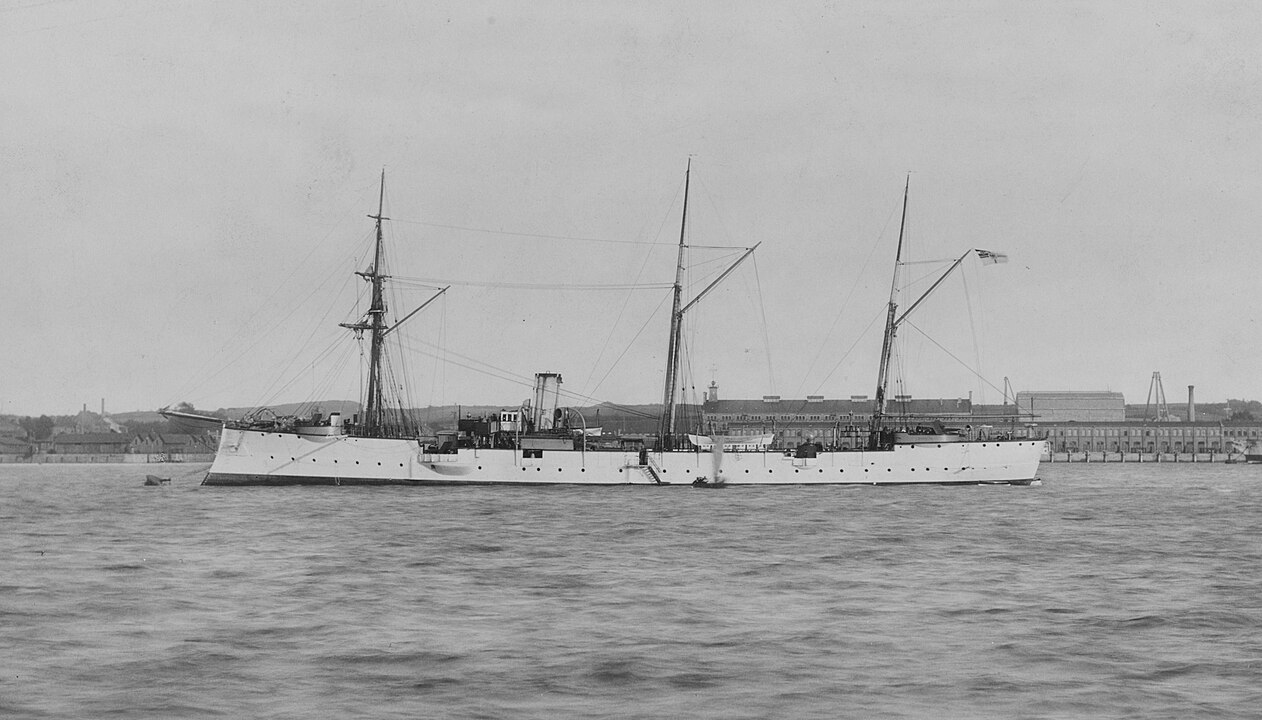
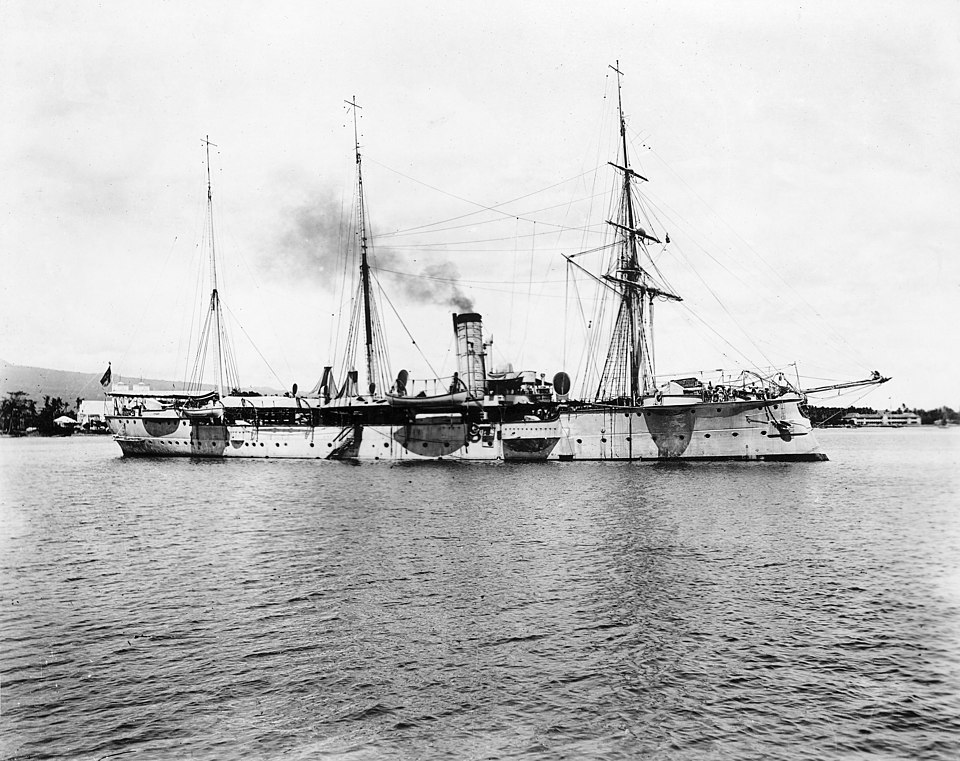
The Bussard class included six similar but enlarged cruisers optimized for gunboat-like operations in distant waters, displacing 1,650 tons, armed with eight 10.5 cm SK L/35 guns, these ships enforced trade routes and suppressed uprisings, with several
lost or scuttled during World War I.
Name | Class | Commissioned | Decommissioned | Notes |
SMS Bussard | Bussard class | 07-10-1890 | 12-03-1910 | Scraped in 1913 |
SMS Falke | Bussard class | 14-09-1891 | 1907 | Scraped in 1913 |
SMS Seeadler | Bussard class | 17-08-1892 | 22-10-1914 | Exploded at Wilhelmshaven 19-04-1917, used as a mine hulk |
SMS Condor | Bussard class | 09-12-1892 | -- | In 1916, hulk for storing naval mines, Scraped 1921 |
SMS Cormoran | Bussard class | 25-07-1893 | 1914 | She was scuttled in 1914, to prevent her from being captured. |
SMS Geier | Bussard class | 24-10-1895 | -- | Captured by the US Navy, 06-04-1917 |
SMS Gefion
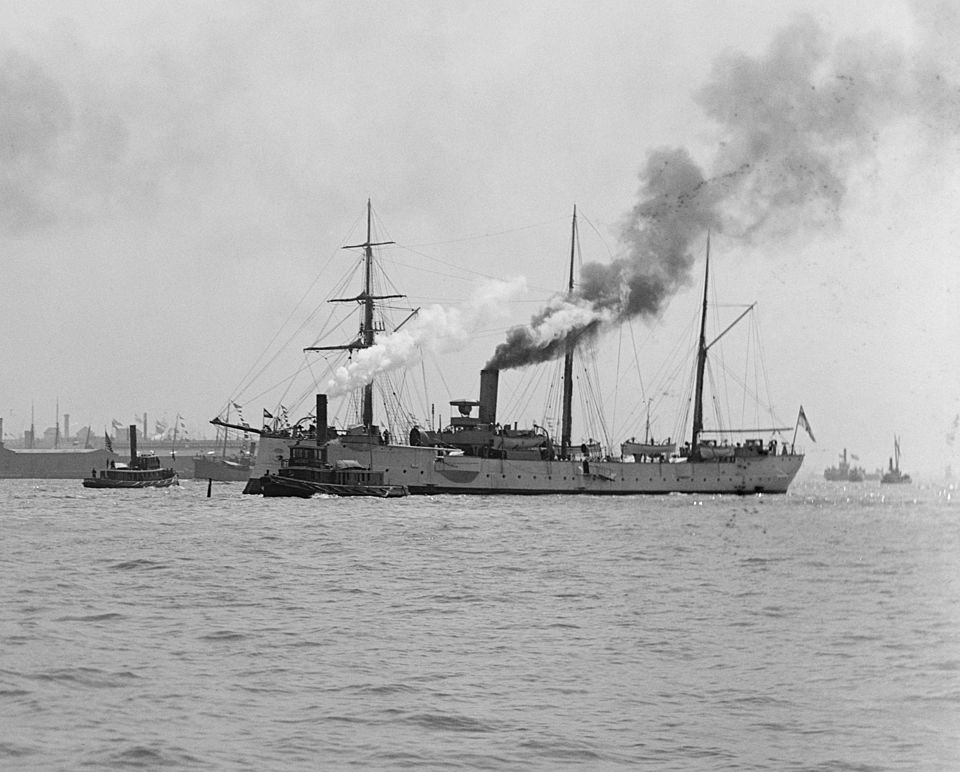
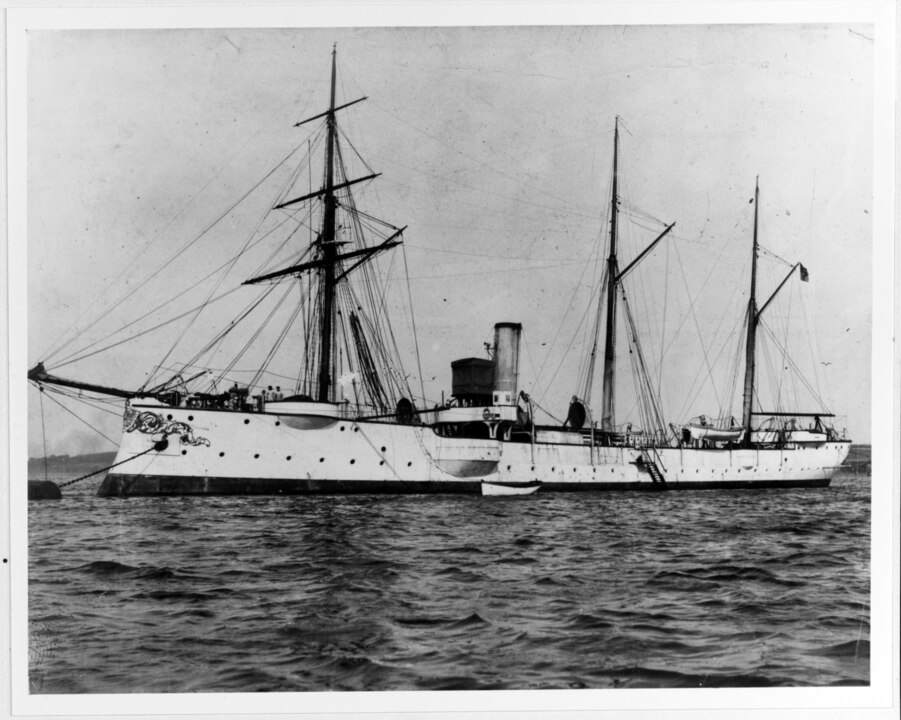
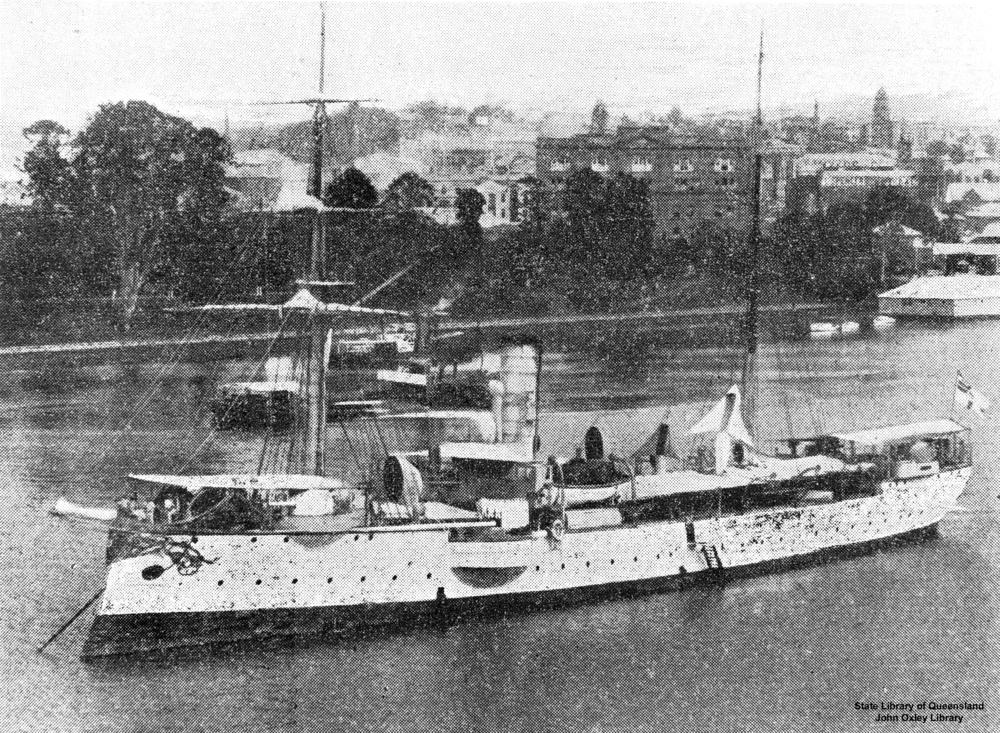
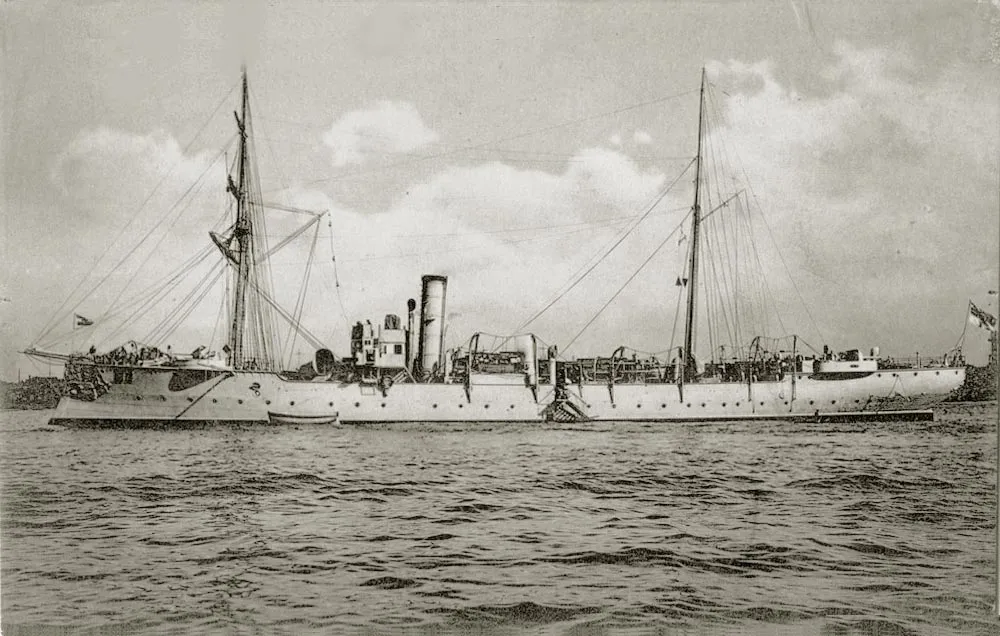
SMS Gefion, launched 31 March 1893 and commissioned 5 June 1895, stood as the largest and final unprotected cruiser, at 4,197 tons with ten 10.5 cm guns and enhanced speed of 17.5 knots for commerce raiding potential. Deployed to East Asia, she supported operations during the Boxer Rebellion before conversion to a barracks ship in 1916.
Name | Class | Commissioned | Decommissioned | Notes |
SMS Gefion | -- | 05-06-1895 | 01-10-1901 | Broken up in 1923 |
Armored cruisers
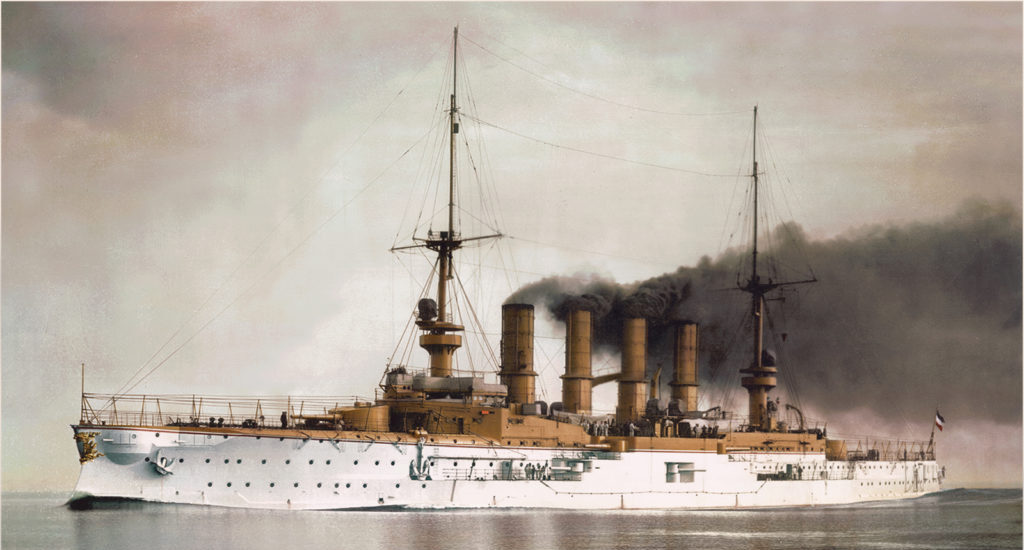
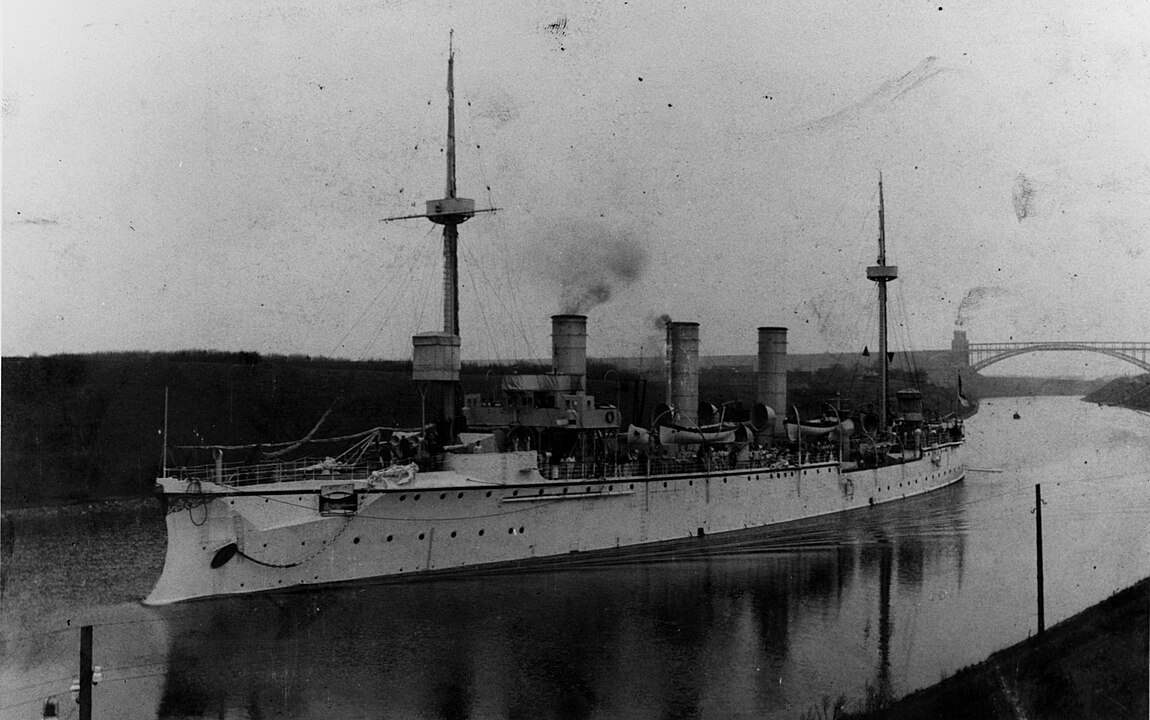
The Imperial German Navy’s armored cruisers, known as Panzerkreuzer, represented an evolution from protected cruisers, incorporating a full armored belt to protect machinery, magazines, and secondary batteries against enemy fire, enabling them to challenge similar vessels or scout for the battle fleet. Development began in the 1890s with the lead ship SMS Fürst Bismarck laid down in 1896 and commissioned on 14 July 1900, displacing 11,281 tons and armed with four 24 cm guns in twin turrets. By 1914, eight such ships were in service. These cruisers participated in World War I operations, including commerce raiding and fleet actions. Post-war, survivors were mostly disarmed under the Treaty of Versailles and scrapped by 1922, marking the obsolescence of the type in favor of specialized light cruisers and battlecruisers.
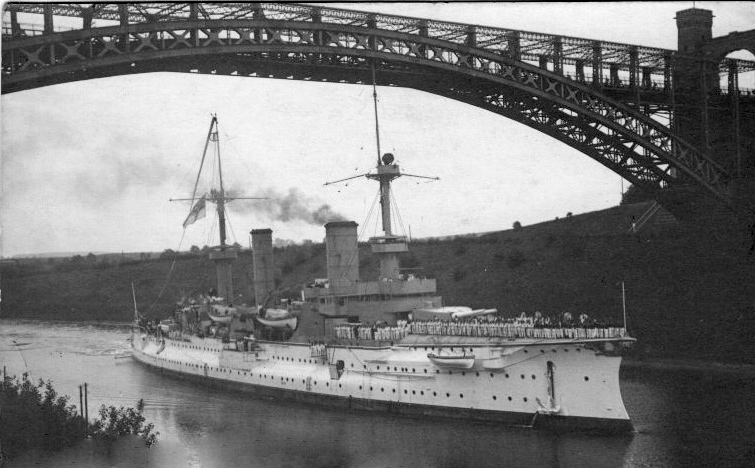
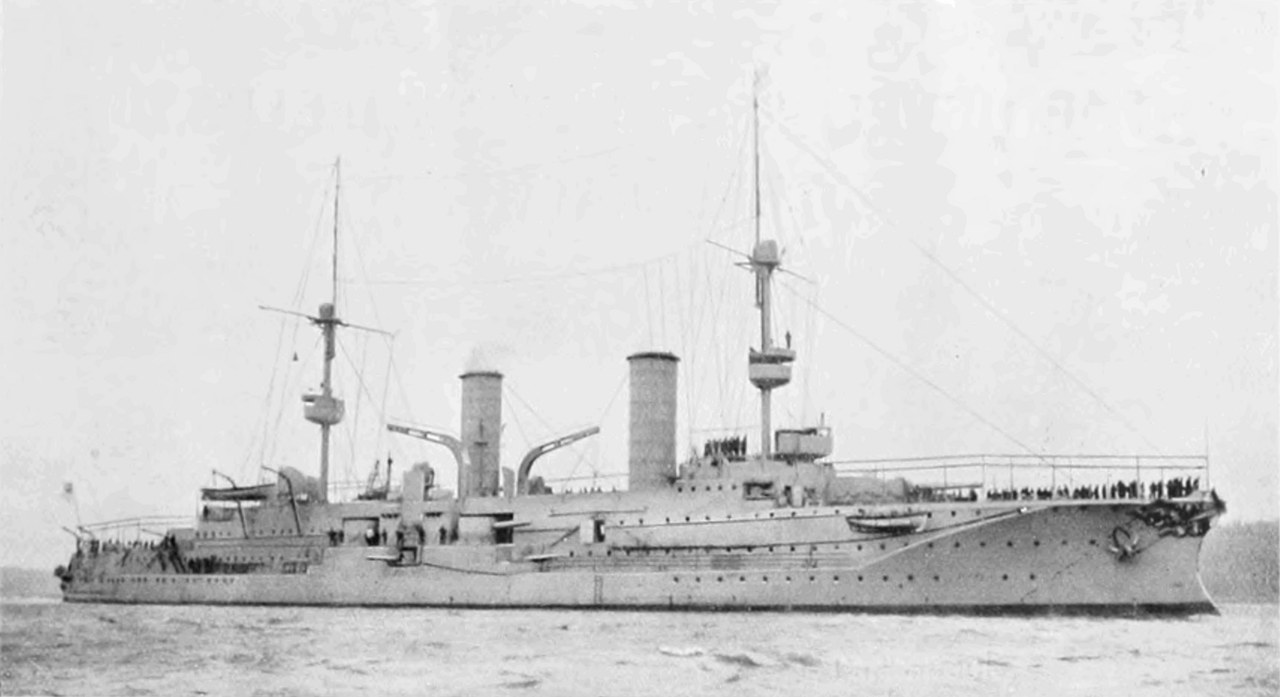
SMS Fürst Bismarck and SMS Prinz Heinrich
SMS Fürst Bismarck (Prince Bismarck) was Germany’s first armored cruiser, built for the Kaiserliche Marine (Imperial Navy) in the late 1890s. Ordered in response to widespread foreign adoption of the ship type, the Germans built Fürst Bismarck to serve abroad in the German colonial empire and as a scout for the main fleet in home waters.
MS Prinz Heinrich was a unique German armored cruiser built at the turn of the 20th century for the German Kaiserliche Marine (Imperial Navy), named after Kaiser Wilhelm II’s younger brother Prince Heinrich. Prinz Heinrich’s design was a modification of the previous armored cruiser, Fürst Bismarck, and traded a smaller main battery and thinner (but more effective) armor for higher speed. All subsequent German armored cruisers were incremental developments of Prinz Heinrich.
Name | Class | Commissioned | Decommissioned | Notes |
SMS Furst Bismarck | -- | 01-04-1900 | 31-12-1918 | Scraped 1919 - 1920 |
SMS Prinz Heinrich | -- | 11-03-1902 | 27-03-1916 | Scraped in 1920 |
Prinz Adalbert class
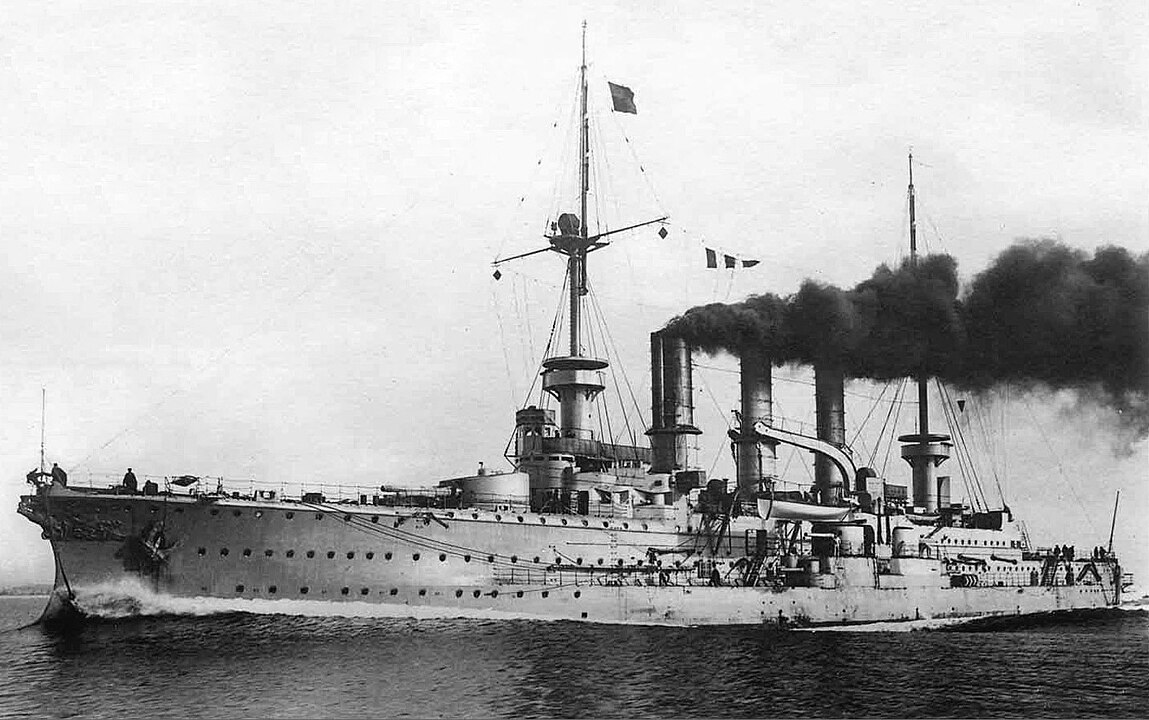
The Prinz Adalbert class was a pair of armored cruisers built for the German Kaiserliche Marine (Imperial Navy) under the terms of the First Naval Law, which initiated a major naval expansion program. Their design was heavily based on Germany’s previous armored cruiser, Prinz Heinrich, with a series of incremental improvements. Prinz Adalbert spent her peacetime career as a gunnery-training ship while Friedrich Carl initially served as the flagship of the Heimatflotte’s (Home Fleet) reconnaissance forces. By 1909, she had been replaced by more modern cruisers and joined Prinz Adalbert as a training vessel.
Name | Class | Commissioned | Decommissioned | Notes |
SMS Prinz Adelbert | Prinz Adelbert | 12-01-1901 | -- | Torpedoed and sunk 23-10-1915 |
SMS Frederich Carl | Prinz Adelbert | 12-12-1903 | -- | Mind and sunk 17-11-1914 |
Roon class
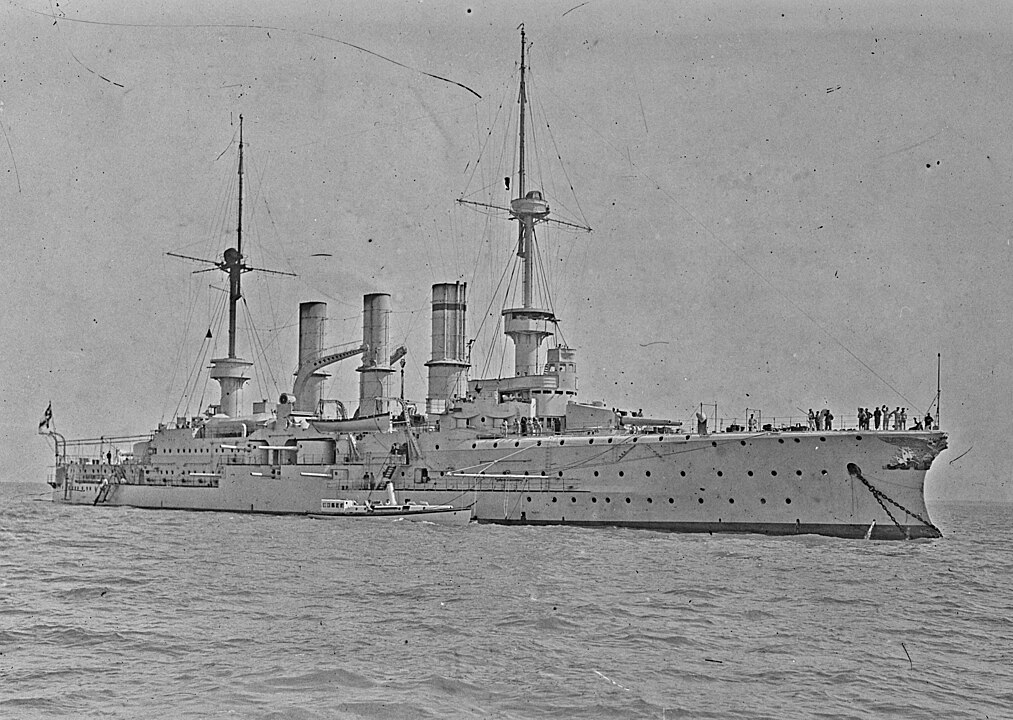
The Roon class was a pair of armored cruisers built for the German Kaiserliche Marine (Imperial Navy) in the 1900s. The two ships of the class, Roon and Yorck, closely resembled the earlier Prinz Adalbert-class cruisers upon which they were based. The Roon class incorporated slight incremental improvements. Additional boilers were meant to increase the ships’ speed, both vessels failed to reach their designed top speed. When combined with the Roon class’ relatively light armament and thin armor protection, the ships compared poorly with their foreign contemporaries—particularly the armored cruisers of their
anticipated opponent, the British Royal Navy.
Name | Class | Commissioned | Decommissioned | Notes |
SMS Roon | Roon class | 02-08-1914 | 04-02-1916 | Scraped in 1921 |
SMS Yorck | Roon class | 21-11-1905 | 21-05-1913 | Sunk accidentally by German mines on 04-11-1914 |
Scharnhorst class
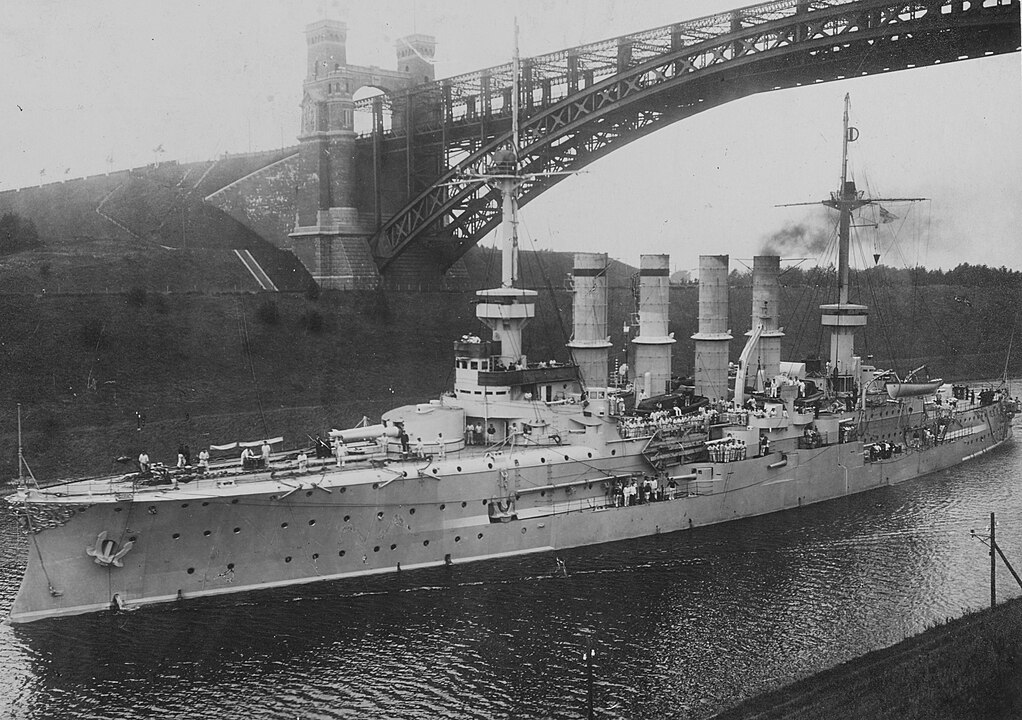
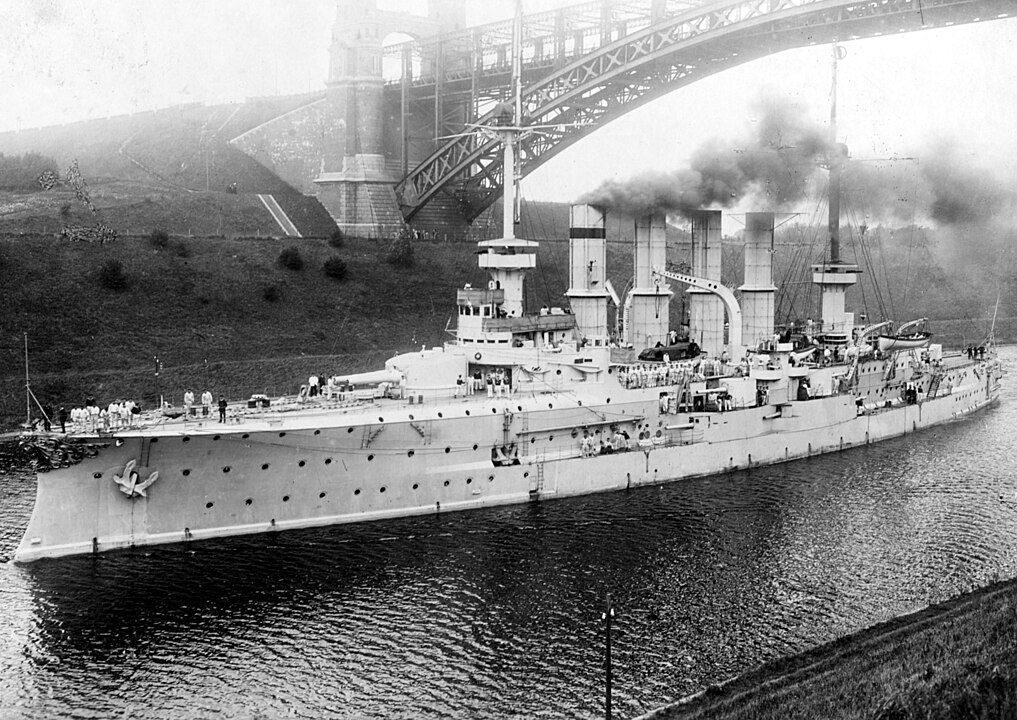
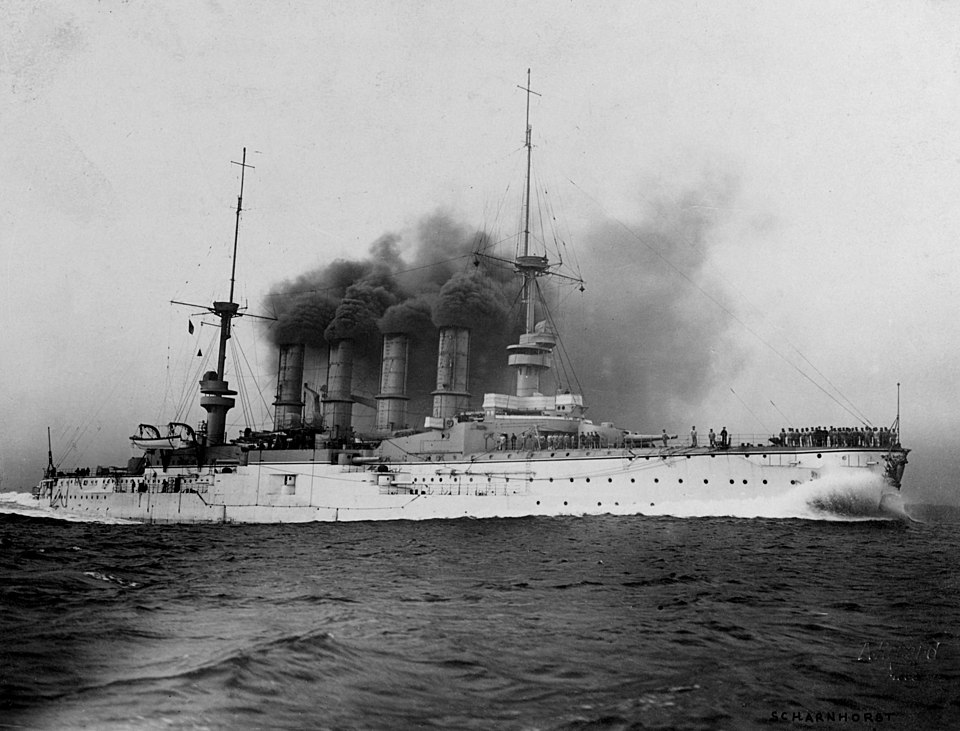
The Scharnhorst class was the last class of traditional armored cruisers built by the German Kaiserliche Marine (Imperial Navy), and marked the culmination of a series of designs that began with the cruiser Prinz Heinrich. The class comprised two ships, Scharnhorst and Gneisenau, which were built between 1904 and 1908. They were larger than the Roon-class cruisers that preceded them; the extra size was used primarily to increase the main armament, and to increase the ships’ top speed. As a
result of these changes, the Scharnhorst class was the first German armored cruiser design to reach equality with their foreign counterparts.
Name | Class | Commissioned | Decommissioned | Notes |
SMS Scharnhorst | Scharnhorst | 24-10-1907 | -- | Sunk in action, Battle of Falkland Islands on 08-12-1914 |
SMS Gneisenau | Scharnhorst | 06-03-1908 | -- | Sunk in action, Battle of Falkland Islands on 08-12-1914 |
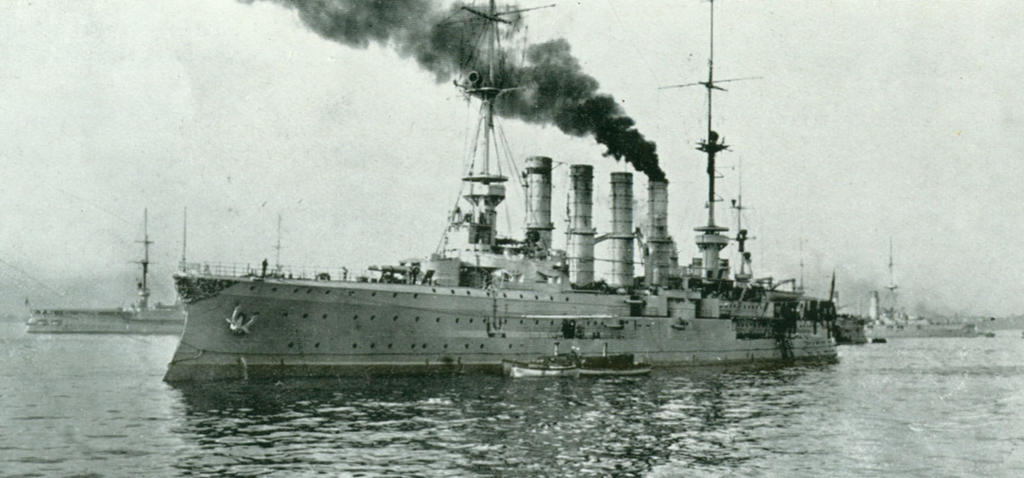
SMS Blücher
SMS Blücher was the last armored cruiser built for the German Kaiserliche Marine (Imperial Navy) beginning in 1907. She was designed in response to the latest British armored cruisers, but the British had already begun work on the Invincible-class battlecruisers, which marked a significant increase in firepower over earlier armored cruisers. Blücher entered service after the Invincibles were commissioned, and as a result, was obsolescent at the start of her career.
Name | Class | Commissioned | Decommissioned | Notes |
SMS Blucher | -- | 01-10-1909 | -- | Sunk during the Battle of Dogger Bank on 24-01-1915 |
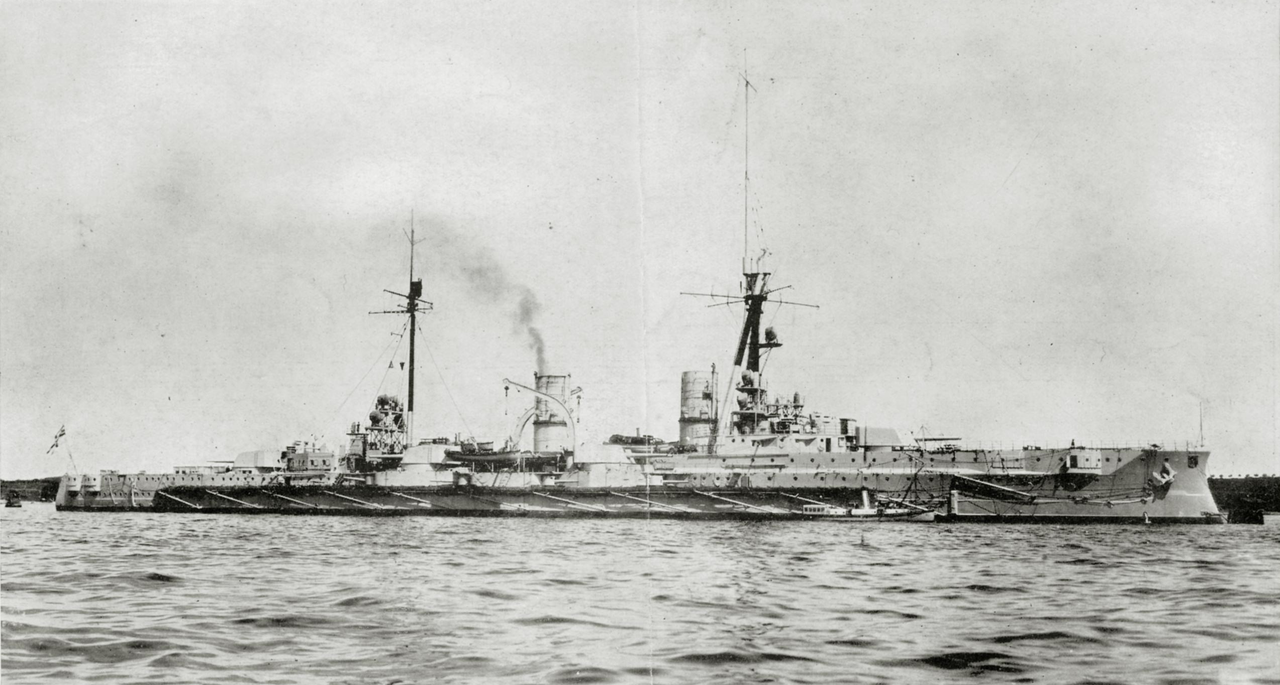
Light cruisers
The light cruisers of the Imperial German Navy, known as kleine Kreuzer, represented an evolution from earlier protected cruisers, incorporating turbine machinery in later designs for greater speed and reliability, with standard armament of ten 10.5 cm SK L/40 guns. These vessels, displacing around 3,000 to 6,000 tons, were intended for reconnaissance, fleet screening, and commerce protection, playing key roles in World War I operations such as the raids by Emden and pursuits in the North Sea. Construction accelerated after 1900, with classes built through 1918, though many were lost to enemy action or scuttled post-war under the Treaty of Versailles.
Gazelle class
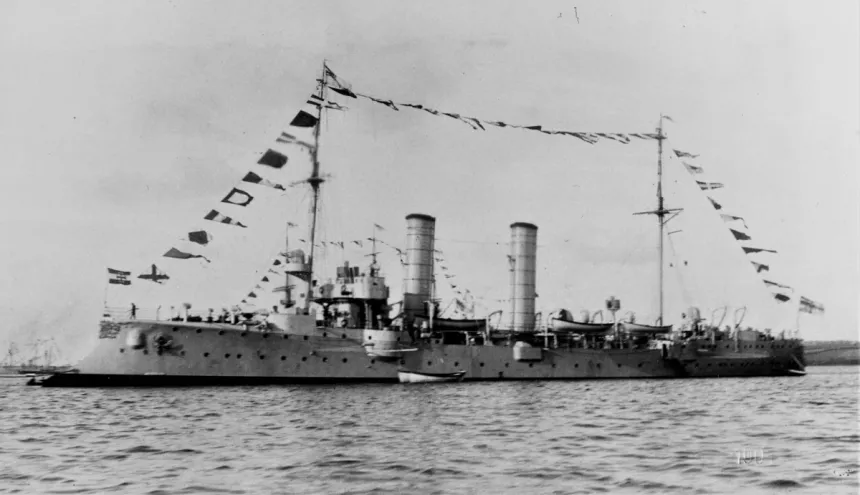
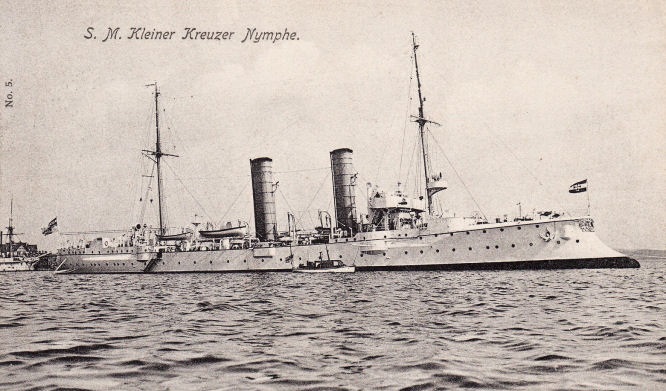
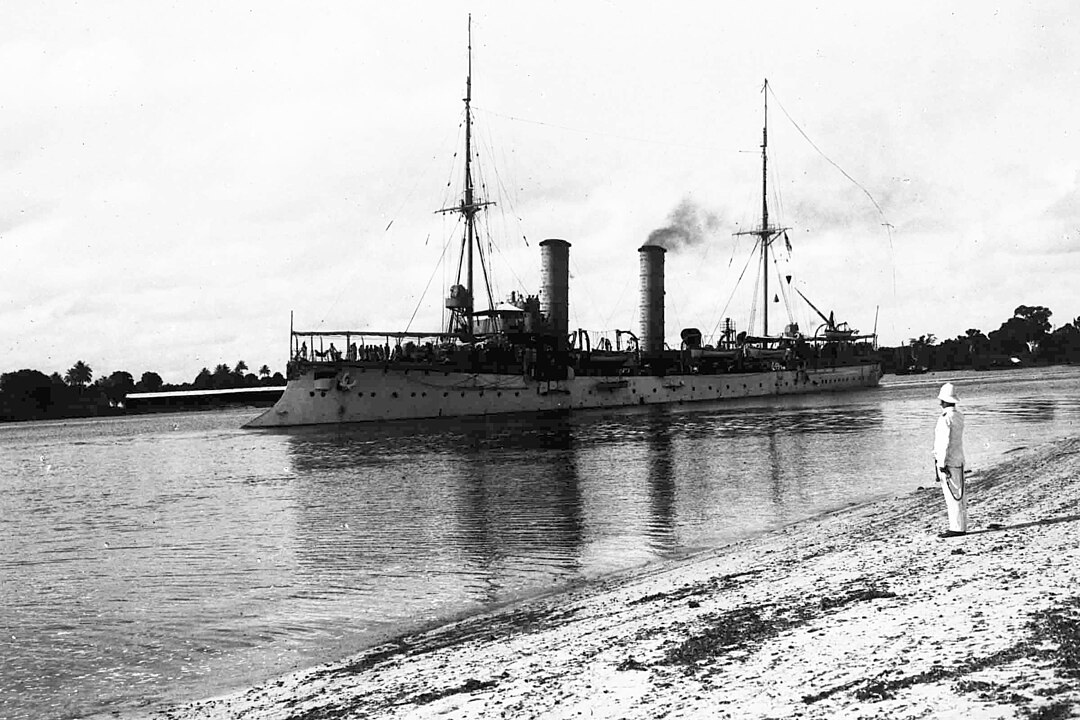
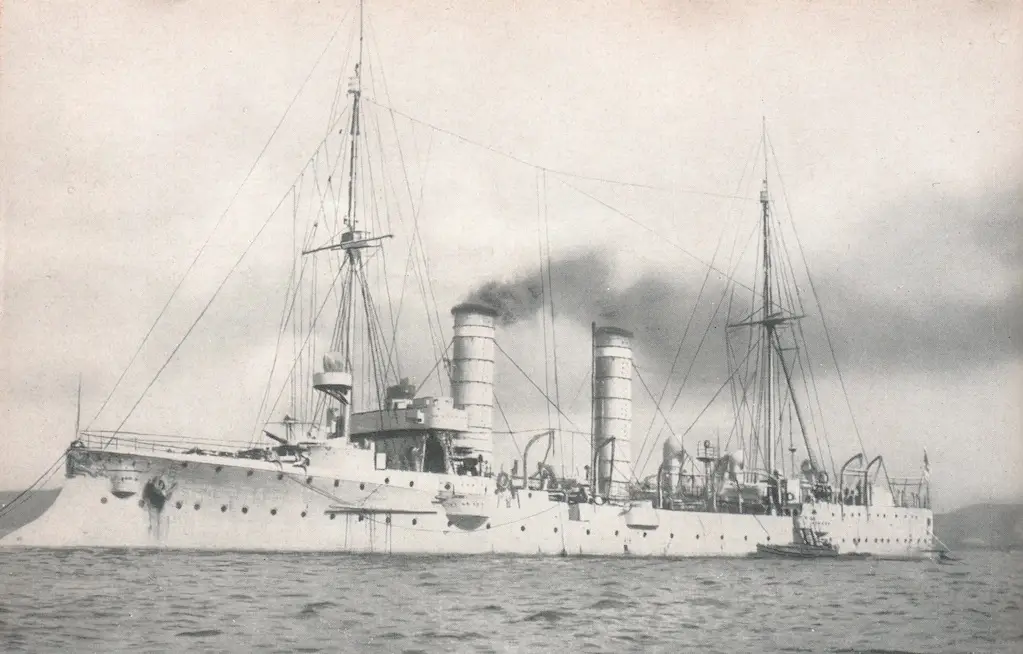
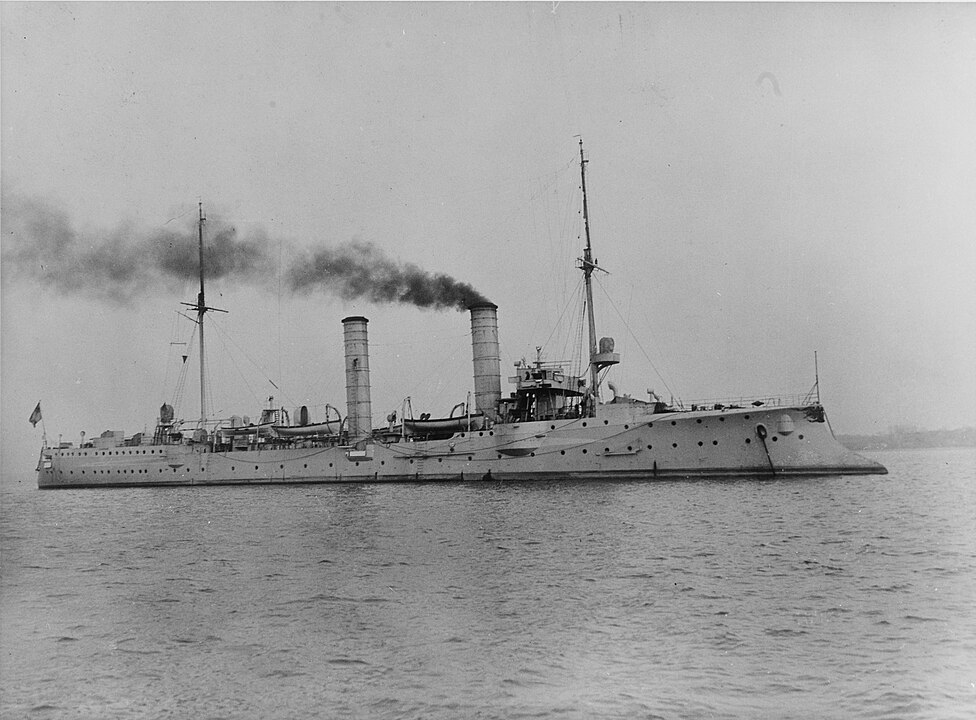
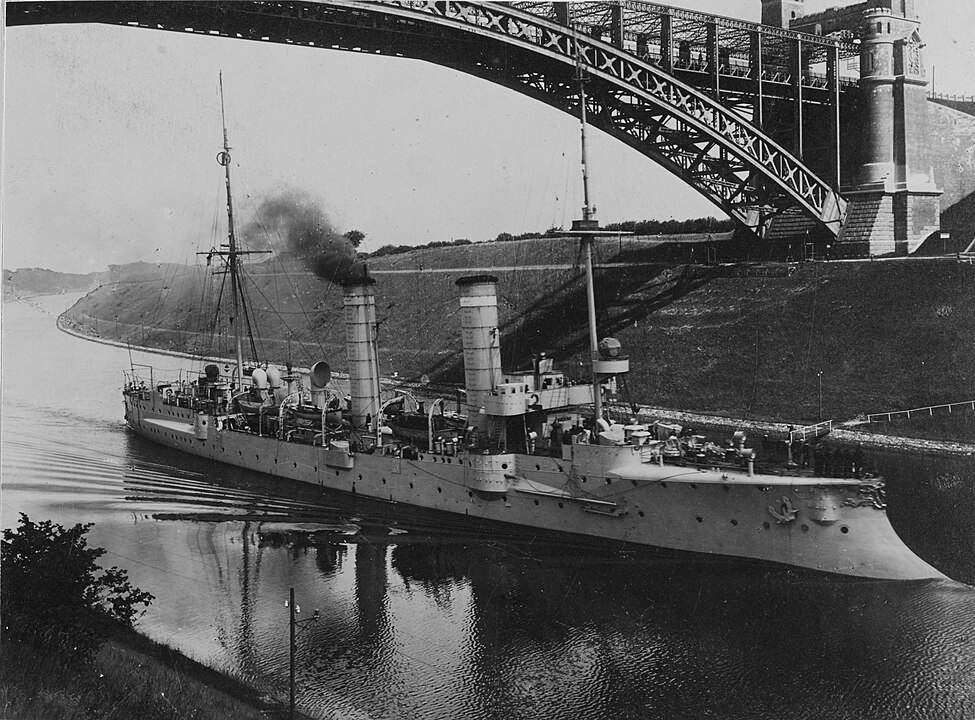
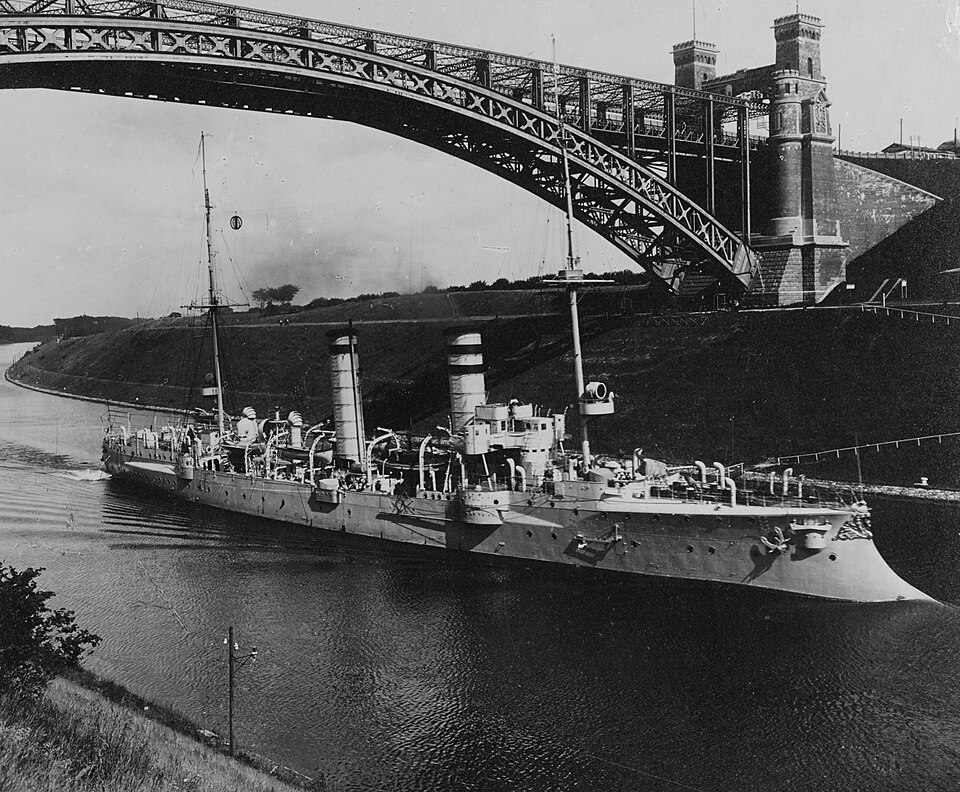
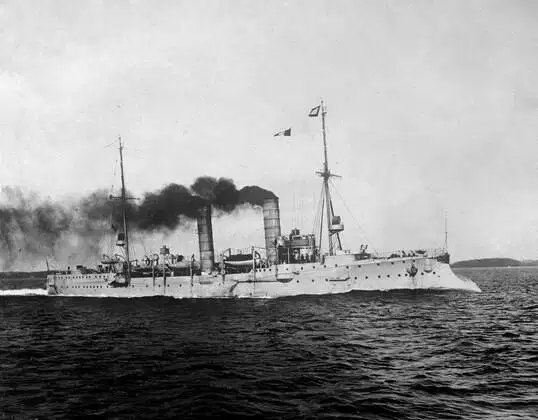
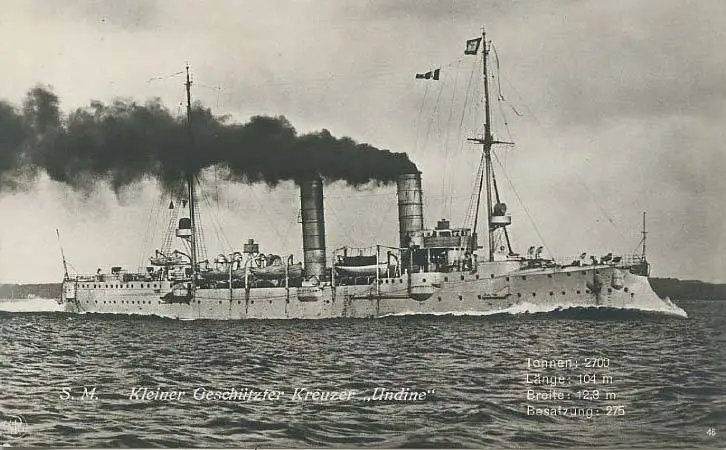
The Gazelle class was a group of ten light cruisers built for the Imperial German Navy at the turn of the 20th century. They were the first modern light cruiser design of the Imperial Navy, and set the basic pattern for all future light cruisers in Imperial service. The design of the Gazelle class attempted to merge the fleet scout with the colonial cruiser.
Name | Class | Commissioned | Decommissioned | Notes |
SMS Gazelle | Gazelle class | 15-06-1901 | 1916 | Scraped in 1920 |
SMS Niobe | Gazelle class | 25-06-1900 | 26-06-1925 | Sold to Yogoslavia |
SMS Nymphe | Gazelle class | 20-09-1900 | 16-04-1924 | Scraped in 1932 |
SMS Thetis | Gazelle class | 14-09-1901 | 30-11-1924 | Scraped in 1930 |
SMS Ariadne | Gazelle class | 18-05-1901 | -- | Sunk at the battle of Helogland Bight |
SMS Amazone | Gazelle class | 15-11-1901 | 31-03-1931 | Scraped in 1954 |
SMS Medusa | Gazelle class | 26-07-1901 | 26-09-1921 | Scuttled on 03-05-1945 |
SMS frauenlob | Gazelle class | 17-02-1903 | -- | Sunk during the battle of Jutland |
SMS Arcona | Gazelle class | 12-05-1903 | February 1920 | Scraped in 1948 |
SMS Undine | Gazelle class | 05-01-1904 | -- | Sunk on 07-11-1915 |
Bremen class
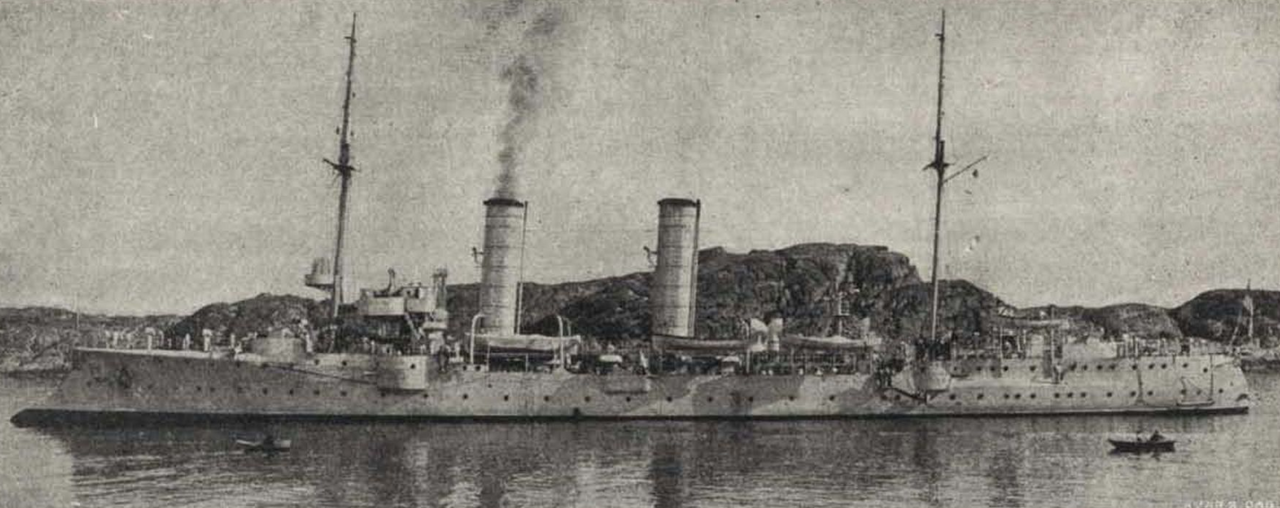
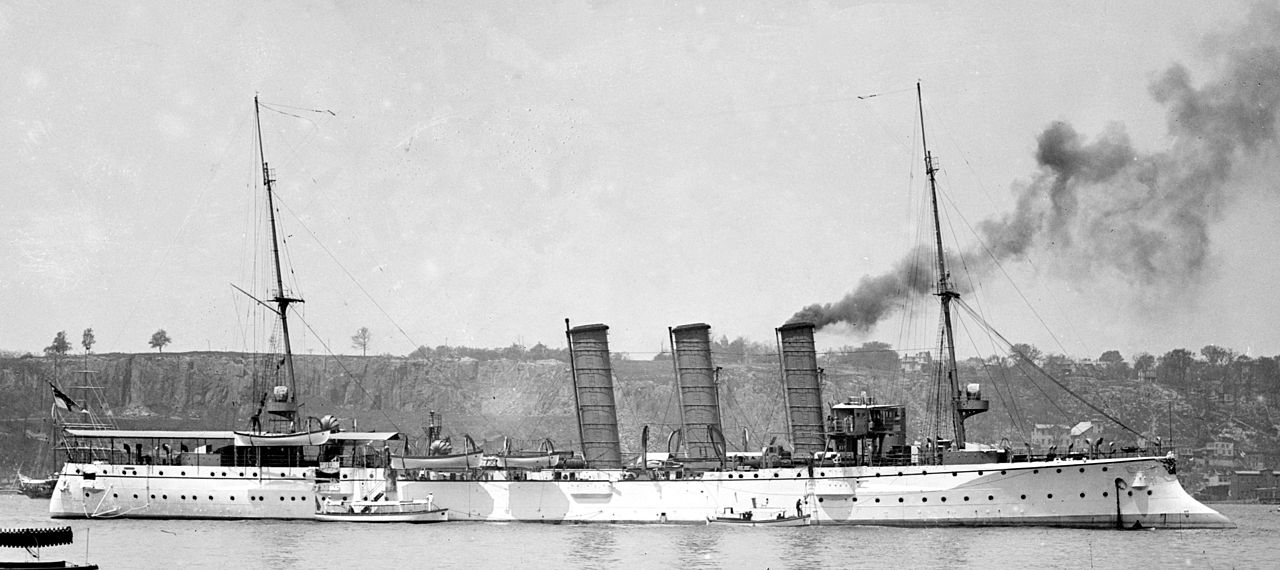
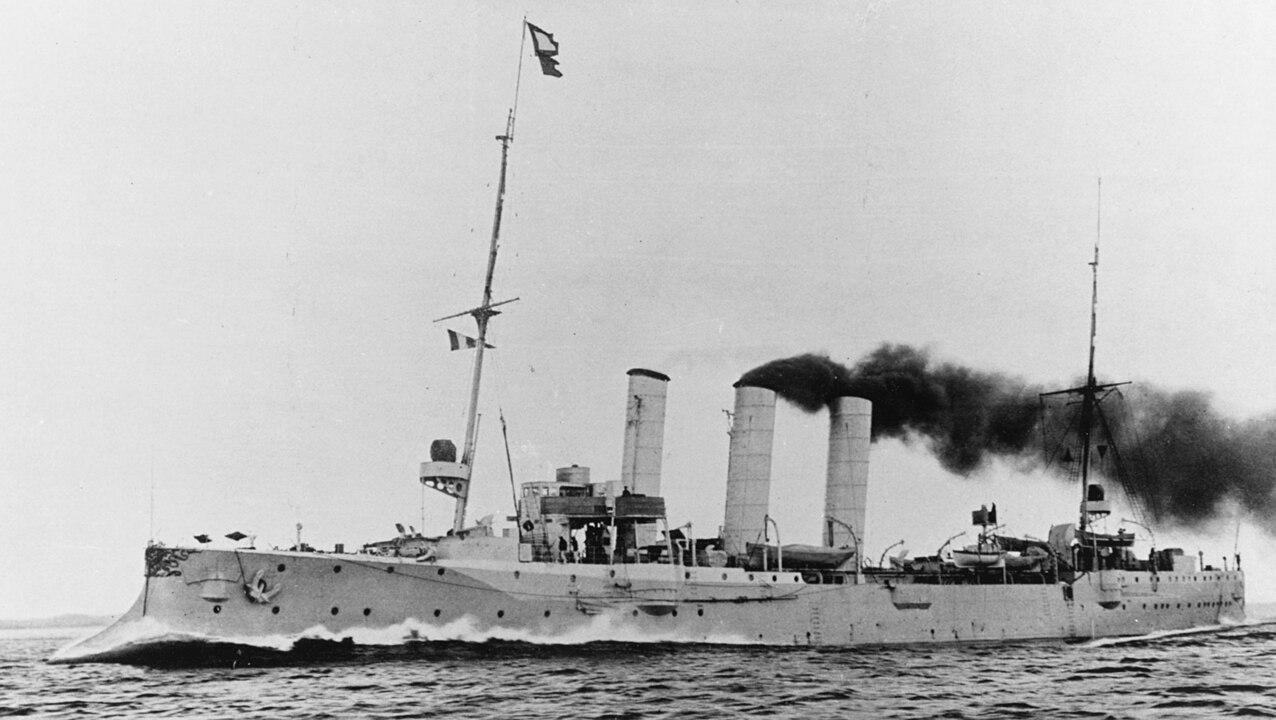
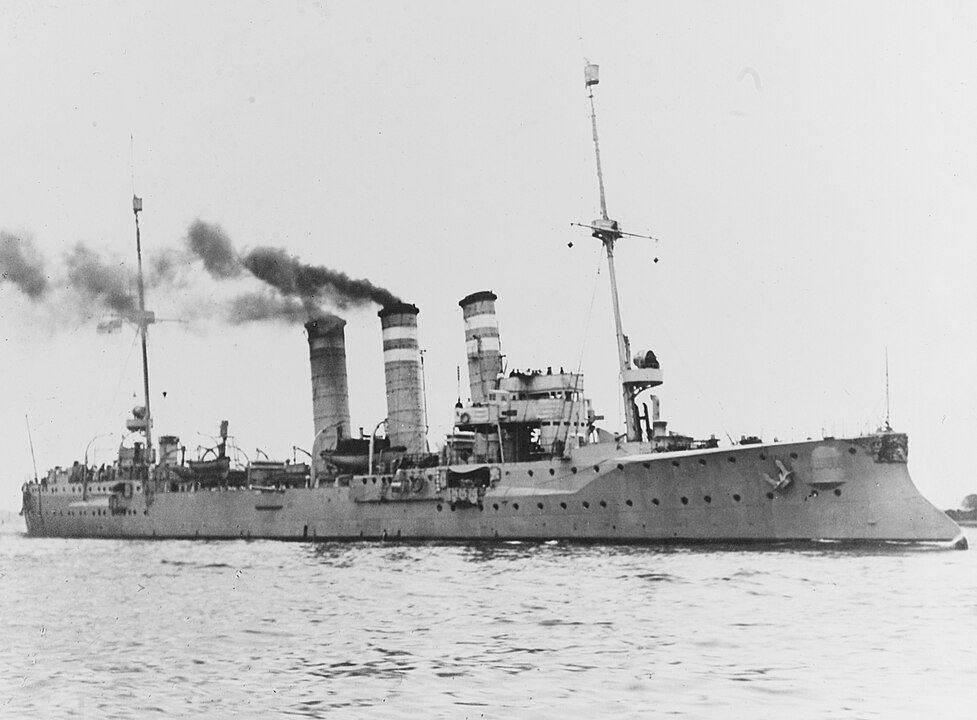
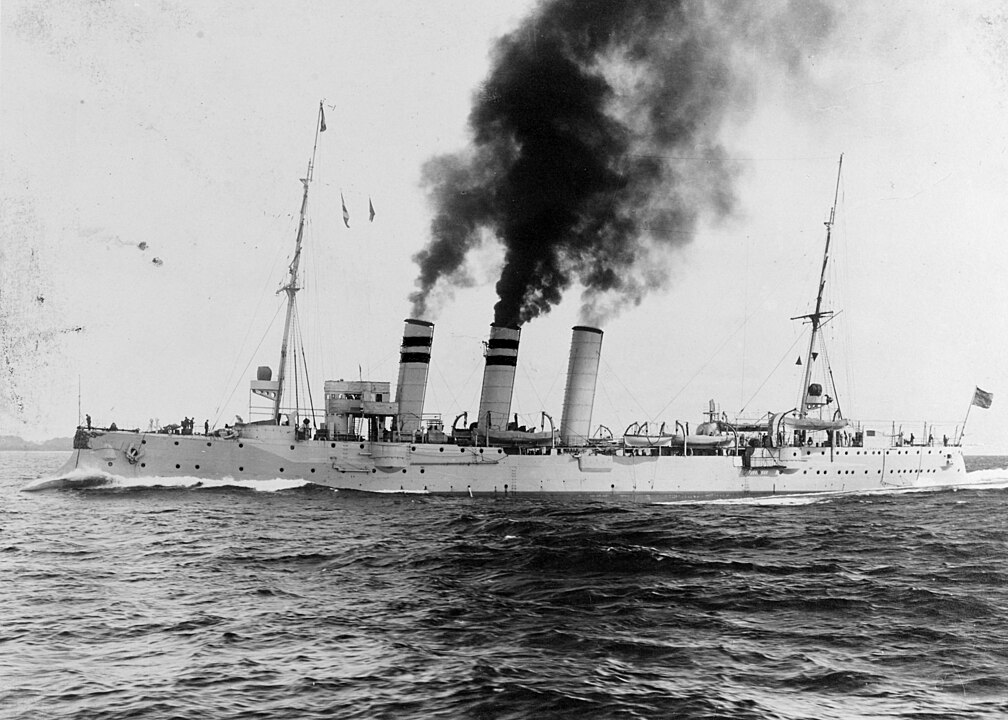
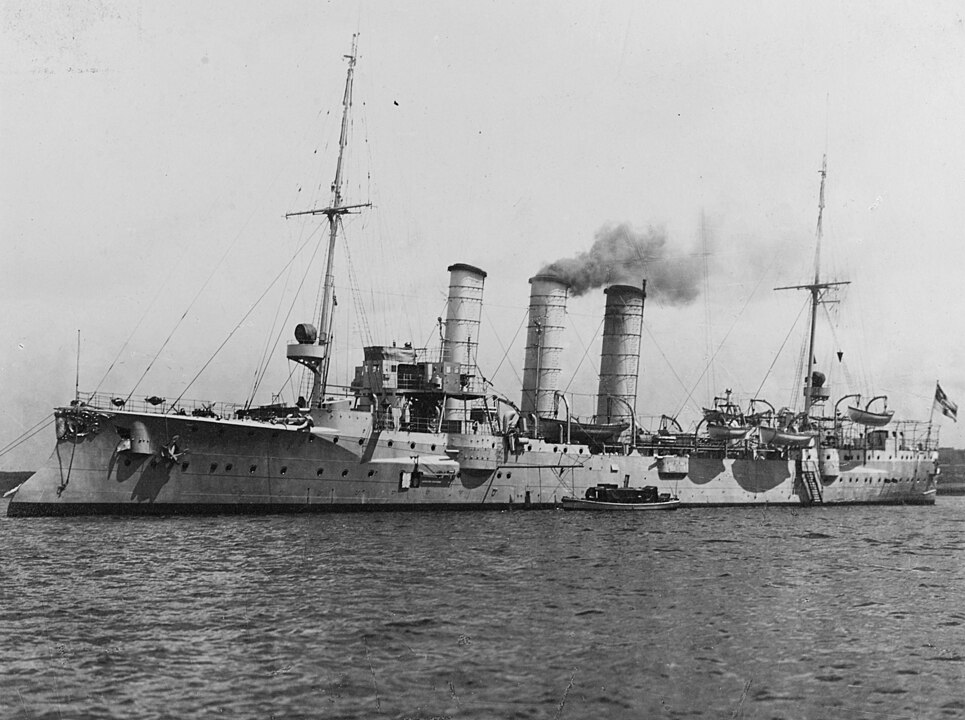
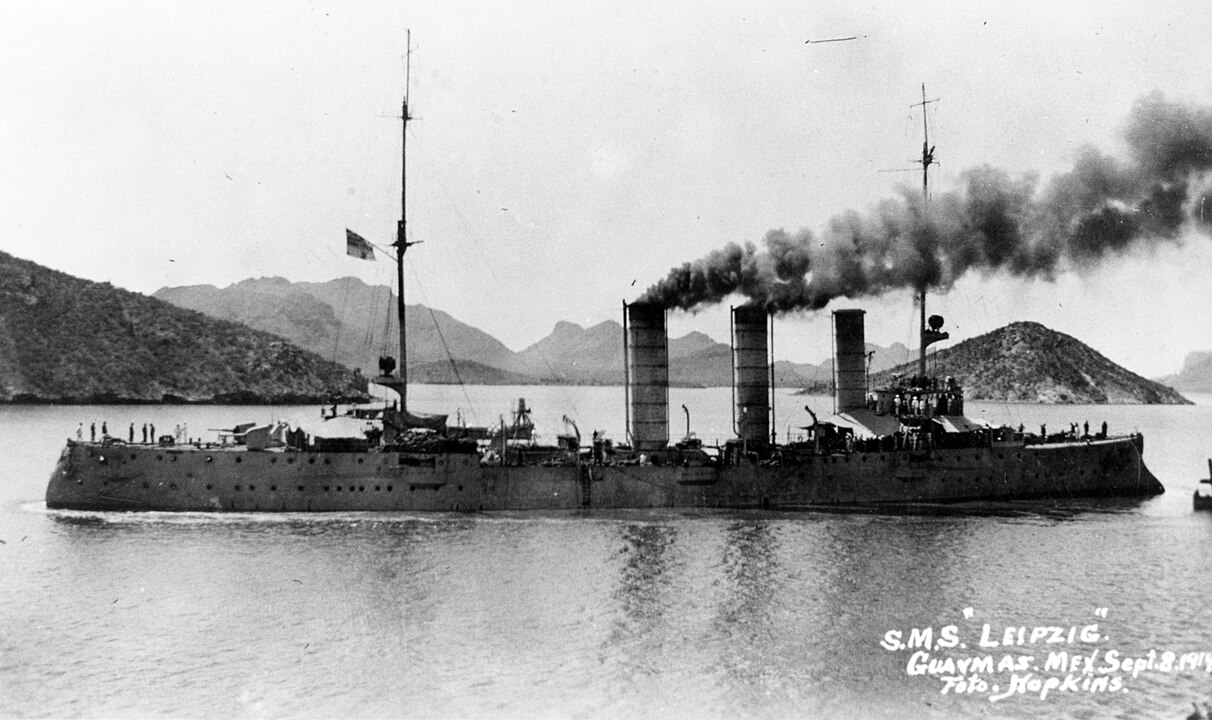
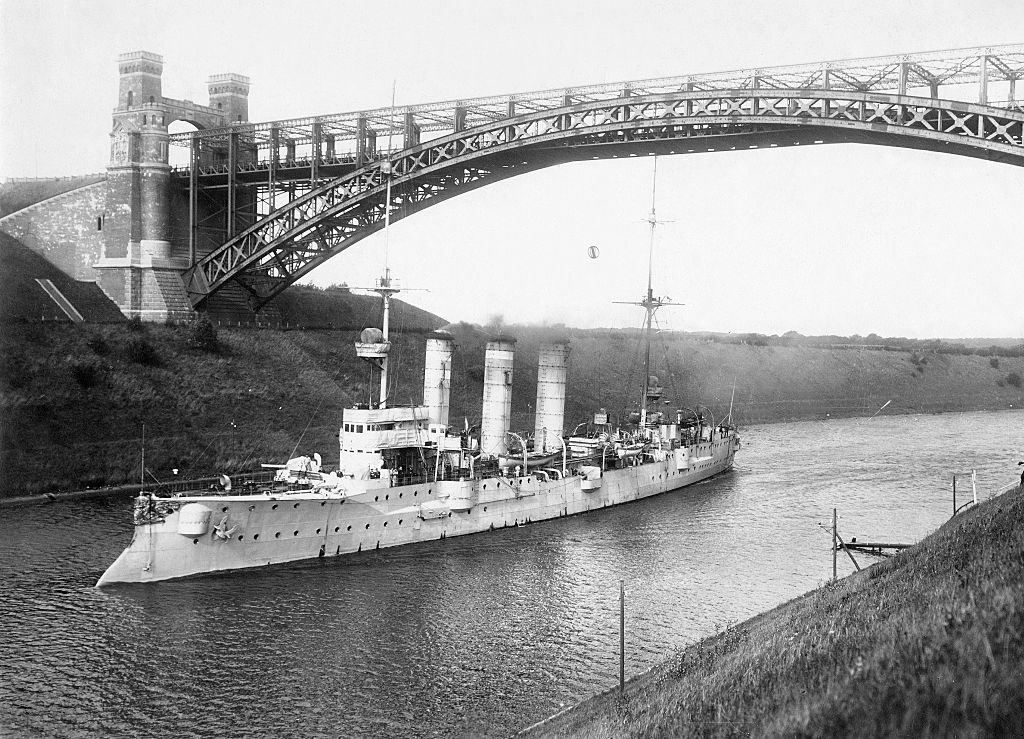
The Bremen class was a group of seven light cruisers built for the Imperial German Navy in the early 1900s. The seven ships were an improvement upon the previous Gazelle class. They were significantly larger than the earlier class, and were faster and better armored. The ships of the Bremen class served in a variety of roles, from overseas cruiser to fleet scout to training ship. Bremen and Leipzig were deployed to the American and Asian stations, respectively, while the other five ships remained in German waters with the High Seas Fleet. Five ships of these class survived the war.
Name | Class | Commissioned | Decommissioned | Notes |
SMS Bremen | Bremen class | 19-05-1904 | -- | Sunk on 17-12-1915 |
SMS Hamburg | Bremen class | 08-03-1904 | 30-06-1927 | Sunk on 27-07-1944, Raised an scraped in 1956 |
SMS Berlin | Bremen class | 04-04-1905 | 27-03-1929 | Scuttled in 1946 |
SMS Lubeck | Bremen class | 26-04-1905 | 05-09-1919 | Scraped 1922 - 1923 |
SMS Munchen | Bremen class | 10-01-1905 | November 1918 | Sunk as target on 28-09-1921 |
SMS Leipzig | Bremen class | 20-04-1906 | -- | Sunk at the battle of the Falkland Islands on 08-12-1914 |
SMS Danzig | Bremen class | 01-12-1907 | 25-03-1918 | Scraped 1922 - 1923 |
Königsberg class (1905)
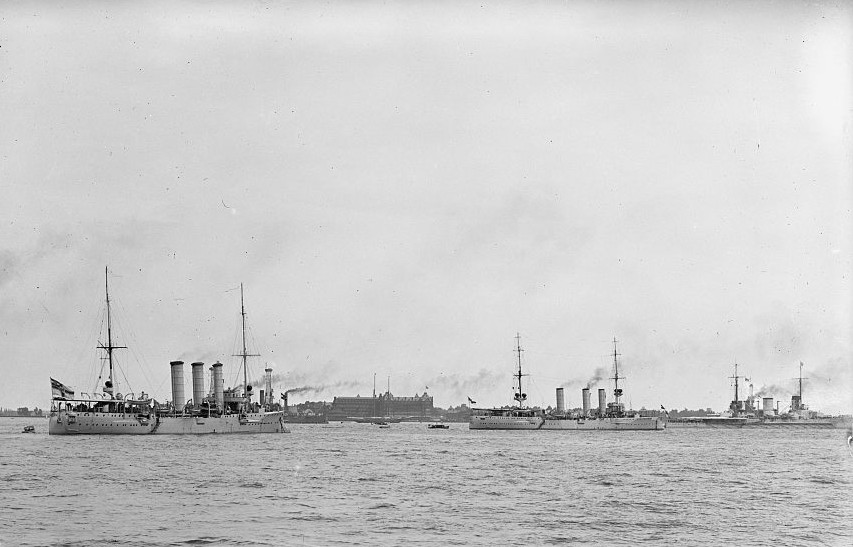
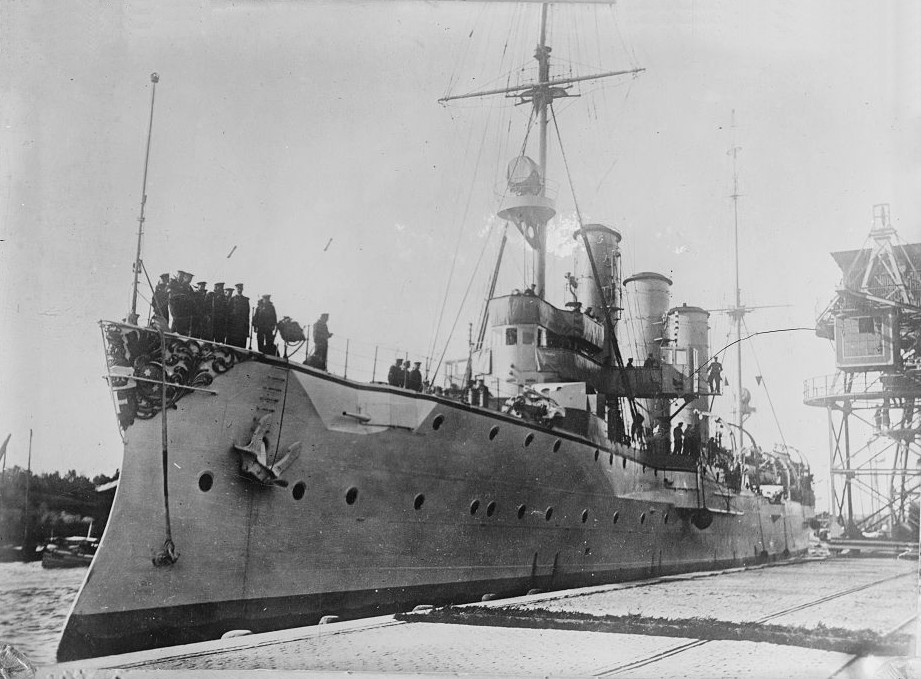
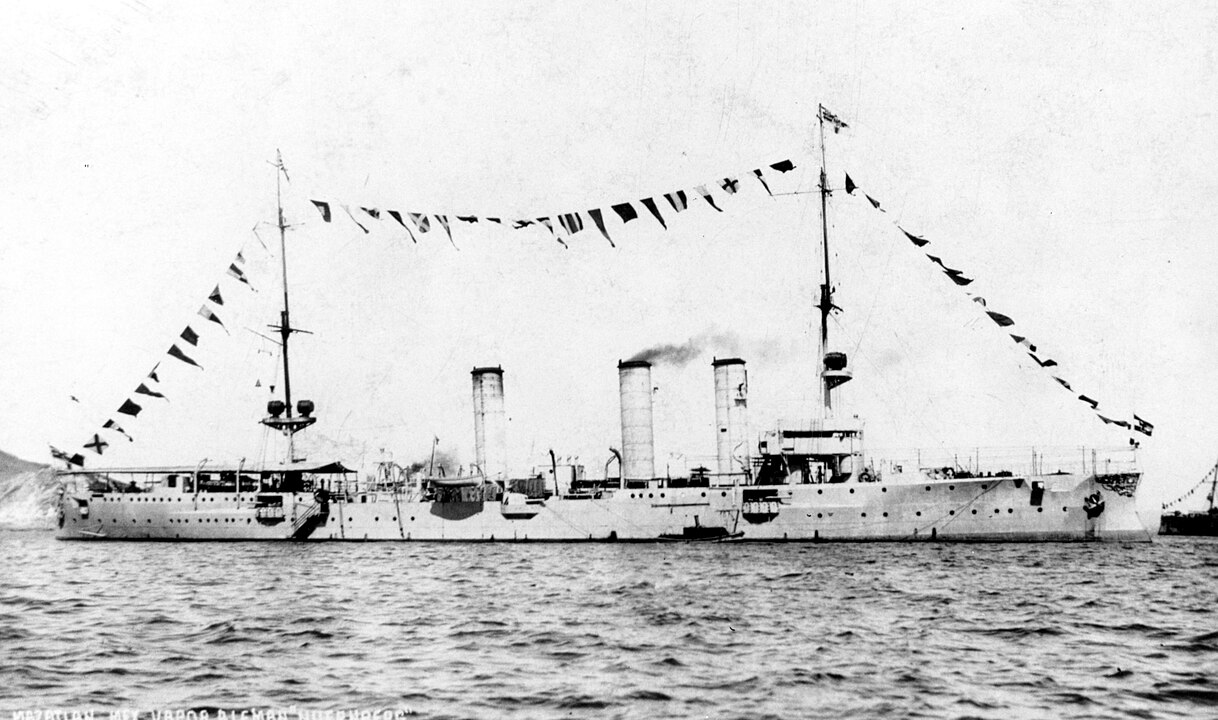
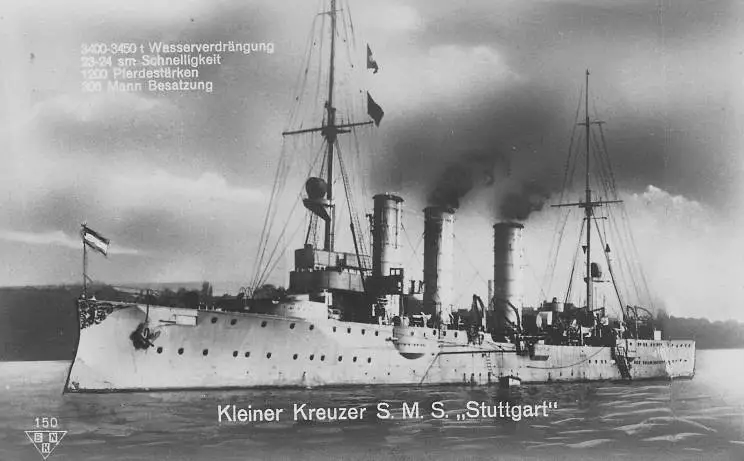
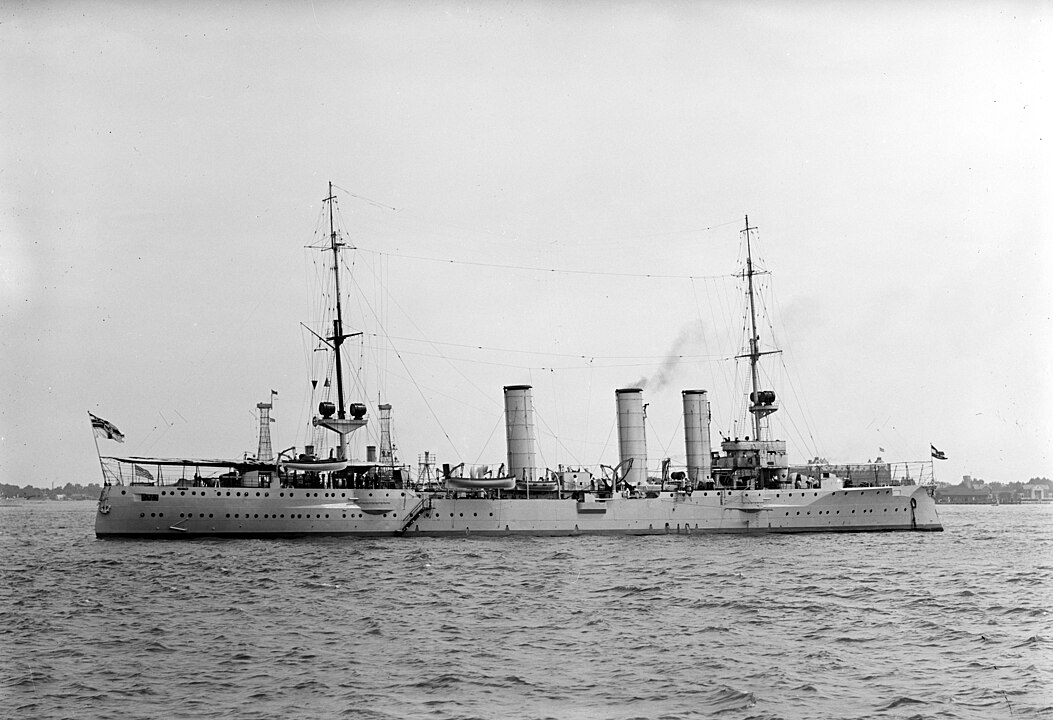
The Königsberg class was a group of four light cruisers built for the German Imperial Navy. The class comprised four vessels. The ships were an improvement on the preceding Bremen class, being slightly larger and faster, and mounting the same armament. The four ships saw extensive service during World War I. Two ships were withdrawn from service later in the war, Stettin to serve as a training ship, and Stuttgart to be converted into a seaplane tender in 1918. They both survived the war, and were surrendered to Britain as war prizes; they were dismantled in the early 1920s.
Name | Class | Commissioned | Decommissioned | Notes |
SMS Königsberg | Königsberg class | 06-04-1907 | -- | Scuttled on 11-07-1915 |
SMS Nurnberg | Königsberg class | 10-04-1908 | -- | Sunk at the battle of the Falkland Islands on 08-12-1914 |
SMS Stuttgart | Königsberg class | 01-02-1908 | 17-12-1918 | Surrended to brittain in 1920, scraped |
SMS Stettin | Königsberg class | 29-10-1907 | -- | Ceded to brittain 1920, scraped 1921 - 1923 |
Dresden class
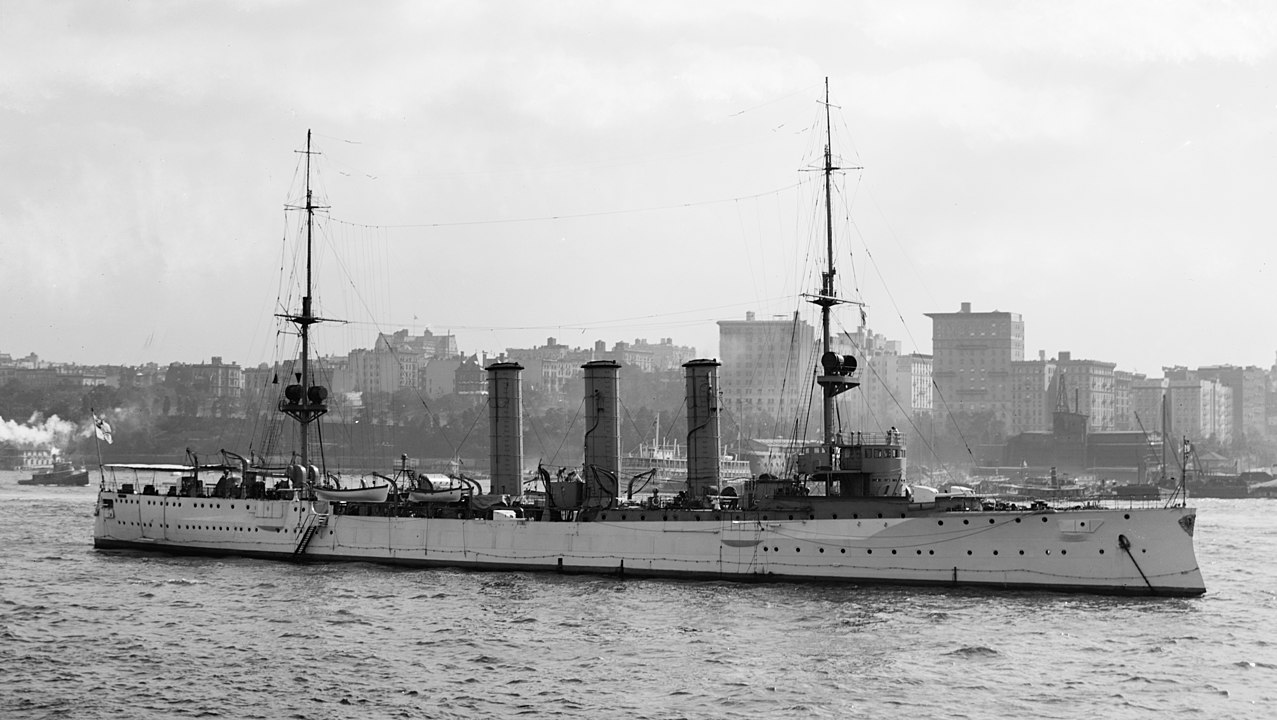
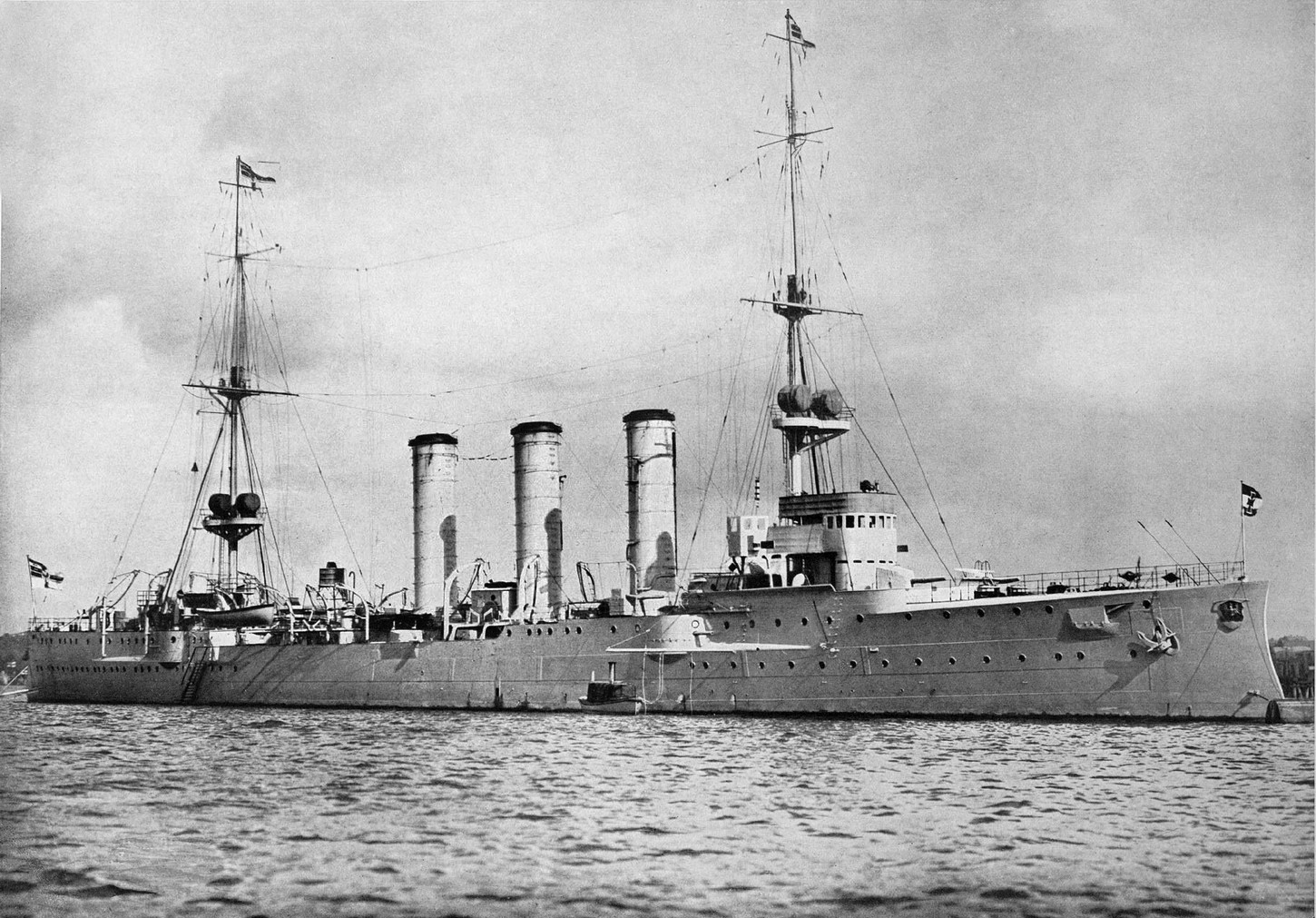
The Dresden class was a pair of light cruisers built for the Imperial German Navy in the early part of the 20th century. The class comprised SMS Dresden, the lead ship, and SMS Emden. The design for the ships was an incremental improvement over the
preceding Königsberg class, being slightly larger and slightly faster, but with the same primary armament. Dresden and Emden were powered by steam turbines and triple expansion engines, respectively, as part of continued experiments with the new turbine technology.
Name | Class | Commissioned | Decommissioned | Notes |
SMS Dresden | Dresden class | 14-11-1908 | -- | Scuttled off Robinson Crusoe Island on 14-03-1915 |
SMS Emden | Dresden class | 10-07-1909 | -- | Disabled by HMAS Sydney on 09-11-1914 |
Kolberg class
The Kolberg class was a group of four light cruisers built for the German Imperial Navy and used during the First World War. The class comprised four vessels. The ships were built between 1908 and 1910, and two, Kolberg and Augsburg, were modernized in 1916–1917. The first three ships were assigned to the reconnaissance forces of the High Seas Fleet; Augsburg was instead used as a torpedo and gunnery training ship. At the outbreak of war in August 1914, Mainz and Cöln were both sunk in the battle of Helgoland. Both othe two ships survived the war; Kolberg was ceded to France, where she was renamed Colmar and served in the French Navy until 1927. Augsburg was surrendered to Japan and was then sold for scrap.
Name | Class | Commissioned | Decommissioned | Notes |
SMS Kolberg | Kolberg class | 21-06-1910 | -- | Scraped in 1929 |
SMS Mainz | Kolberg class | 01-10-1909 | -- | Sunk during the battle of Heligoland Bight on 28-08-1914 |
SMS Coln | Kolberg class | 16-06-1911 | -- | Sunk during the battle of Heligoland Bight on 28-08-1914 |
SMS Augsburg | Kolberg class | 01-10-1910 | 17-12-1918 | Scraped in 1922 |
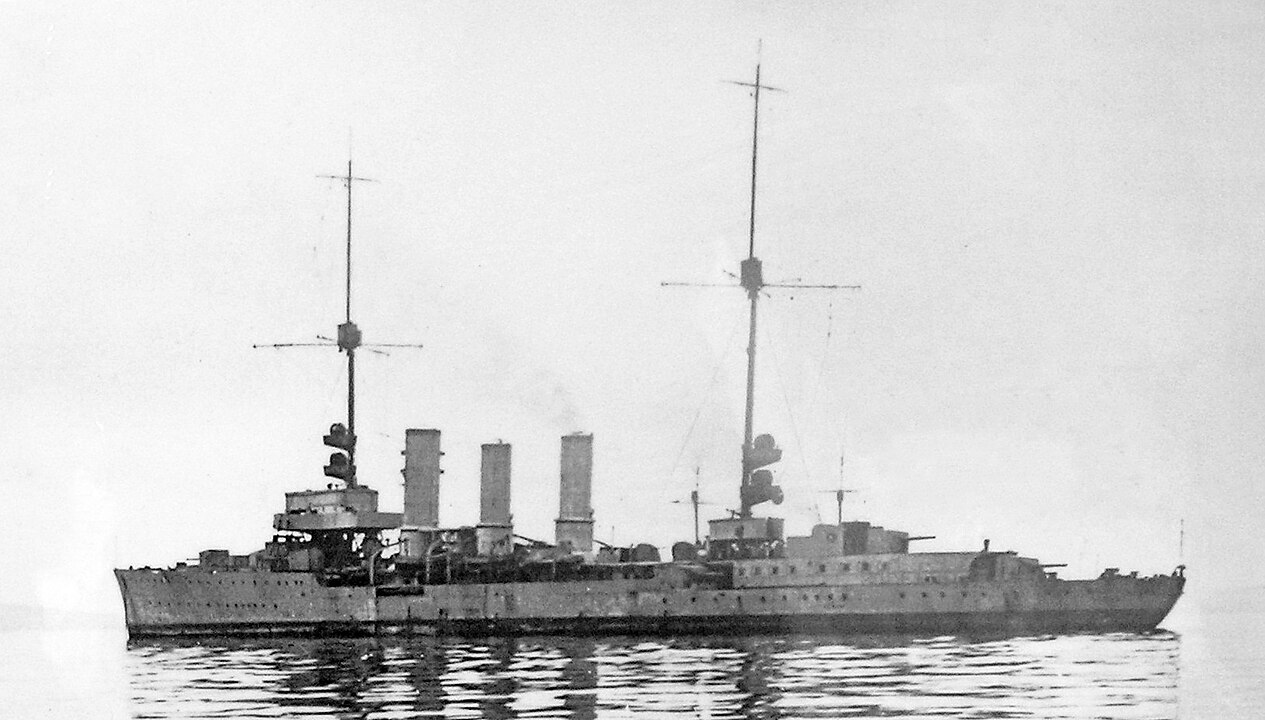
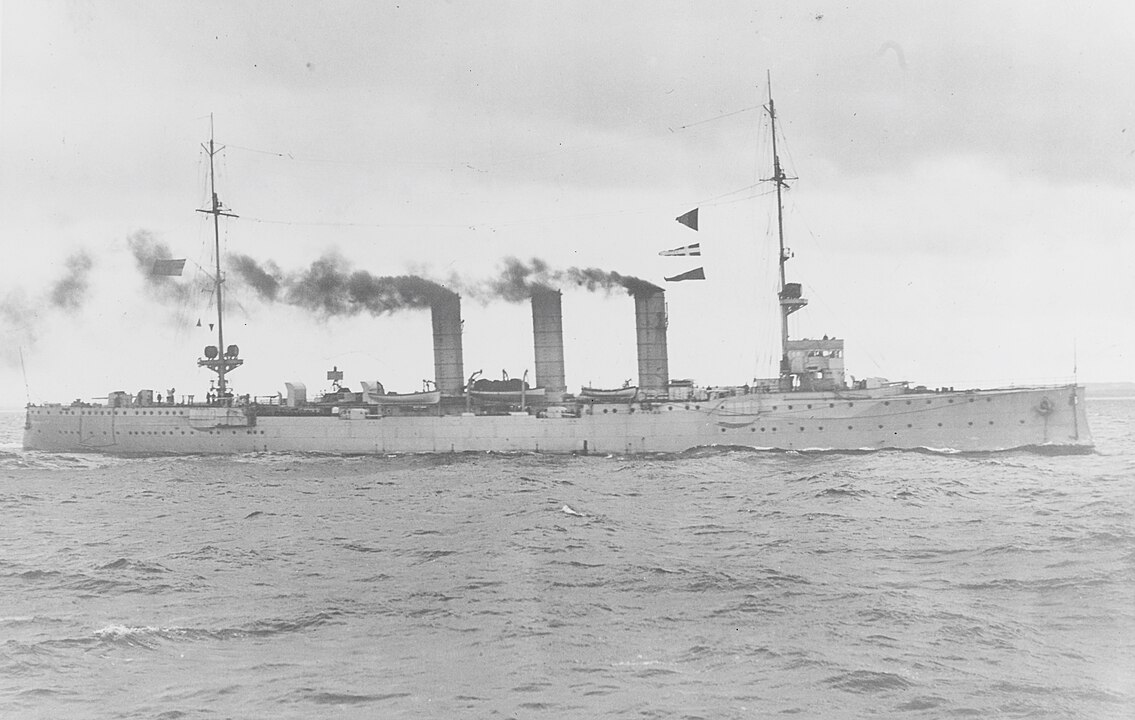
Magdeburg class
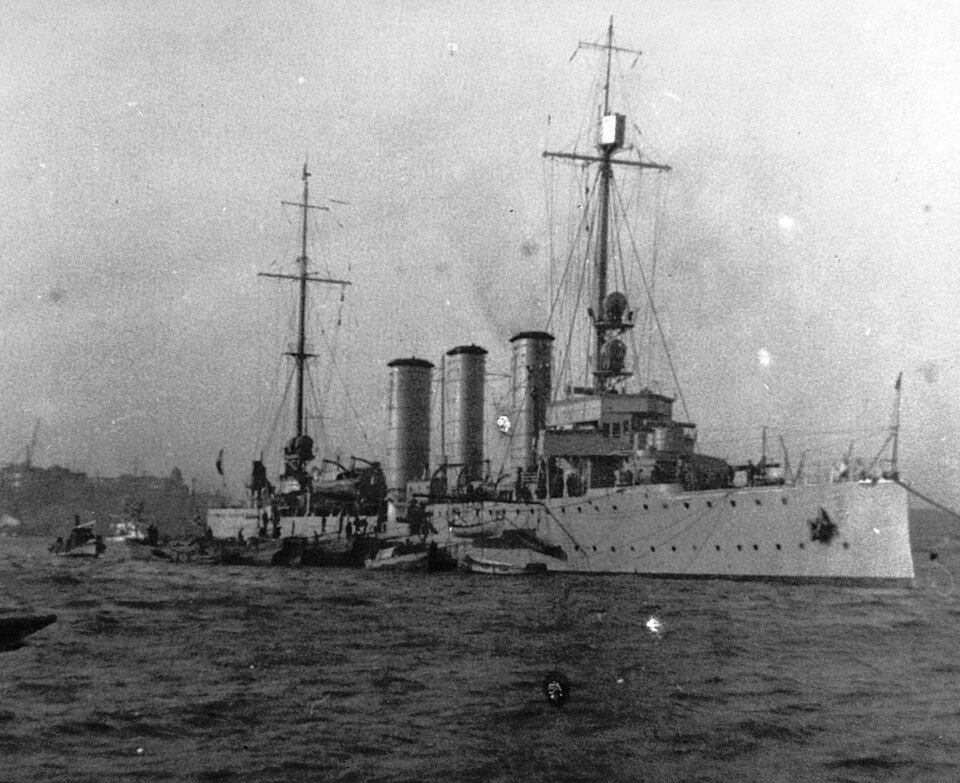
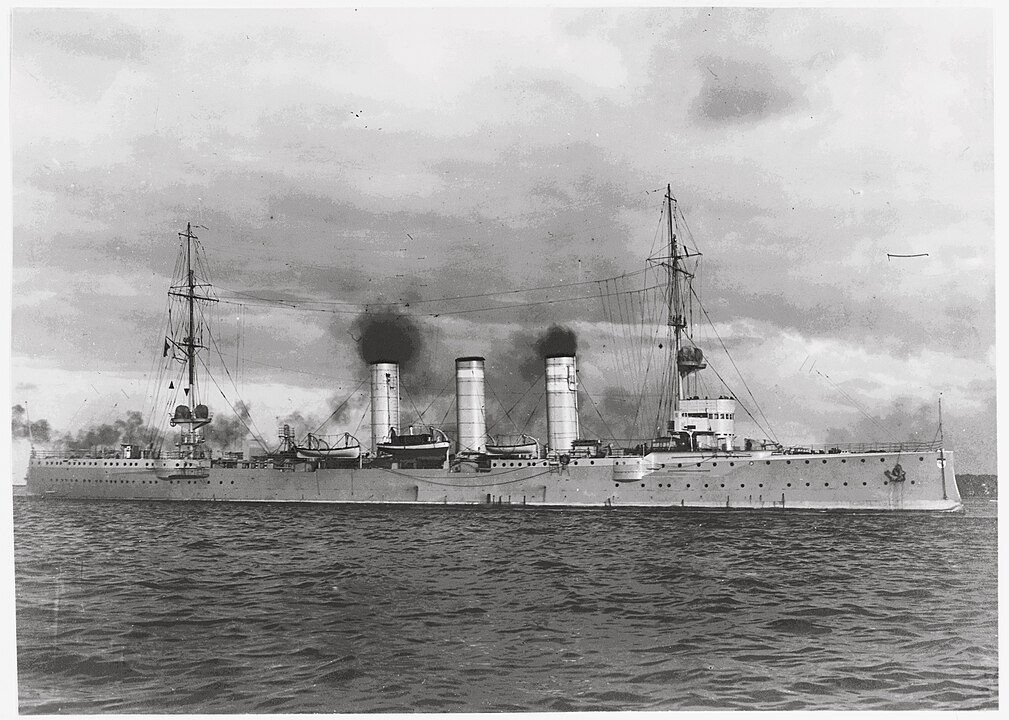
The Magdeburg class of light cruisers was a group of four ships built for the Imperial German Navy. All four ships were laid down in 1910 and were completed by the end of 1912. Magdeburg was used as a torpedo test ship before the outbreak of World War I in August 1914, after which she was assigned to the Baltic. She conducted a series of raids on Russian positions culminating in a sweep into the Gulf of Finland that resulted in her grounding off the Estonian coast. Russian cruisers seized the stranded ship and captured code books; they gave one copy to the British Royal Navy, which used it to great advantage.
Name | Class | Commissioned | Decommissioned | Notes |
SMS Magdeburg | Magdeburg class | 20-05-1911 | -- | Wrecked on 26-08-1914 in the Gulf of Finland |
SMS Breslau | Magdeburg class | 10-05-1912 | -- | Transfered to the Ottoman Empire 16-08-1914 |
SMS Strassburg | Magdeburg class | 01-10-1912 | 14-06-1920 | Ceded by Italy in 1920 |
SMS Stralsund | Magdeburg class | 10-12-1912 | 17-12-1918 | Ceded to France in 1920 |
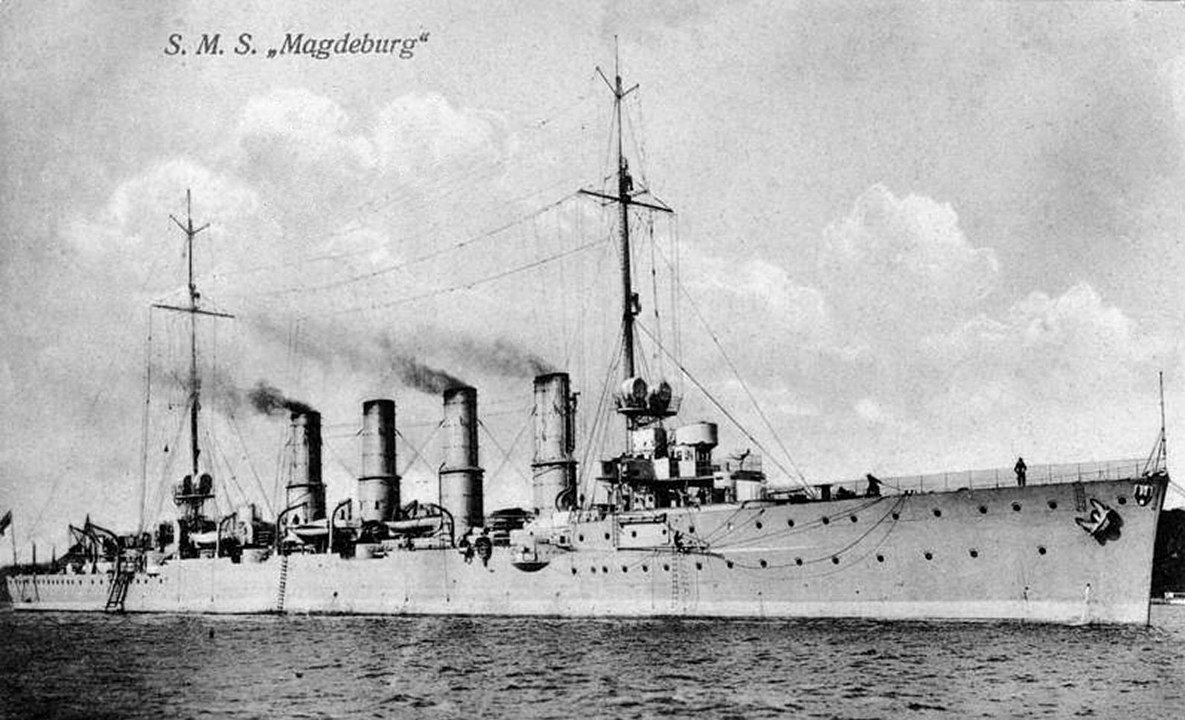
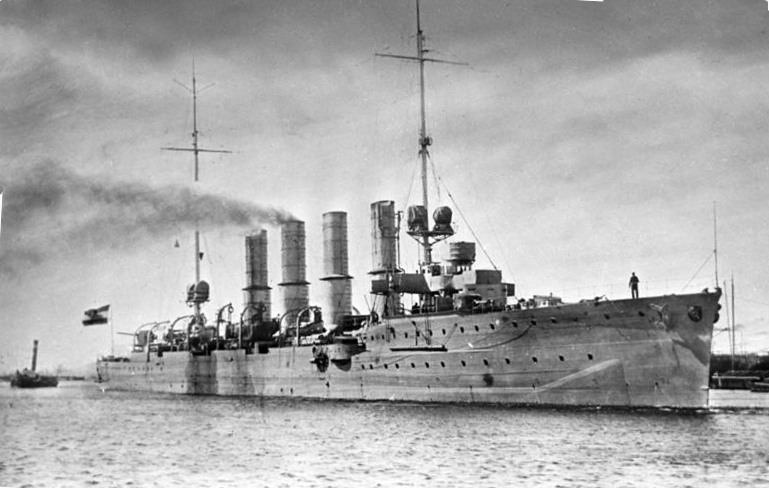
Karlsruhe class
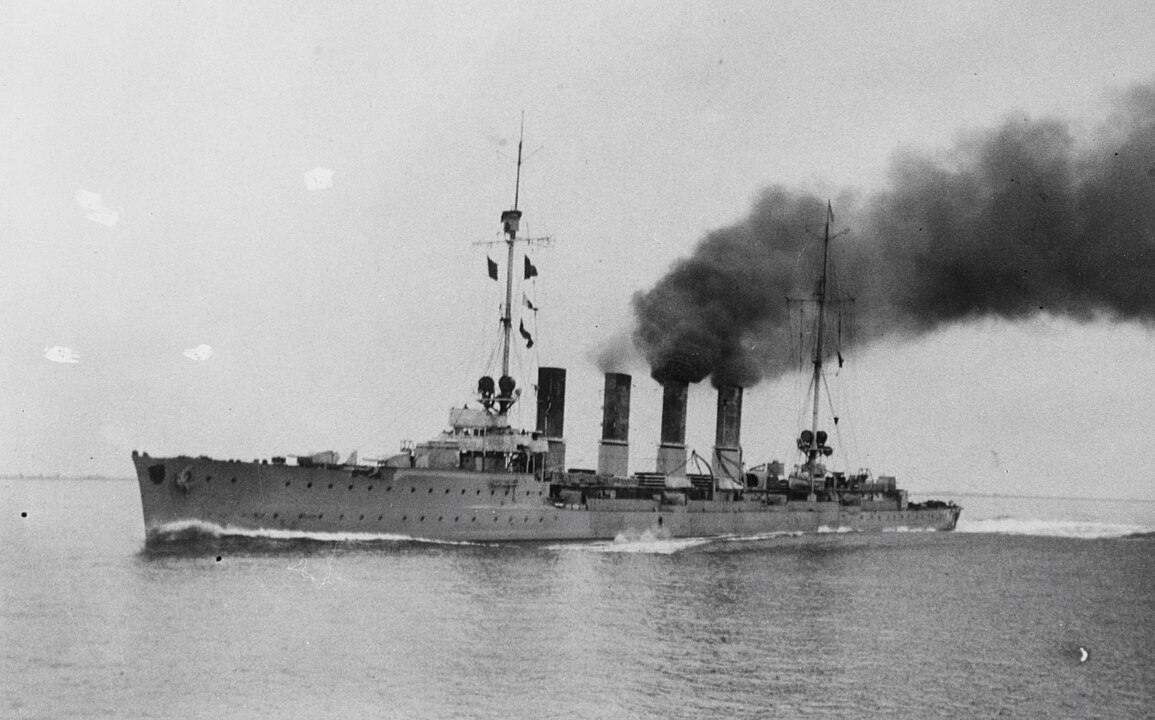
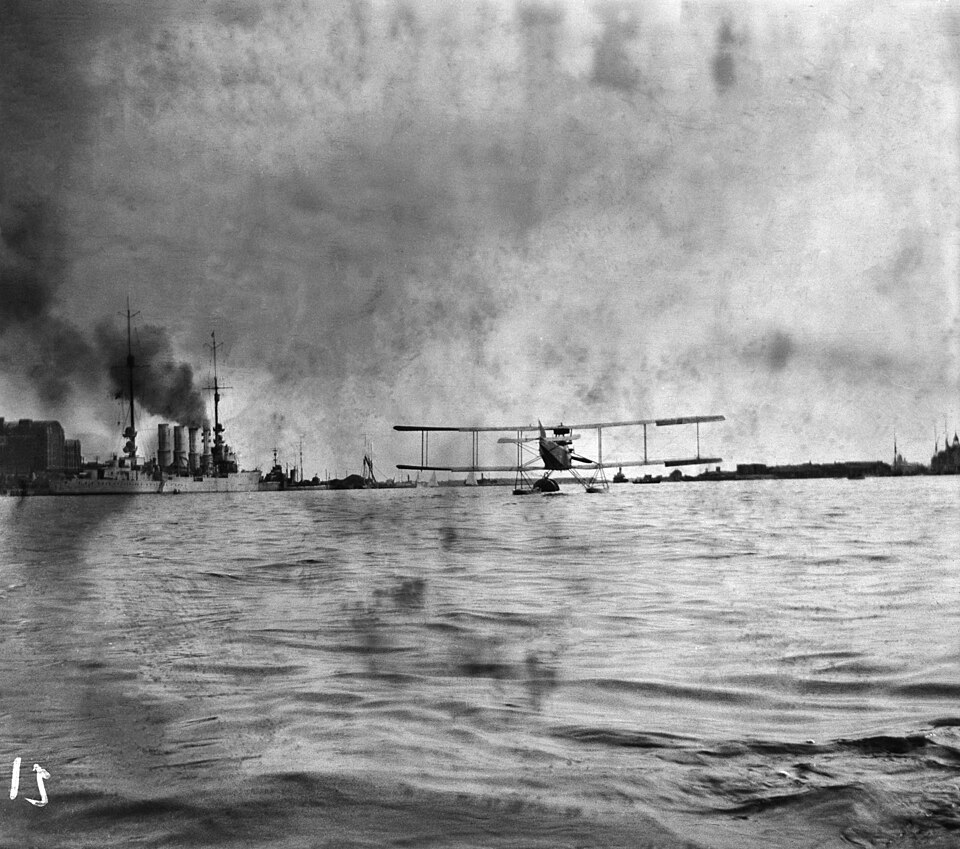
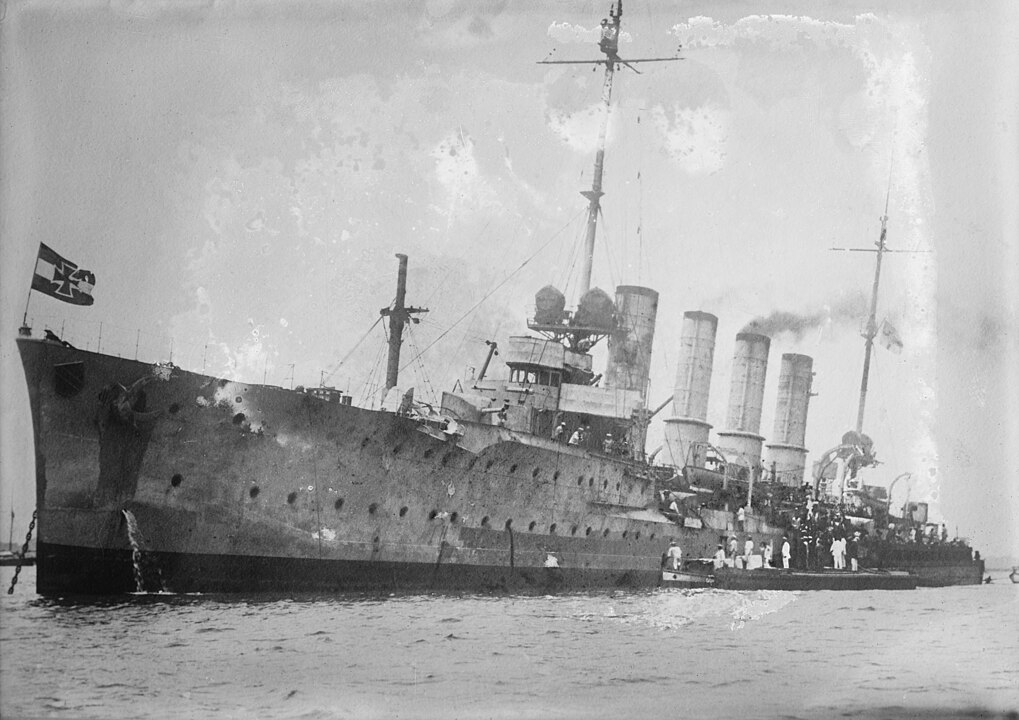
The Karlsruhe class of light cruisers was a pair of two ships built for the German Imperial Navy before the start of World War I. The ships SMS Karlsruhe and Rostock were very similar to the previous Magdeburg-class cruisers, mounting the same armament and similar armor protection, though they were larger and faster than the earlier ships.
Name | Class | Commissioned | Decommissioned | Notes |
SMS Karlsruhe | Karlsruhe class | 15-01-1914 | -- | Sunk on 01-11-1914 |
SMS Rostock | Karlsruhe class | 04-02-1914 | -- | Sunk at he battle of Jutland on 01-06-1916 |
Graudenz class
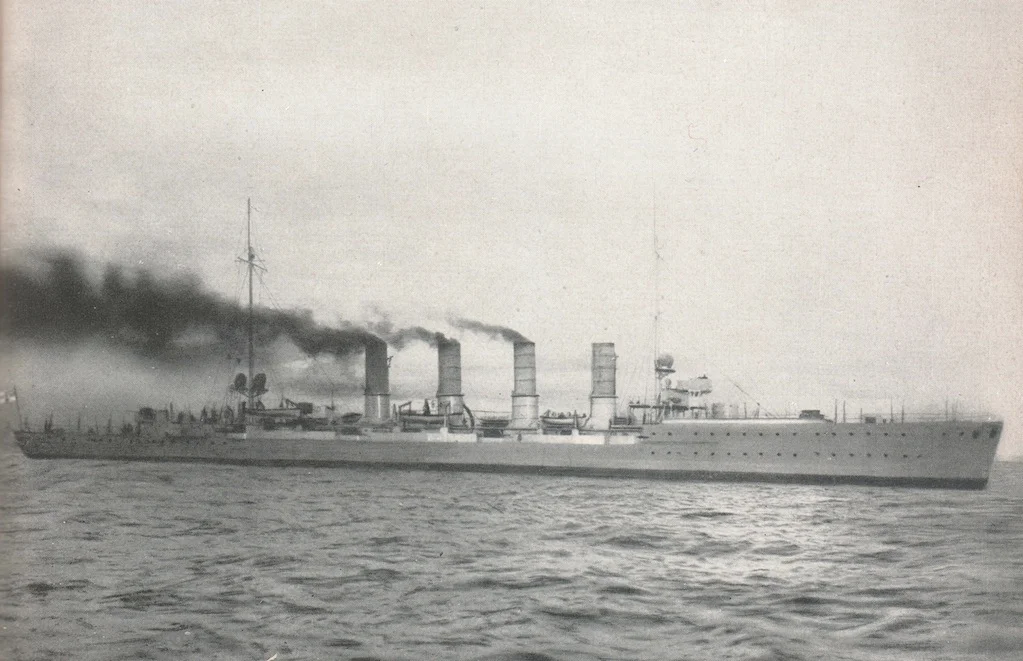
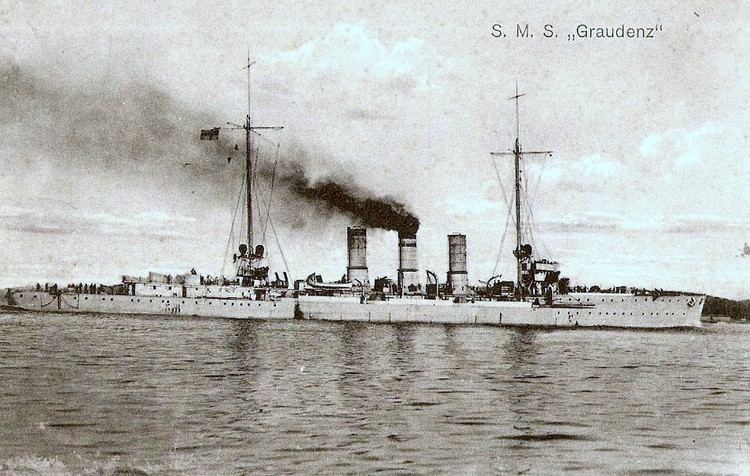
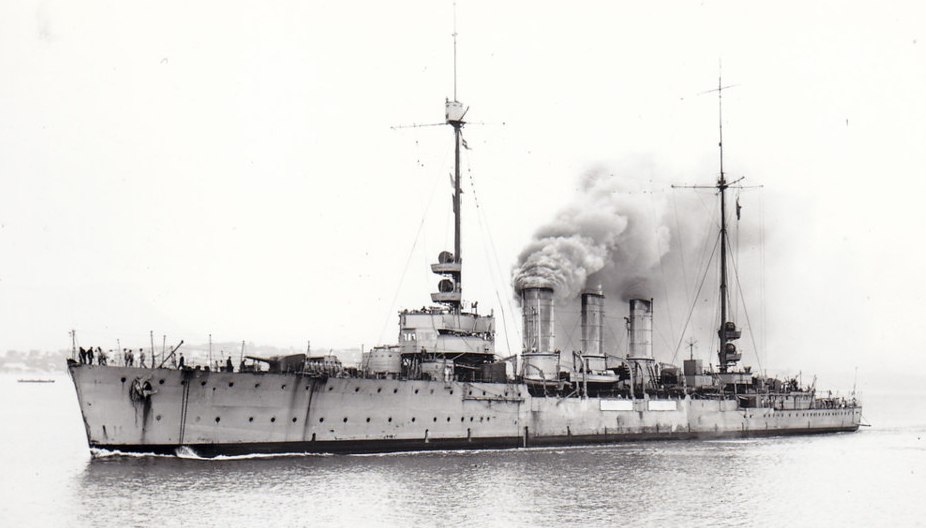
The Graudenz class of light cruisers was a class of two ships built for the Imperial German Navy. The class comprised SMS Graudenz and SMS Regensburg. Both ships saw extensive service during World War I, primarily in the reconnaissance forces of the High Seas Fleet. After the war Graudenz was ceded to Italy and served as Ancona until 1937, when she was sold for scrap. Regensburg was transferred to France, where she served as Strasbourg until 1936, when she was converted into a barracks ship.
Name | Class | Commissioned | Decommissioned | Notes |
SMS Graudenz | Graudenz class | 10-08-1914 | 10-03-1920 | Ceded to Italy in 1920 |
SMS Regensburg | Graudenz class | 03-01-1915 | 24-01-1920 | Ceded to France |
Pillau class
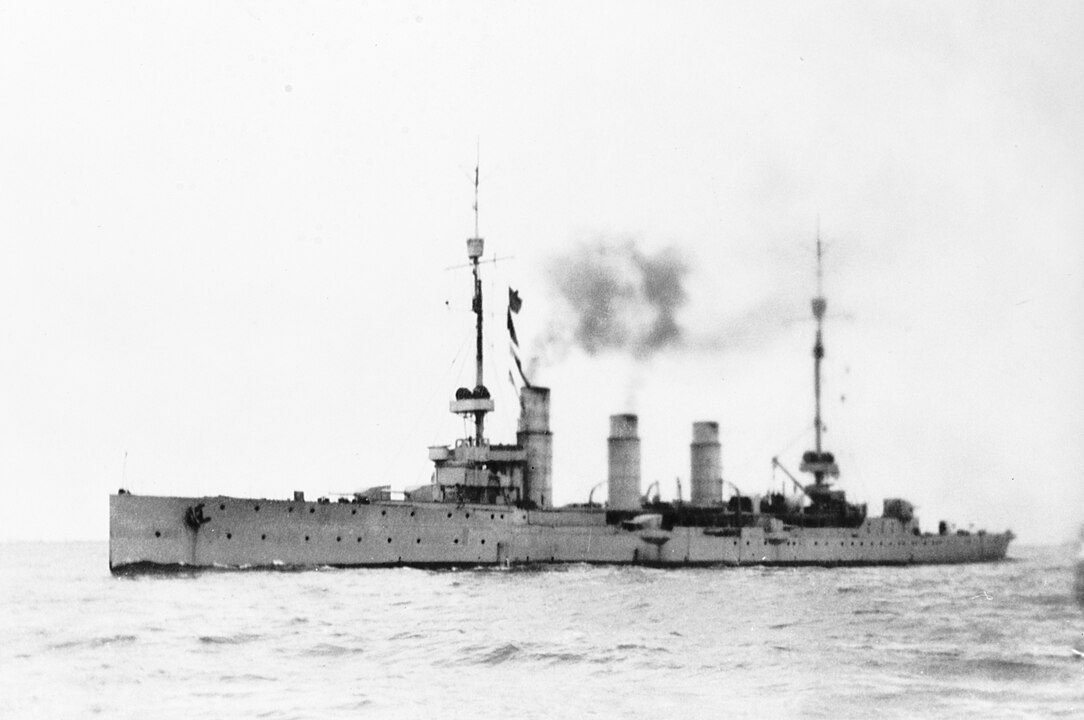
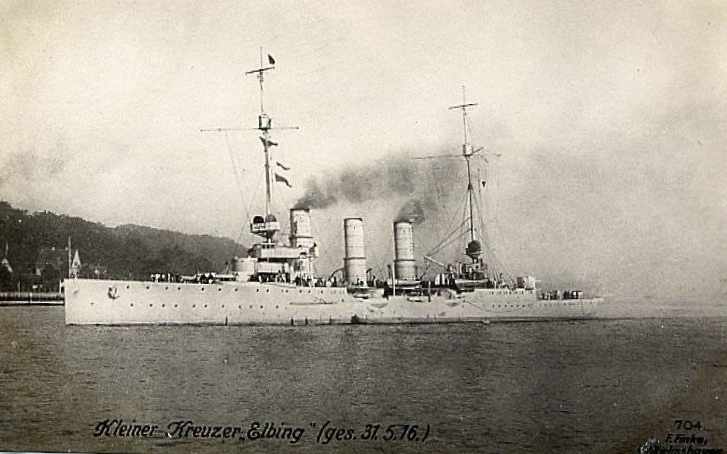
The Pillau class of light cruisers was a pair of ships built in Germany just before the start of World War I. The class consisted of SMS Pillau and Elbing. The ships were initially ordered for the Imperial Russian Navy in 1912. After the outbreak of World War I, however, the German Kaiserliche Marine (Imperial Navy) confiscated the ships before they were completed. The
ships were similar in design to other German light cruisers.
Name | Class | Commissioned | Decommissioned | Notes |
SMS Pillau | Pillau class | 14-12-1914 | 31-03-1919 | Ceded to Italy on 20-071920 |
SMS Elbing | Pillau class | 04-09-1915 | -- | Scuttled at the battle of Jutland on 01-06-1916 |
Wiesbaden class
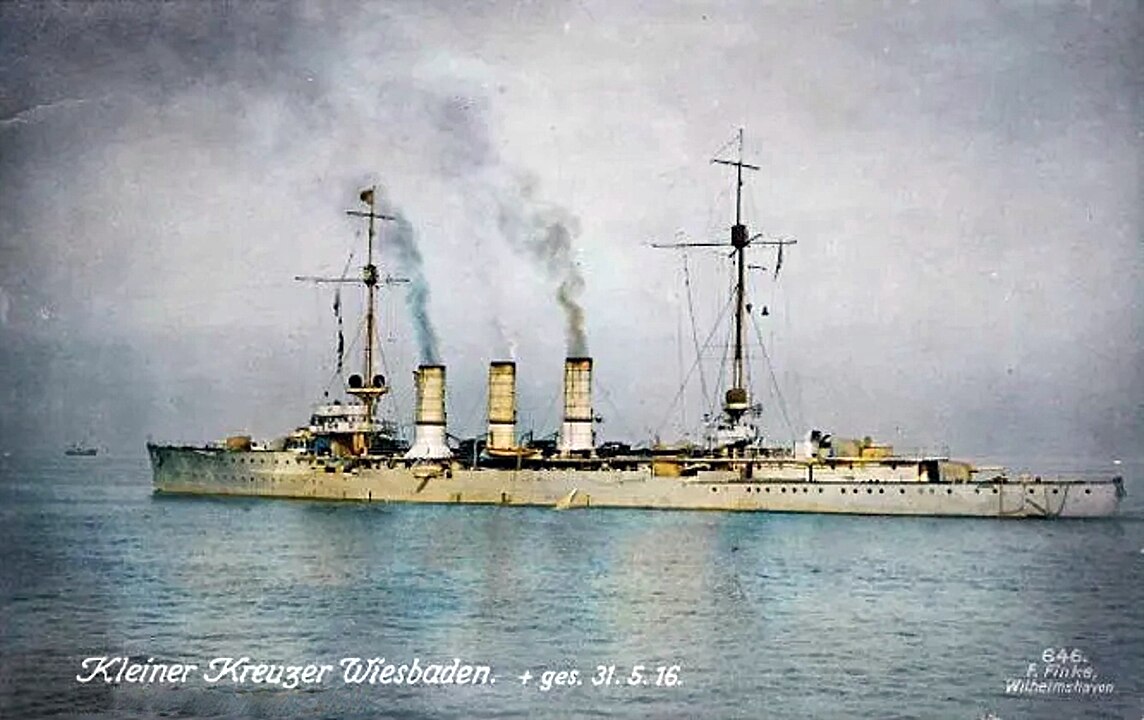
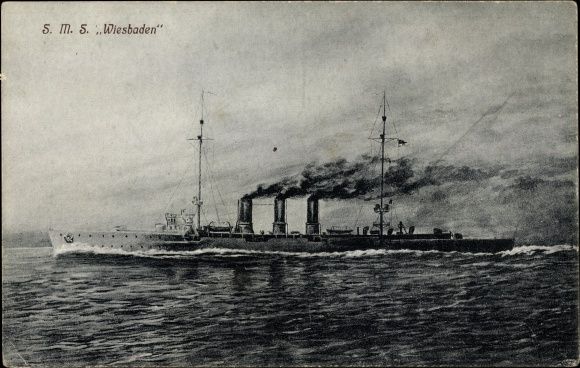
The Wiesbaden class of light cruisers was a class of ships built by the German Kaiserliche Marine (Imperial Navy) shortly before the outbreak of World War I. Two ships were built in this class, Wiesbaden and Frankfurt. They were very similar to the preceding design, the Graudenz class.
Name | Class | Commissioned | Decommissioned | Notes |
SMS Wiesbaden | Wiesbaden class | 23-08-1915 | -- | Sunk at the battle of Jutland on 01-06-1916 |
SMS Frankfurt | Wiesbaden class | 20-08-1915 | -- | Ceded to the United States after World War I |
Konigsberg class (1915)
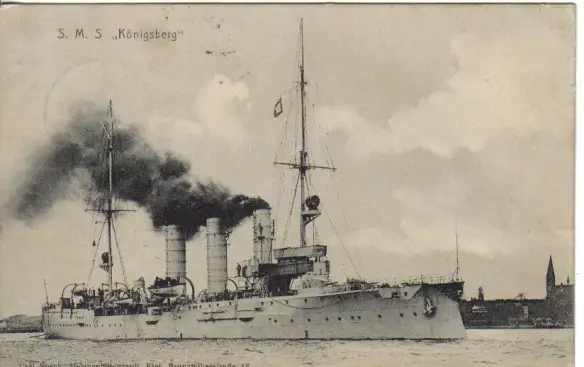
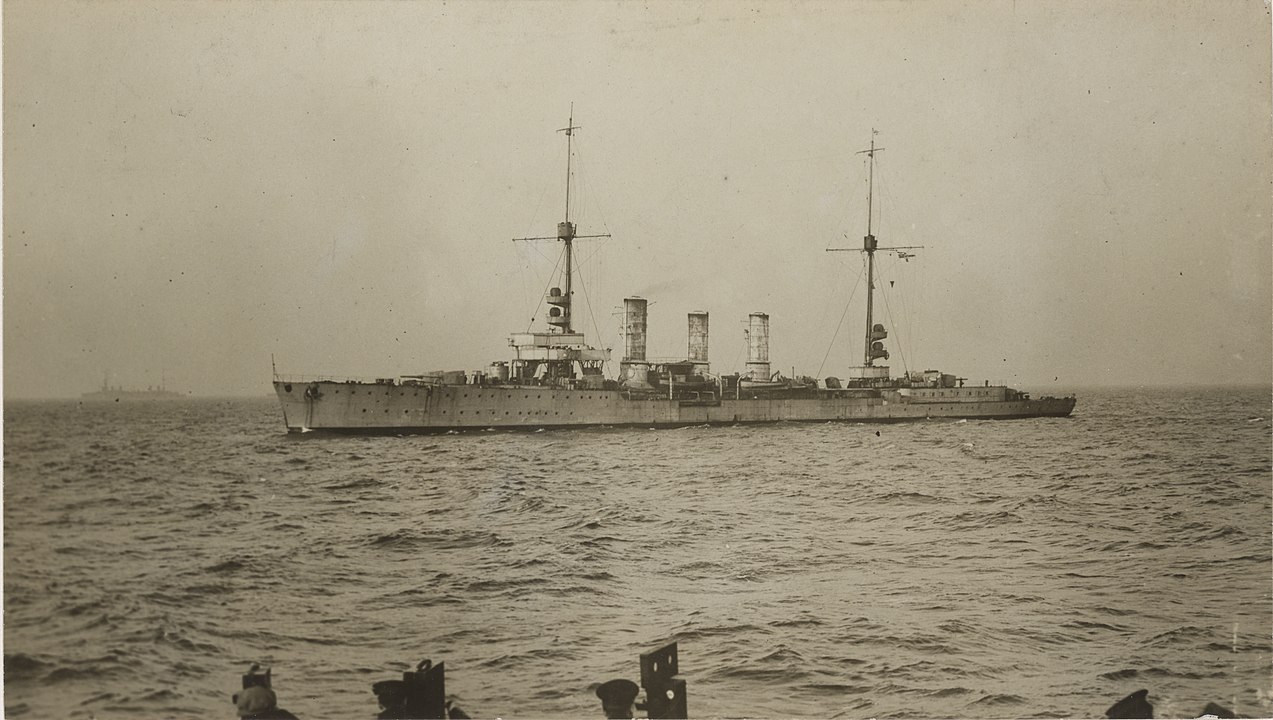
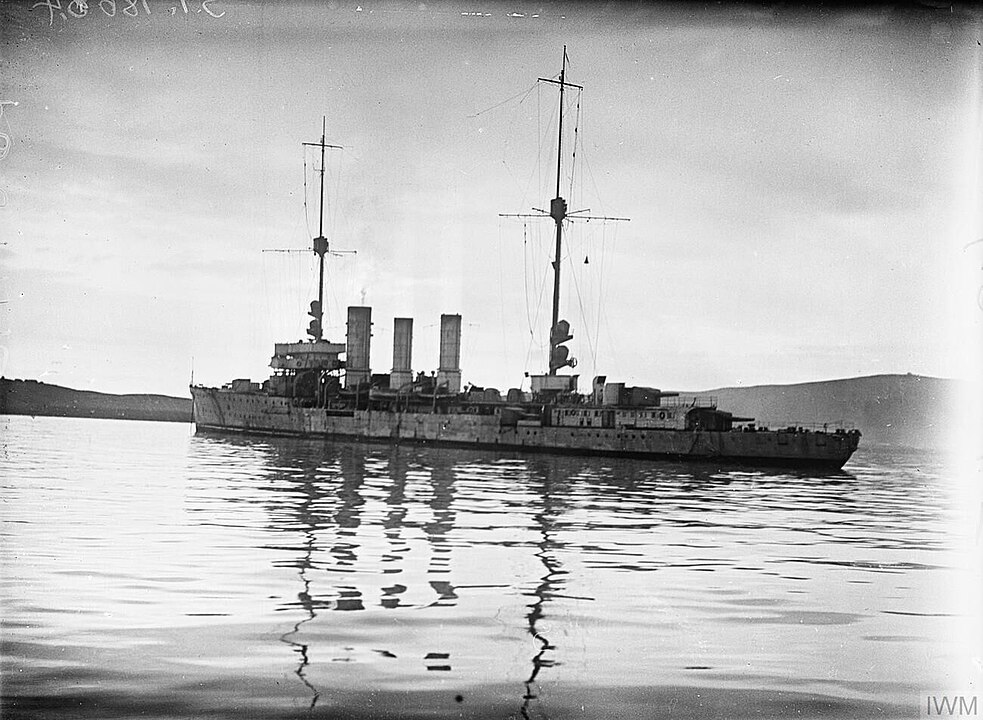
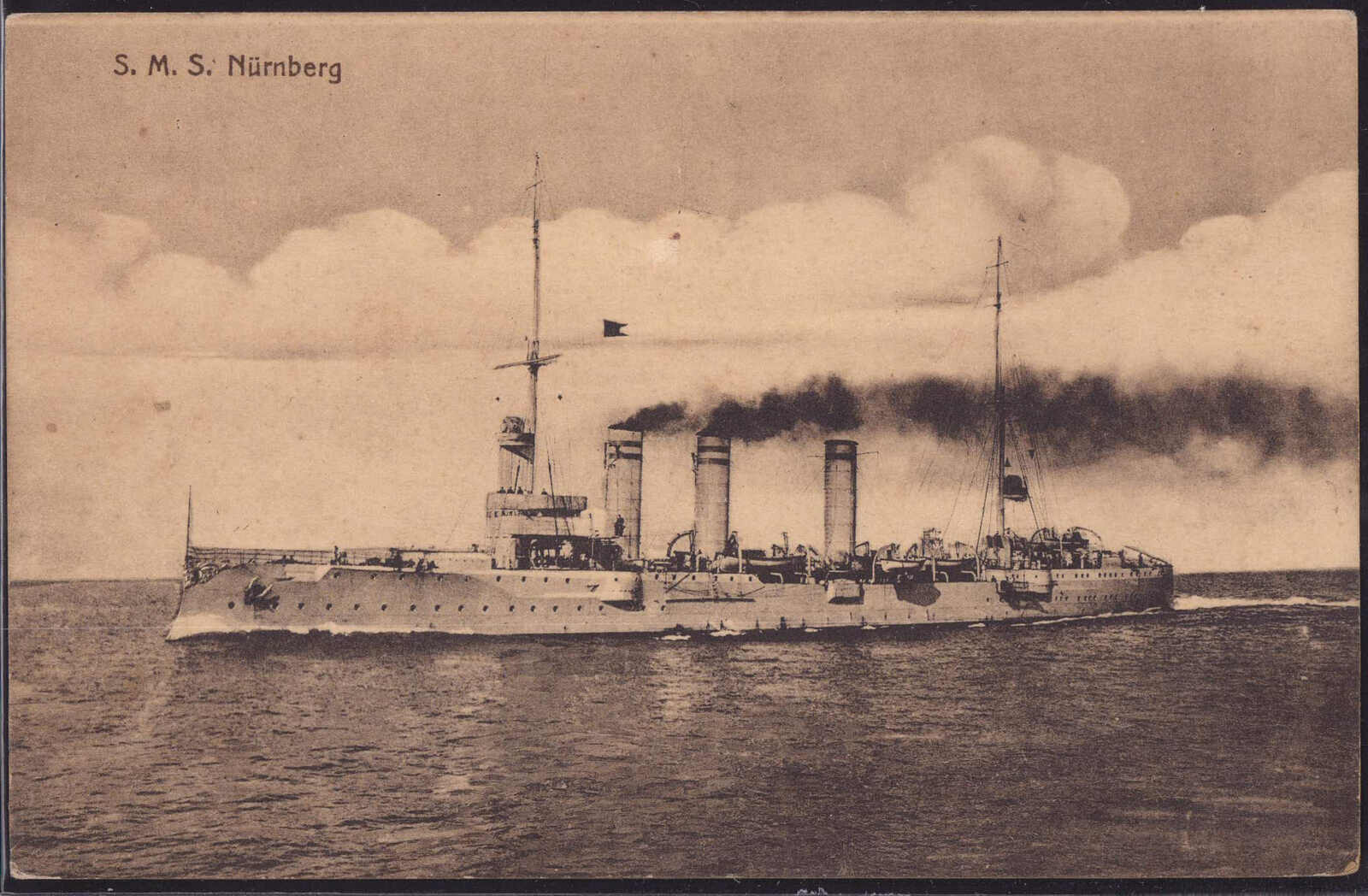
The Königsberg class of light cruisers was a group of four ships commissioned into Germany’s Kaiserliche Marine (Imperial Navy) shortly before the end of World War I. The class comprised Königsberg, Karlsruhe, Emden, and Nürnberg, all of which were named after light cruisers lost earlier in the war. The ships were an incremental improvement over the preceding Wiesbaden-class cruisers. Karlsruhe, Emden, and Nürnberg were interned at Scapa Flow after the end of the war, and were scuttled on 21 June 1919, though only Karlsruhe was successfully sunk. The other two ships were beached by British sailors and ceded to the Allies. Königsberg was transferred to the French Navy as a war prize and commissioned as Metz; she served with the French Navy until the 1930s, when she was broken up for scrap.
Name | Class | Commissioned | Decommissioned | Notes |
SMS Konigsberg | Konigsberg class | 12-08-1916 | -- | Ceded to France in 1920 |
SMS Karlsruhe | Konigsberg class | december 1912 | -- | Scuttled at Scapa Flow on 21-06-1919 |
SMS Emden | Konigsberg class | 16-12-1916 | -- | Ceded to France, scraped 1926 |
SMS Nurnberg | Konigsberg class | February 1917 | -- | Sunk as a target ship on 07-07-1922 |
Brummer class
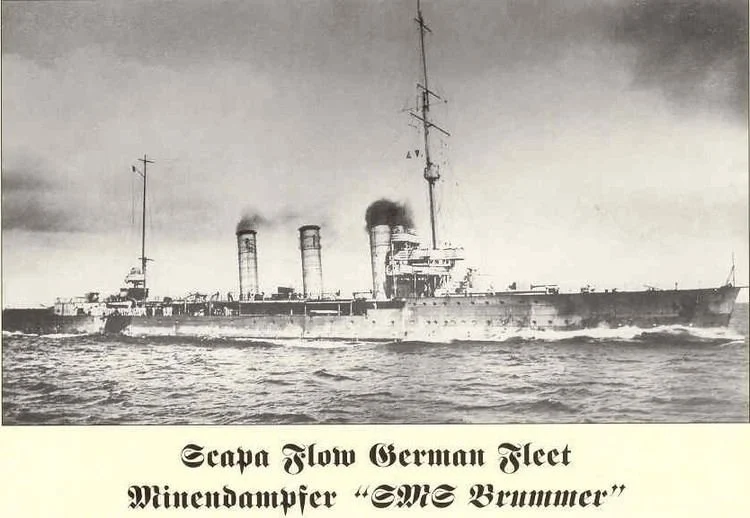
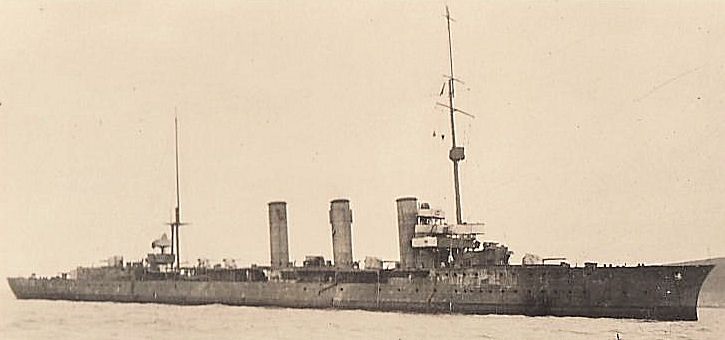
The Brummer class consisted of two light mine-laying cruisers built for the Imperial German Navy in World War I: SMS Brummer and SMS Bremse. When the war broke out, the Germans had only two older mine-laying cruisers. Although most German cruisers were fitted for mine-laying, a need for fast specialized ships existed. The Imperial Russian Navy had ordered sets of steam turbines for the first two ships of the Svetlana-class cruisers from the AG Vulcan shipyard in Stettin. This machinery was confiscated on the outbreak of war and used for these ships. The two ships laid a series of minefields during their career, though their most significant success came in October 1917, when they attacked a British convoy to Norway. They sank two escorting destroyers and nine of the twelve merchant ships from the convoy. They escaped back to Germany without damage.
Name | Class | Commissioned | Decommissioned | Notes |
SMS Brummer | Konigsberg class | 02-04-1916 | -- | Scuttled at Scapa Flow on 21-06-1919 |
SMS Bremse | Konigsberg class | 01-07-1916 | -- | Scuttled at Scapa Flow on 21-06-1919 |
Coln class
The Cöln class of light cruisers was Germany’s last class commissioned before her defeat in World War I. Originally planned to comprise ten ships, only two were completed; Cöln and Dresden. Five more were launched, but not completed: Wiesbaden, Magdeburg, Leipzig, Rostock and Frauenlob, while another three were laid down but not launched: Ersatz Cöln, Ersatz Emden and Ersatz Karlsruhe. The design was a slightly modified version of the preceding Königsberg class. Cöln and Dresden joined the High Seas Fleet in 1918, which limited their service careers. The two ships were interned and eventually scuttled in Scapa Flow in June 1919. Both Dresden and Cöln remain on the bottom of Scapa Flow.
Name | Class | Commissioned | Decommissioned | Notes |
SMS Coln | Coln class | 17-01-1918 | 01-11-1918 | Scuttled at Scapa Flow on 21-06-1919 |
SMS Dresden | Coln class | 23-03-1918 | -- | Scuttled at Scapa Flow on 21-06-1919 |
SMS Wiesbaden | Coln class | -- | -- | Launced but not completed, scraped 1920 - 1922 |
SMS Magdeburg | Coln class | -- | -- | Launced but not completed, scraped 1920 - 1922 |
SMS Leipzig | Coln class | -- | -- | Launced but not completed, scraped 1920 - 1922 |
SMS Rostock | Coln class | -- | -- | Launced but not completed, scraped 1920 - 1922 |
SMS Frauenlob | Coln class | -- | -- | Launced but not completed, scraped 1920 - 1922 |
SMS Ersatz Coln | Coln class | -- | -- | Launced but not completed, scraped 1920 - 1922 |
SMS Ersatz Emden | Coln class | -- | -- | Launced but not completed, scraped 1920 - 1922 |
SMS Ersatz Karlsruhe | Coln class | -- | -- | Launced but not completed, scraped 1920 - 1922 |
FK Designs
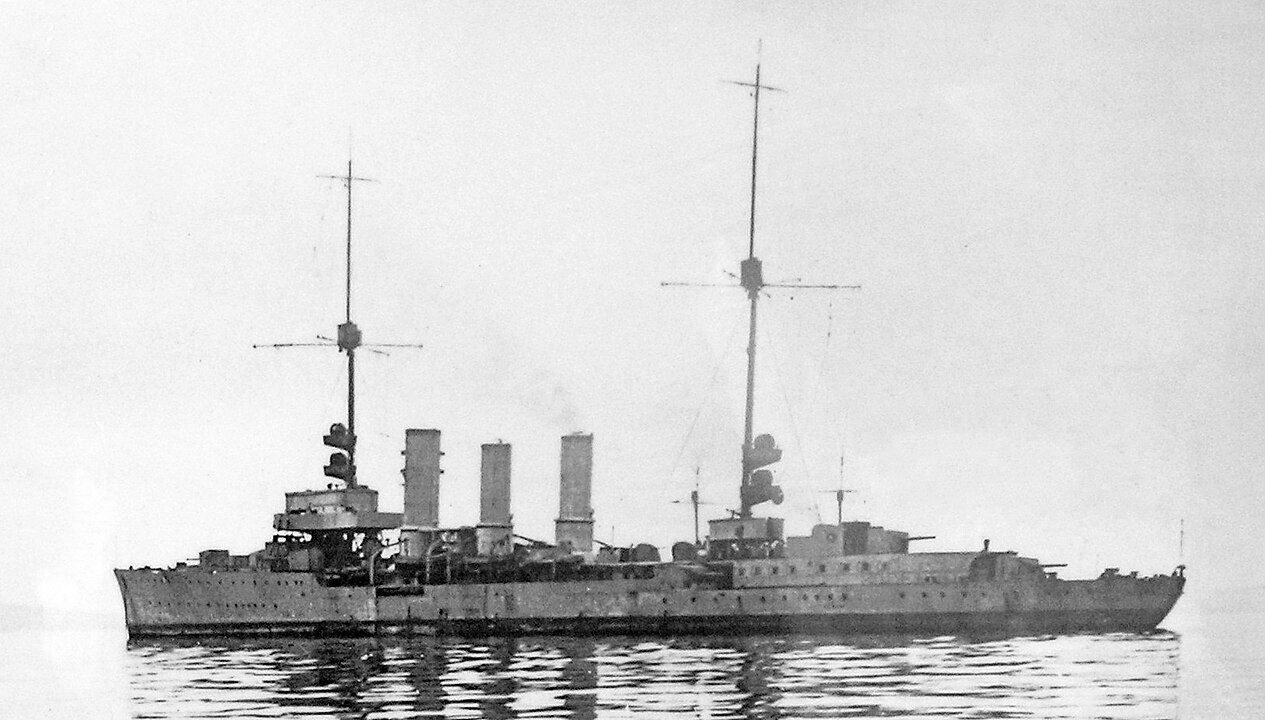
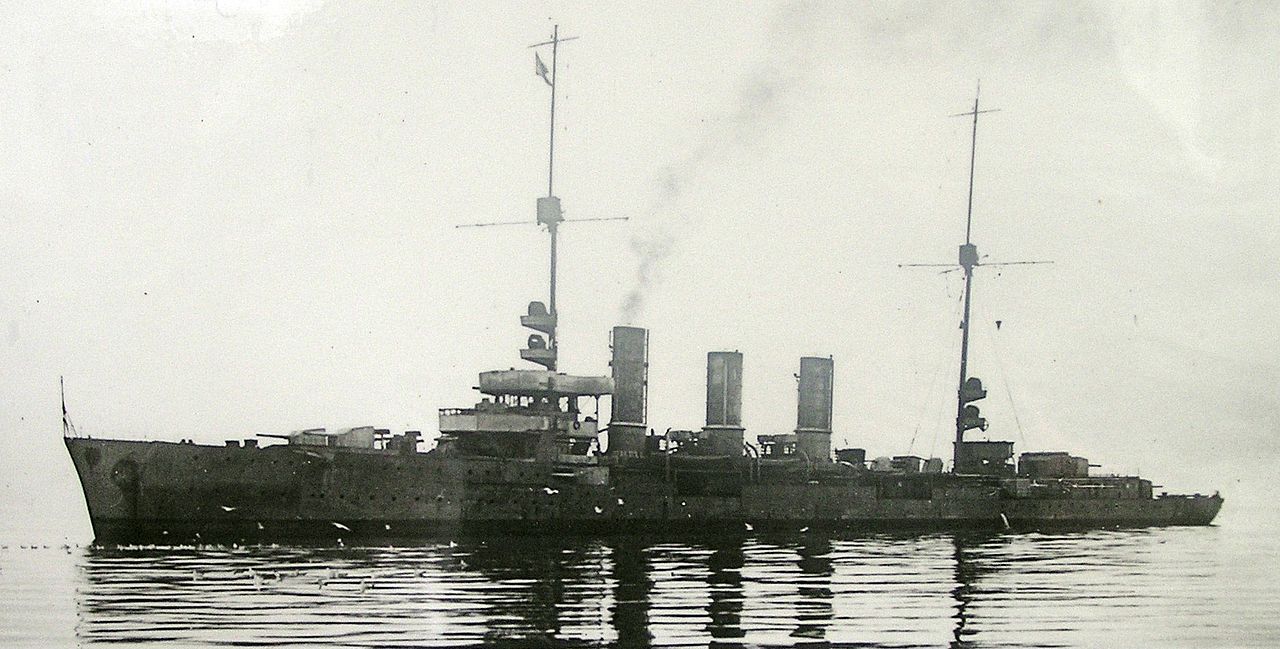
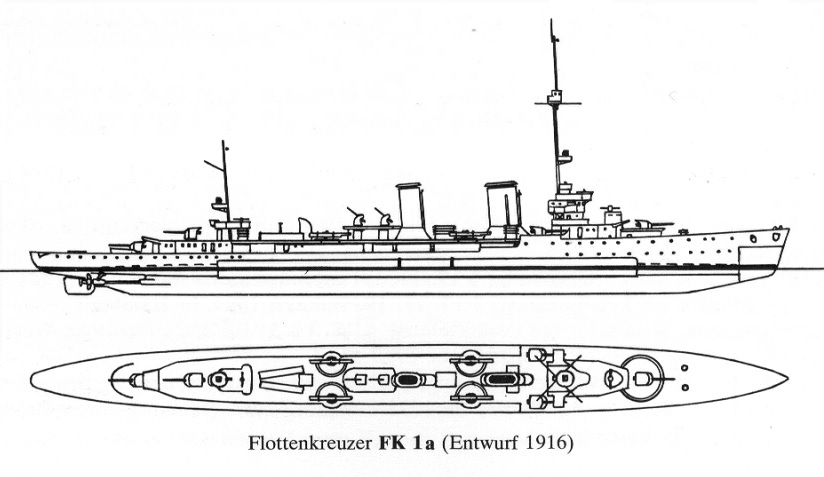
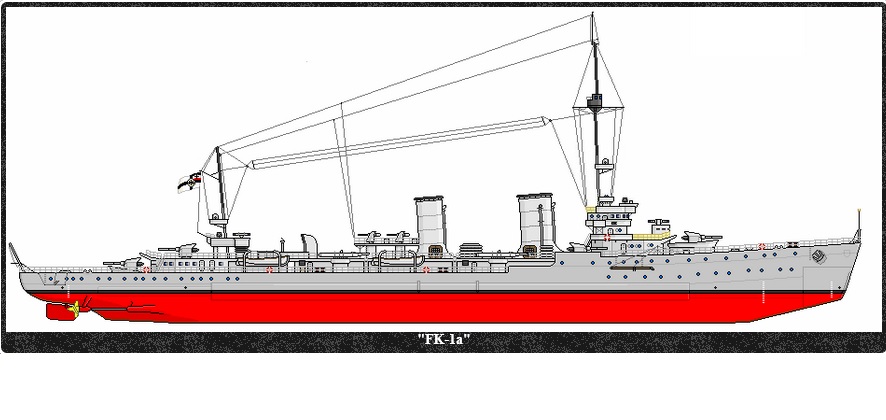
The German Imperial Navy (Kaiserliche Marine) created a series of fleet cruiser designs (designated Flottenkreuzer) in 1916 to follow the Cöln-class cruisers ordered in 1915. They were initially intended to favor high speed for reconnaissance over the heavier gun armament of the Cöln class, though by the final iterations, they were as powerful as the earlier class. The design staff ultimately drew up five different designs: FK 1, FK 1a, FK 2, FK 3, and FK 4. Each proposed design grew in size over the preceding draft, as the weaponry and propulsion systems were increased. None of the designs were built, owing to shifting construction priorities in the German Navy in the last year of World War I.
Name | Class | Commissioned | Decommissioned | Notes |
FK 1 | -- | -- | -- | Design study only |
FK 1a | -- | -- | -- | Design study only |
FK 2 | -- | -- | -- | Design study only |
FK 3 | -- | -- | -- | Design study only |
FK 4 | -- | -- | -- | Design study only |
SMS Emden
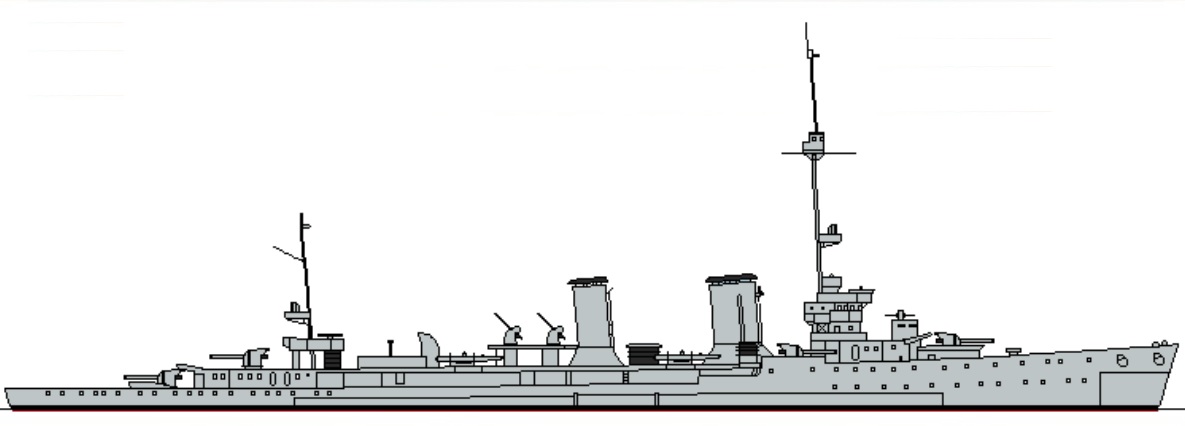
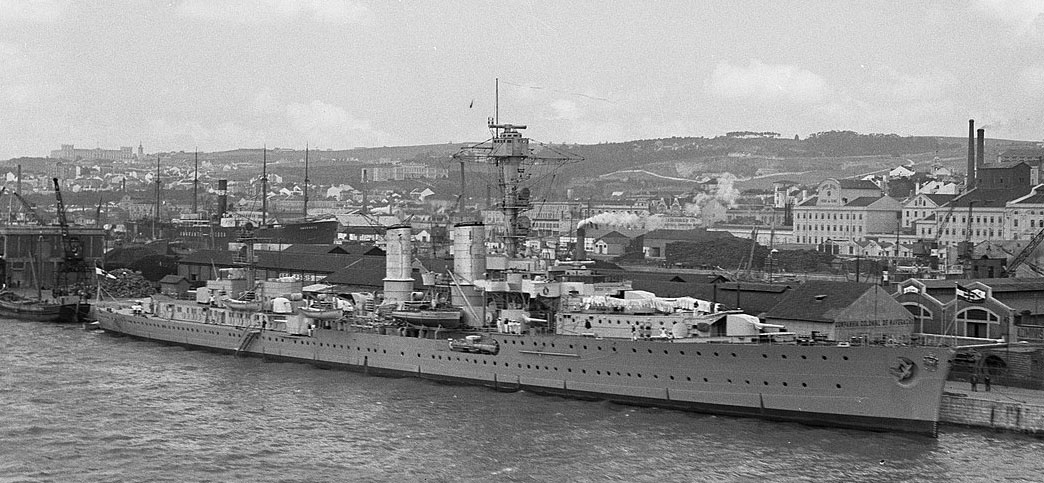
Emden was a light cruiser built for the German Navy (Reichsmarine) in the early 1920s. She was the only ship of her class and was the first large warship built in Germany after the end of World War I. Her design was heavily informed by the restrictions of the Treaty of Versailles, though like all German warships built in the period, Emden exceeded the size limitations. Emden spent the majority of her career as a training ship; in the inter-war period, she conducted several world cruises to train naval cadets. In 1937 and 1938, she briefly participated in the non-intervention patrols during the Spanish Civil War. At the outbreak of war, she laid minefields off the German coast and was damaged by a British bomber that crashed into her.
Name | Class | Commissioned | Decommissioned | Notes |
SMS Emden | -- | 15-10-1925 | 16-04-1945 | Destroyed on 03-05-1945, scraped 1949 |
Konigsberg class (1927)
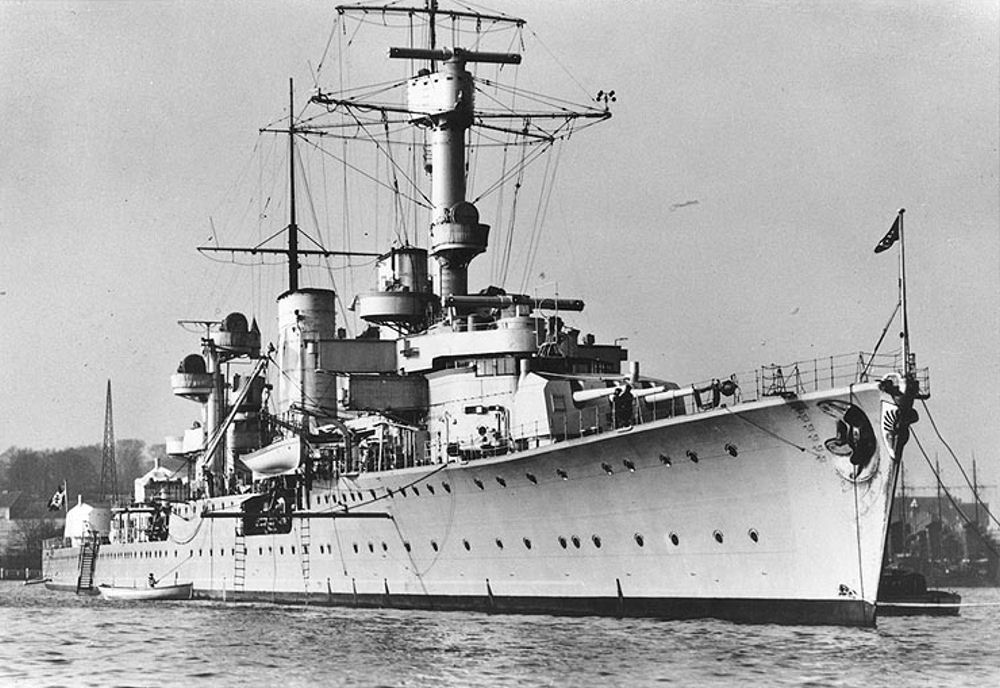
The Königsberg class, sometimes referred to as the K class, was a class of light cruisers of the German Reichsmarine and Kriegsmarine. The class comprised three ships named after German cities: Königsberg, Karlsruhe, and Köln, all built between 1926 and 1930. These ships were the first of the Reichsmarine with a modern cruiser design. All three ships of the class were used extensively as training cruisers throughout the 1930s. They went on numerous overseas cruises and participated in the non-intervention patrols during the Spanish Civil War in 1936–1939. After the outbreak of World War II in September 1939, the three ships laid defensive minefields in the North Sea.
Name | Class | Commissioned | Decommissioned | Notes |
SMS Konigsberg | Konigsberg class | 17-04-1929 | -- | Sunk on 10-04-1940 at Bregen, Norway |
SMS Karlsruhe | Konigsberg class | 06-11-1929 | -- | Sunk on 09-0401929 |
SMS Koln | Konigsberg class | 15-01-1930 | -- | Sunk by American aircraft on 30-03-1945 |
Leipzig class
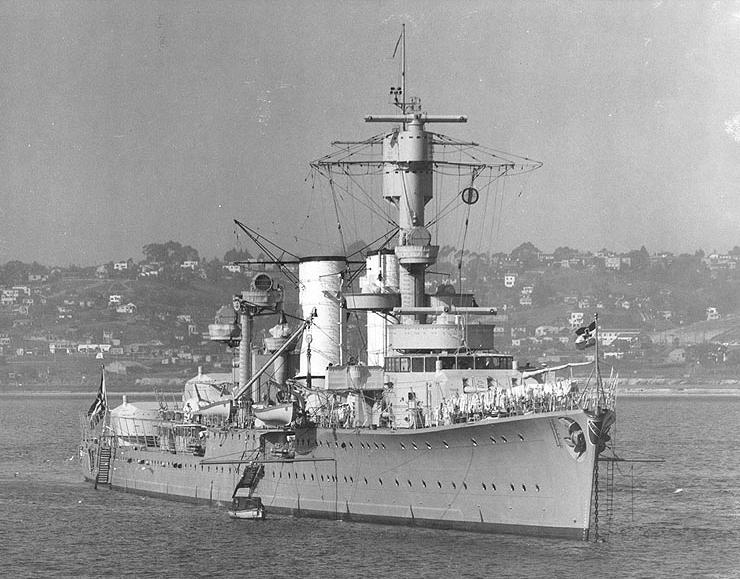
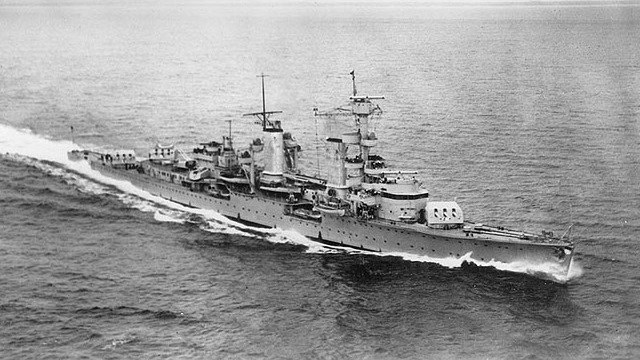
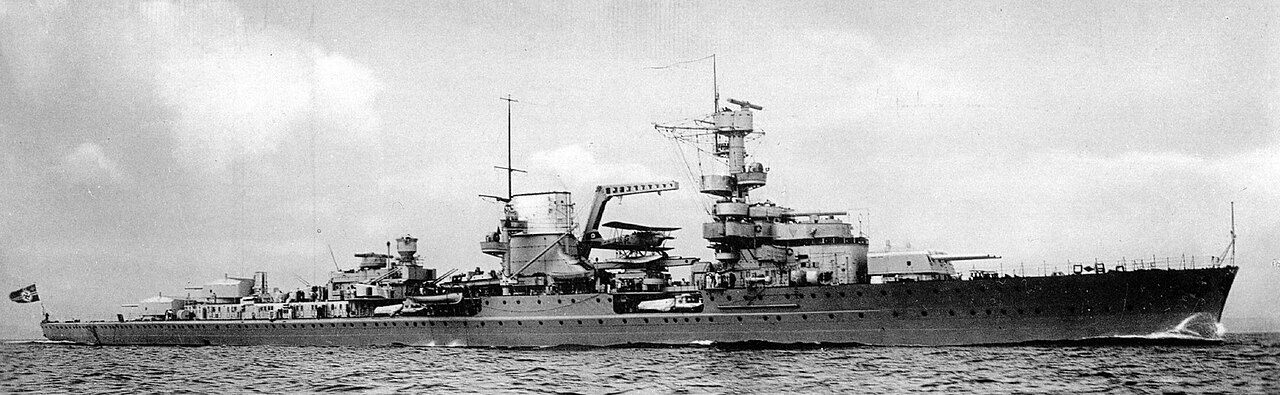
The Leipzig class was a class of two light cruisers of the German Reichsmarine and later Kriegsmarine; the class comprised Leipzig, the lead ship, and Nürnberg, which was built to a slightly modified design. The ships were improvements over the preceding Königsberg-class cruisers. Both ships participated in the non-intervention patrols during the Spanish Civil War in 1936 and 1937. After the outbreak of World War II in September 1939, they were used in a variety of roles, including as minelayers and escort vessels. On 13 December, both ships were torpedoed by the British submarine HMS Salmon. They were thereafter used in secondary roles, primarily as training ships, for most of the rest of the war. Both ships survived the war. Leipzig was used as a barracks ship before being scuttled in 1946. Nürnberg, however, emerged from the war largely unscathed, and as a result, was seized by the Soviet Navy as war reparations, and commissioned into the Soviet fleet as Admiral Makarov; she continued in Soviet service until the late 1950s, and was broken up for scrap by 1960.
Name | Class | Commissioned | Decommissioned | Notes |
SMS Leipzig | Leipzig class | 08-10-1931 | -- | Scuttled july 1946 |
SMS Nurnberg | Leipzig class | 02-11-1935 | -- | Surrendered 1945, Assigned as a war prize to the Soviet navy |
M class
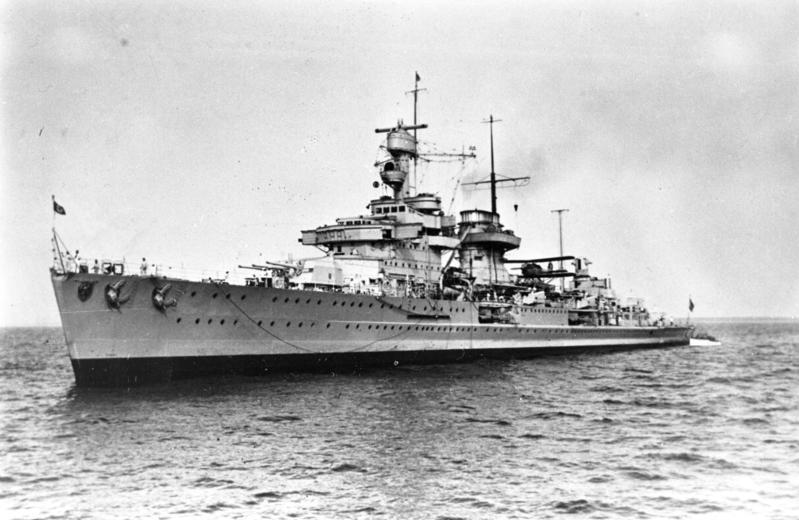
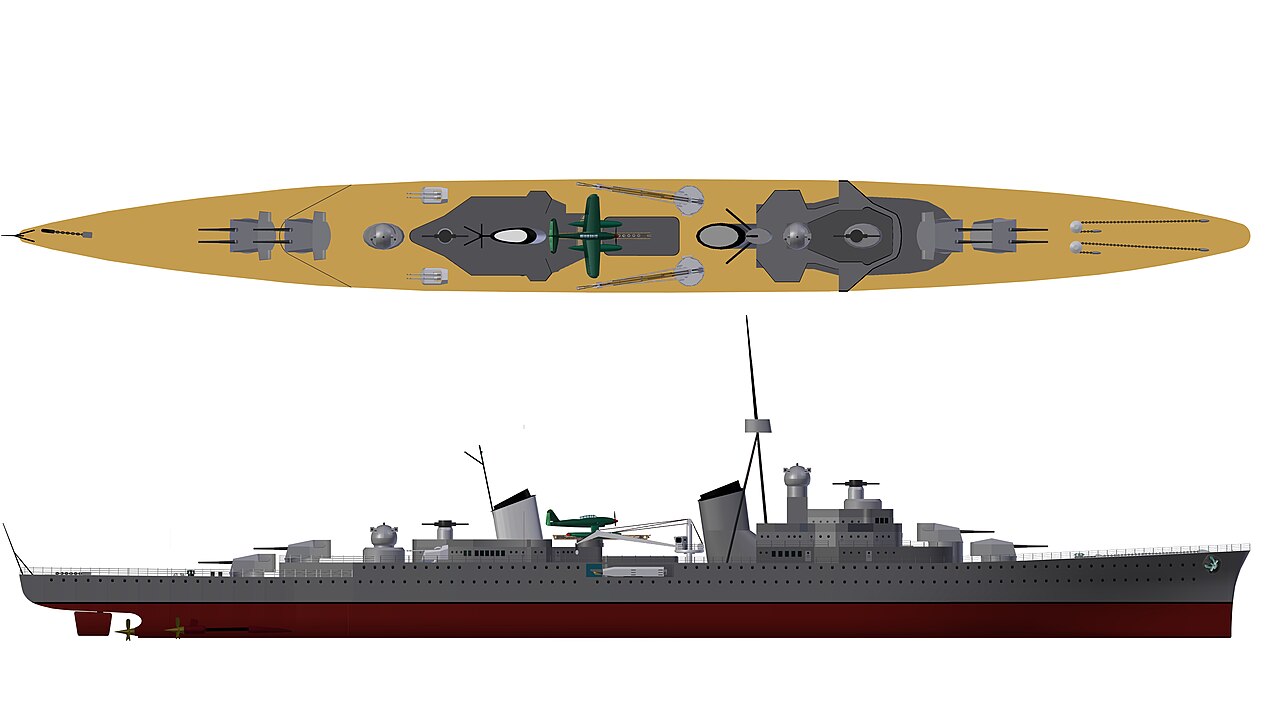
The M-class cruisers were a class of light cruisers planned, but never built, by Nazi Germany’s Kriegsmarine before World War II. The ships were designed for commerce raiding in the Atlantic Ocean. The design for the first four ships suffered from a number of problems, and so the fifth and sixth ships were substantially redesigned. The name of the class is taken from the letter designating the first projected unit. As long as the ships were not named, they were referred to by letters assigned in the chronological order of their planned construction. The first planned unit would have been the thirteenth German cruiser and was therefore listed as cruiser M in the navy’s documents. Had any of the ships been built, the class would have been named after the first completed unit.
Name | Class | Commissioned | Decommissioned | Notes |
M, N, O, P, Q, R | M class | -- | -- | M and N were launched but none of them were completed |
Heavy cruisers
Deutschland class
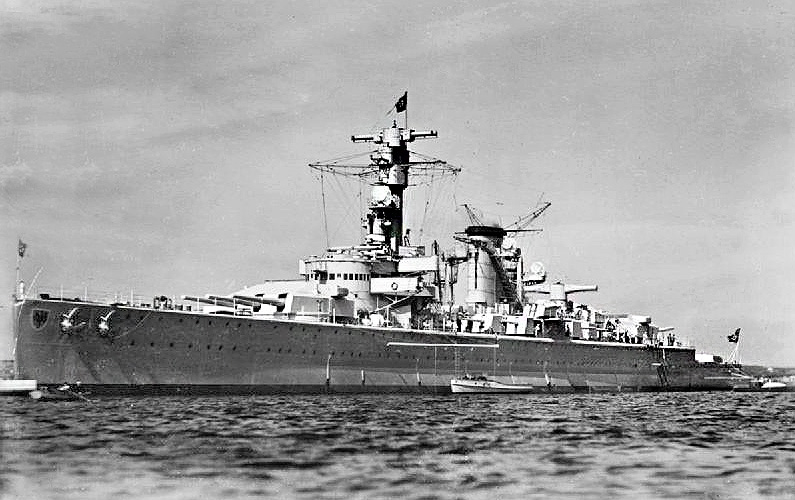
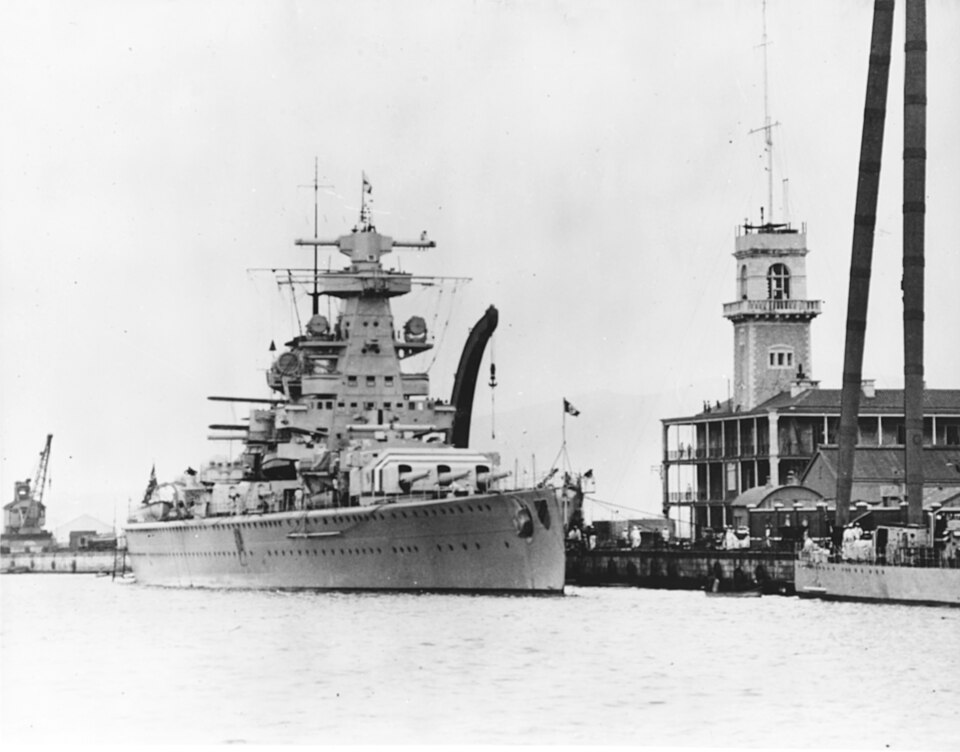
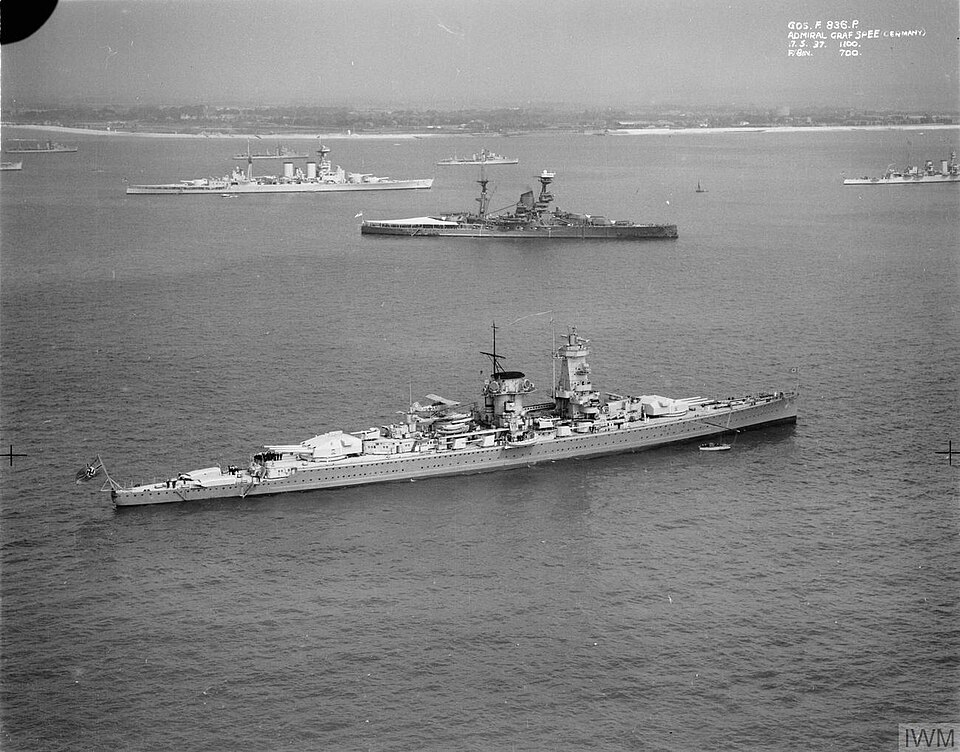
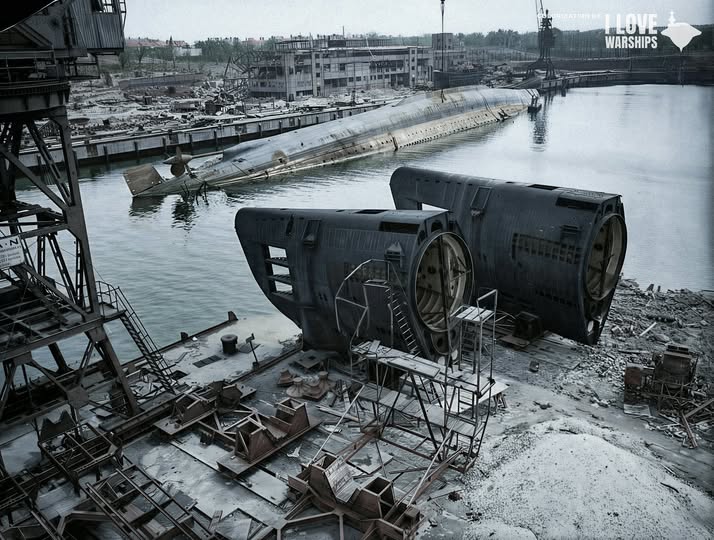
The Deutschland class was a series of three Panzerschiffe (armored ships), a form of heavily armed cruiser, built by the Reichsmarine (Germany navy) officially in accordance with restrictions imposed by the Treaty of Versailles. The design for the ships incorporated several radical innovations, including the first major use of welding in a warship and all-diesel propulsion. The Deutschland-class ships were initially classified as Panzerschiffe, but the Kriegsmarine (the renamed German navy) reclassified them as heavy cruisers in February 1940. The three ships were built between 1929 and 1936.
Name | Class | Commissioned | Decommissioned | Notes |
SMS Deutschland | Deutschland | 01-04-1933 | -- | Sunk as traget ship on 22-07-1947 |
SMS Admiral Scheer | Deutschland | 12-11-1934 | -- | Sunk by air attack 09-04-1945. partially scraped and burried |
SMS Admiral Graf Spee | Deutschland | 06-01-1936 | -- | Scuttled on 17-12-1939 |
D class (D, E)
The D-class cruisers were a pair of German heavy cruisers, classified as panzerschiffe (“armored ships”) by the Reichsmarine (Navy of the Realm). The ships were improved versions of the preceding Deutschland-class cruisers, authorized by Adolf Hitler in 1933. They were intended to counter a new French naval construction program. Displacement increased to 20,000 long tons (20,000 t), but Hitler allowed only increases to armor, prohibiting additions to the ships’ main battery armament. Both ships were laid down in February 1934, but not much work done before work was cancelled pending a significant revision of the design. It was determined that the ships should be enlarged to counter the new French Dunkerque-class battleship. The construction contracts for both ships were superseded by the Scharnhorst-class battleships.
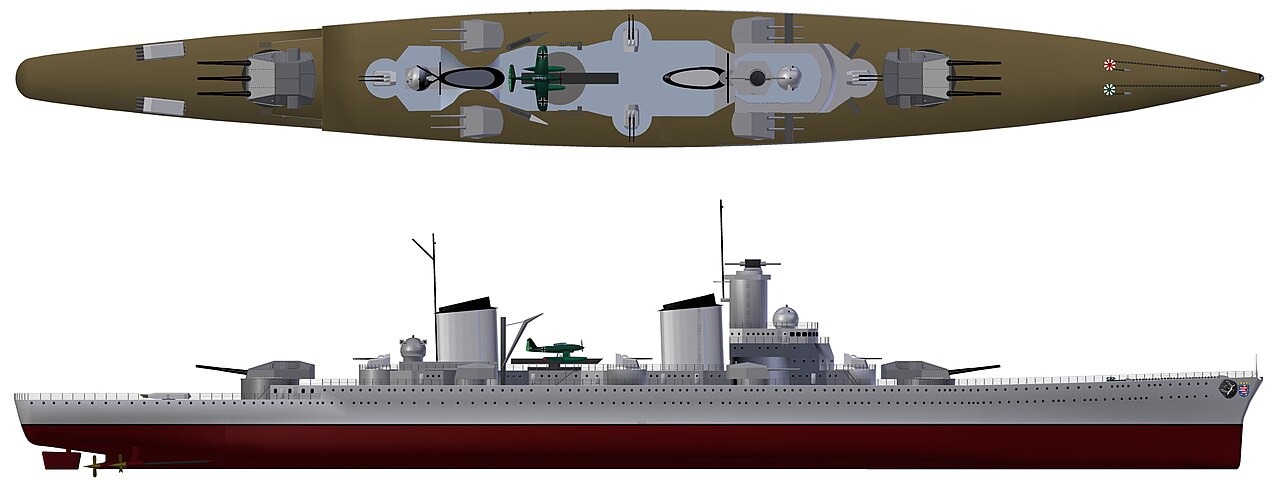
P class (P1 – P12)
The P class was a planned group of twelve heavy cruisers of Nazi Germany’s Kriegsmarine; they were the successor to the Deutschland-class cruisers. Design work began in 1937 and continued until 1939; at least twenty designs were submitted with nine of them being considered. There were three designs that were selected as the final contenders. The ships were designated as Panzerschiff (armored ship), and given the preliminary names P1–P12. They were an improved design over the preceding planned D-class cruisers, which had been canceled in 1934. Although the ships were already assigned to shipyards, construction never began on the P-class ships after the O-class battlecruiser design superseded them.
Admiral Hipper class
The Admiral Hipper class was a group of five heavy cruisers built by Nazi Germany’s Kriegsmarine beginning in the mid-1930s. The class comprised Admiral Hipper, the lead ship, Blücher, Prinz Eugen, Seydlitz, and Lützow. Only the first three ships of the class saw action with the German Navy during World War II. Work on Seydlitz stopped when she was approximately 95 percent complete; it was decided to convert her into an aircraft carrier, but this was not completed
either. Lützow was sold incomplete to the Soviet Union in 1940.
Name | Class | Commissioned | Decommissioned | Notes |
SMS Admiral Hipper | Admiral Hipper | 29-04-1939 | -- | Scuttled 03-05-1945, raised and scraped in 1946-1952 |
SMS Blücher | Admiral Hipper | 20-09-1939 | -- | Sunk in the Battle of Drøbak Sound on 09-04-1940 |
SMS Prinz Eugen | Admiral Hipper | 01-08-1940 | 07-05-1945 | Surrounded 08-05-1945 and trasfered to the US NAvy |
SMS Seydlitz | Admiral Hipper | -- | -- | Scuttled incomplete 29-01-1945 |
SMS Lützow | Admiral Hipper | -- | -- | Sold incomplete to the Sovjet Navy 11-02-1940 |