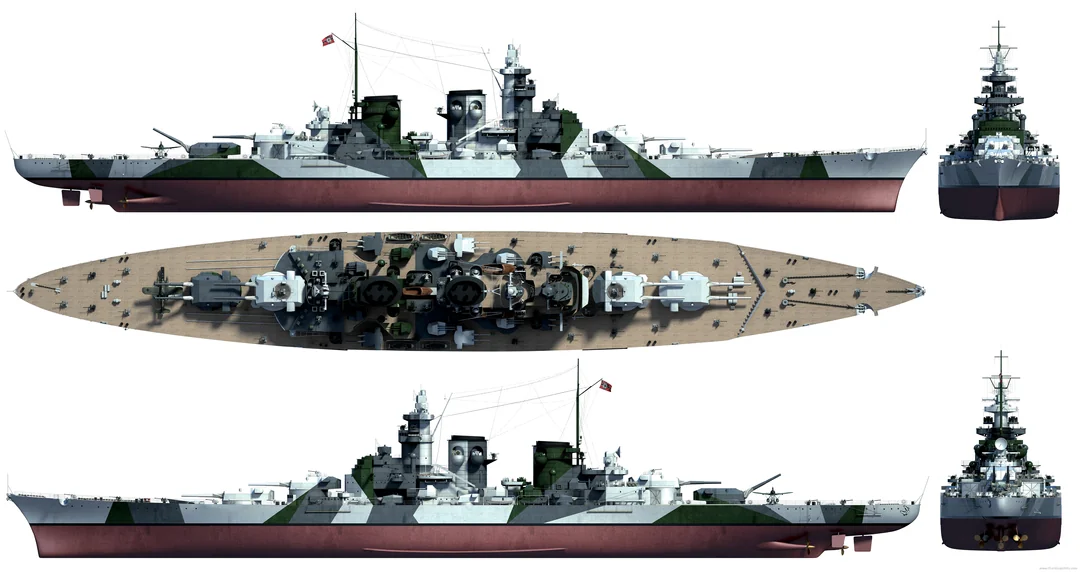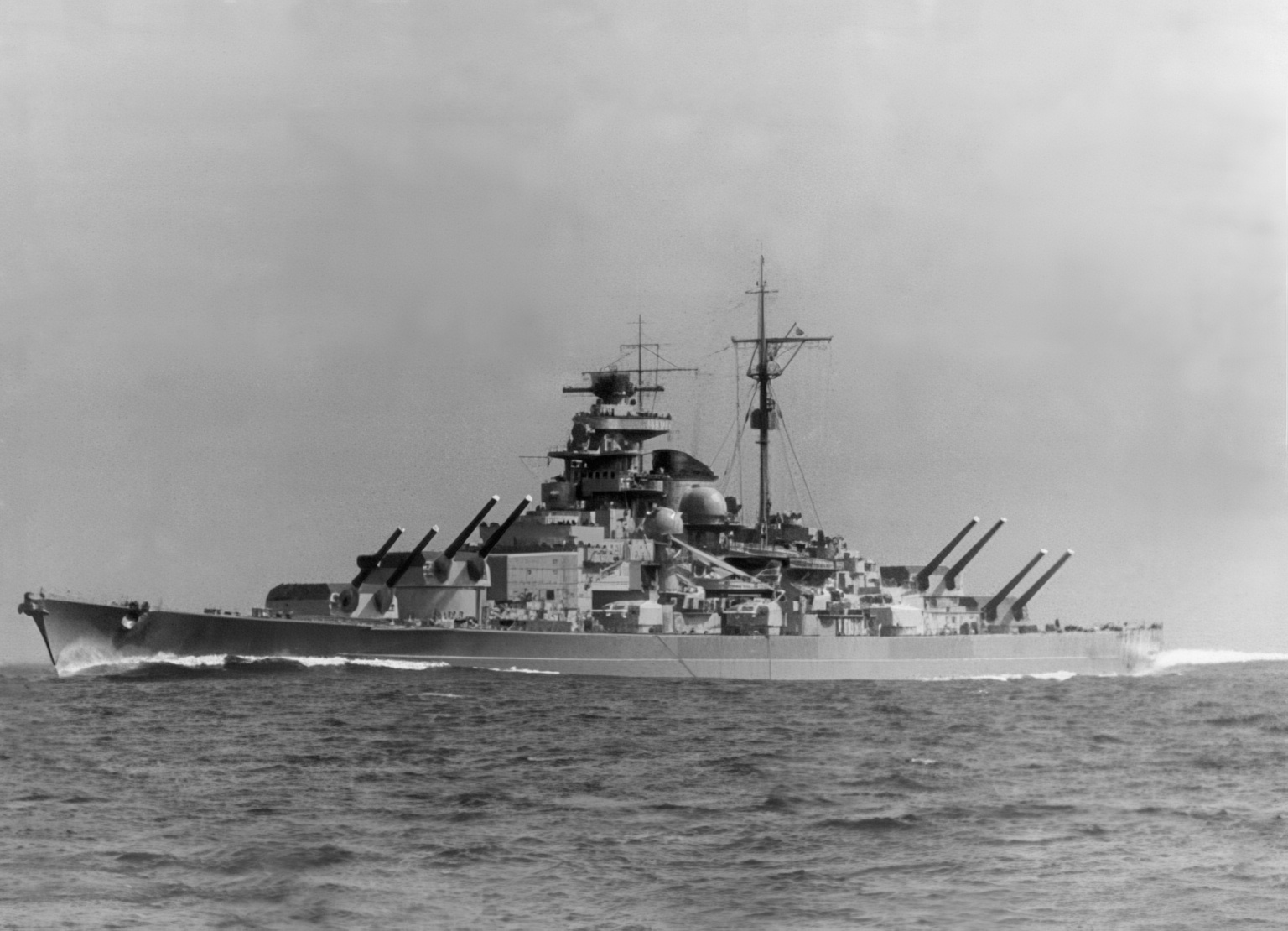
The history of German battleships is closely linked to the development of the German navy and its role in both world wars. From the rise of the Imperial Navy in the 19th century to the role of the Kriegsmarine during World War II, German battleships played a crucial strategic role.
The origins of the German battleships lie in the establishment of the Imperial Navy in the late 19th century. Germany became an imperial power in 1871, and to enhance its influence, it began to form a maritime power. The German navy initially focused on the construction of panzerkreuzers (armored cruisers), which were larger than traditional cruisers but less heavily armored than battleships. SMS Friedrich der Große (1878) was the first German battleship (panzerkreuzer). It was a relatively light and fast ship intended to fulfill the role of an armored war cruiser.
The introduction of the British HMS Dreadnought in 1906 revolutionized naval warfare. Germany responded by developing its own battleships that approached the Dreadnought class. The SMS Nassau (1908) and the SMS Helgoland (1911) were Germany’s first true “Dreadnoughts”.

During World War I, the High Seas Fleet (Hochseeflotte) was the main combat force of the Imperial Navy. This fleet consisted of a mix of battleships, cruisers, and destroyers. The Battle of Jutland (1916) was the largest naval battle of the war and took place between the British Grand Fleet and the German High Seas Fleet. The battle ended in a strategic victory for the British. Despite significant losses on both sides, the Germans were unable to decisively defeat the British fleet. It was the last major confrontation of the Imperial Navy during the war. German battleships such as the SMS Derfflinger, SMS Seydlitz, and SMS Lützow played key roles in this battle. The Seydlitz was heavily damaged but survived the battle, demonstrating the durability of German battleships.
After Germany’s defeat in World War I, the Reichsmarine was established, but the size and power of the fleet were severely limited. Germany was prohibited from building new battleships, and the existing ships were outdated and neglected.
With the rise of the Nazis to power in 1933 under Adolf Hitler, Germany’s navy was rebuilt. The Treaty of Versailles was rejected, and Germany began to construct the Kriegsmarine with the aim of matching the power of the Allied fleets. This led to the creation of some of the most famous battleships in German naval history. The most famous and largest battleship of Germany during World War II was the Bismarck, commissioned in 1940. The Bismarck was intended to threaten Allied shipping routes in the Atlantic and played a strategic role in naval warfare. In May 1941, the Bismarck set out from Germany for an operation against Allied shipping. The ship achieved an initial victory by sinking the British battleship HMS Hood, but was eventually defeated after an intense hunt by the British navy. The Bismarck was eventually sunk after a massive air attack by the Royal Navy.
By 1945, at the end of the war, the remaining German battleships were outdated and had little strategic use. The rise of air forces made traditional battleship warfare obsolete, and battleships were increasingly seen as sitting ducks for airstrikes. The last active battleships of the Kriegsmarine were either scrapped or sunk by 1945.
Pre dreadnought battleships
Brandenburg class
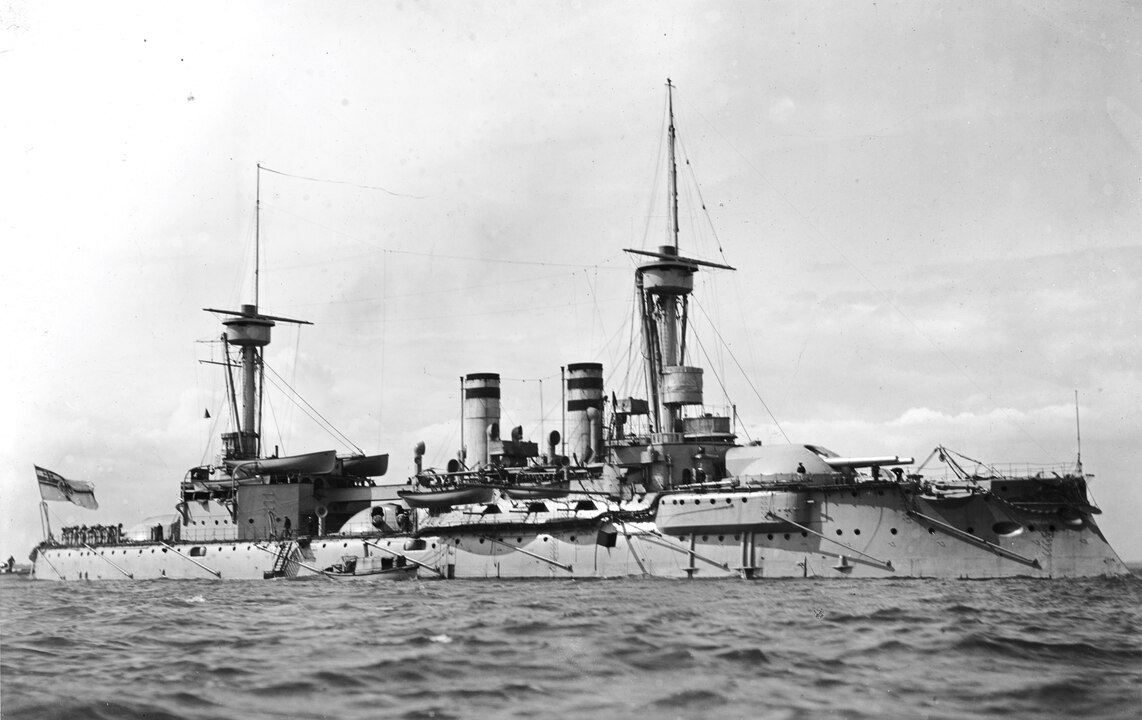
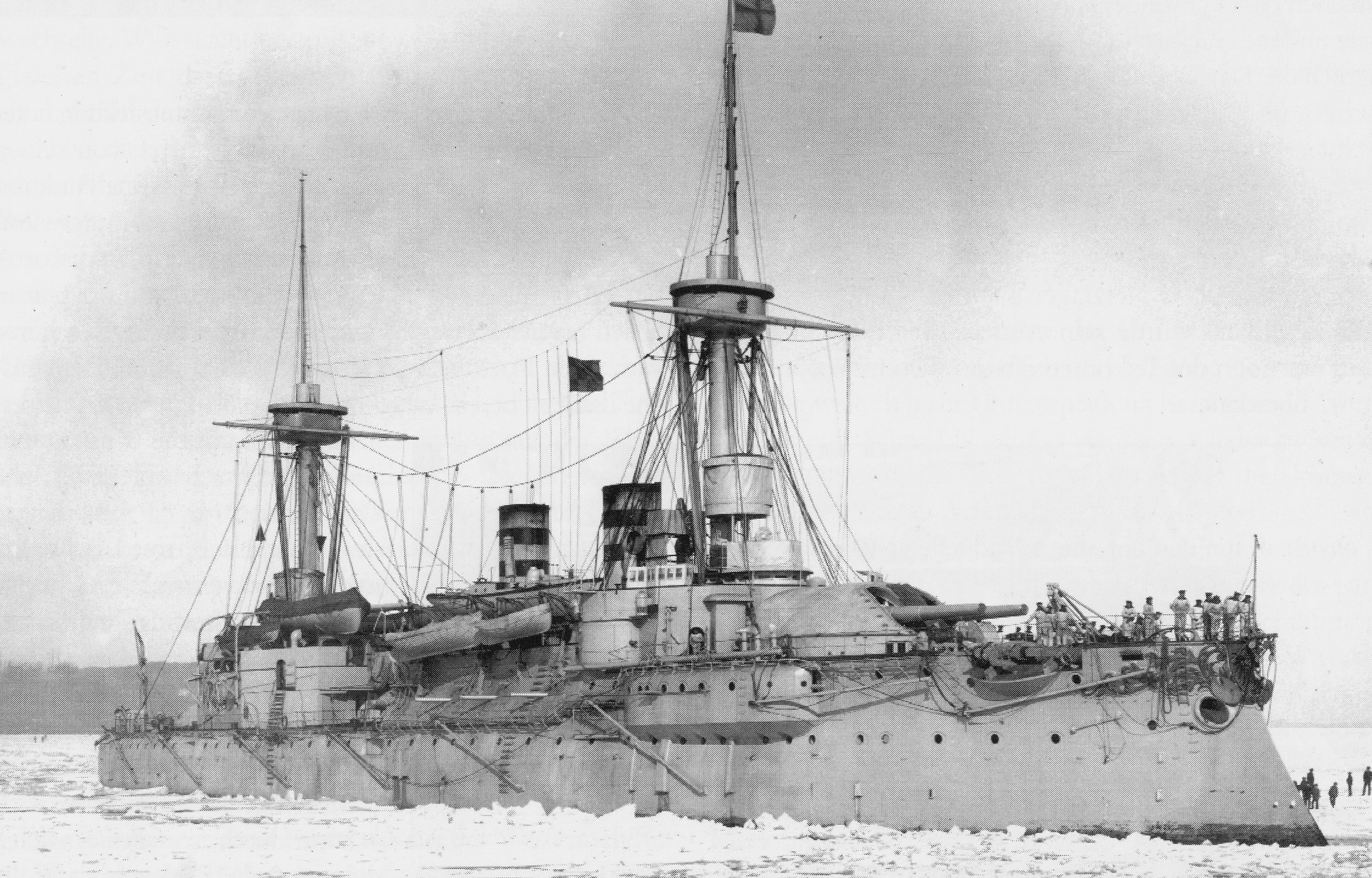
The Brandenburg-class battleships comprised four pre-dreadnought warships constructed for the Imperial German Navy Kaiserliche Marine) from 1890 to 1894, constituting Germany’s inaugural class of ocean-going battleships designed for high-seas operations beyond coastal defense. By the First World War, their obsolescence relegated them to coastal defense and training roles in the High Seas Fleet; two were sold to the Ottoman Empire in 1910 as Turgut Reis and Barbaros Hayreddin, with the latter sunk by a British submarine in the Dardanelles in 1915, while Turgut Reis lingered in limited service until scrapped in the 1950s, and the remaining pair were decommissioned and broken up postwar.
Name | Class | Commissioned | Decommissioned | Notes |
SMS Brandenburg | Brandenburg class | 19-11-1893 | 13-05-1919 | Scrapped in 1920 |
SMS Kurfürst Friedrich Wilhelm | Brandenburg class | 29-04-1894 | 1910 | Sold to the Ottoman Empire in 1910 |
SMS Weissenburg | Brandenburg class | 14-10-1894 | -- | Sold to the ottoman Empire |
SMS Wörth | Brandenburg class | 31-10-1893 | 13-05-1919 | Scrapped in 1919 |
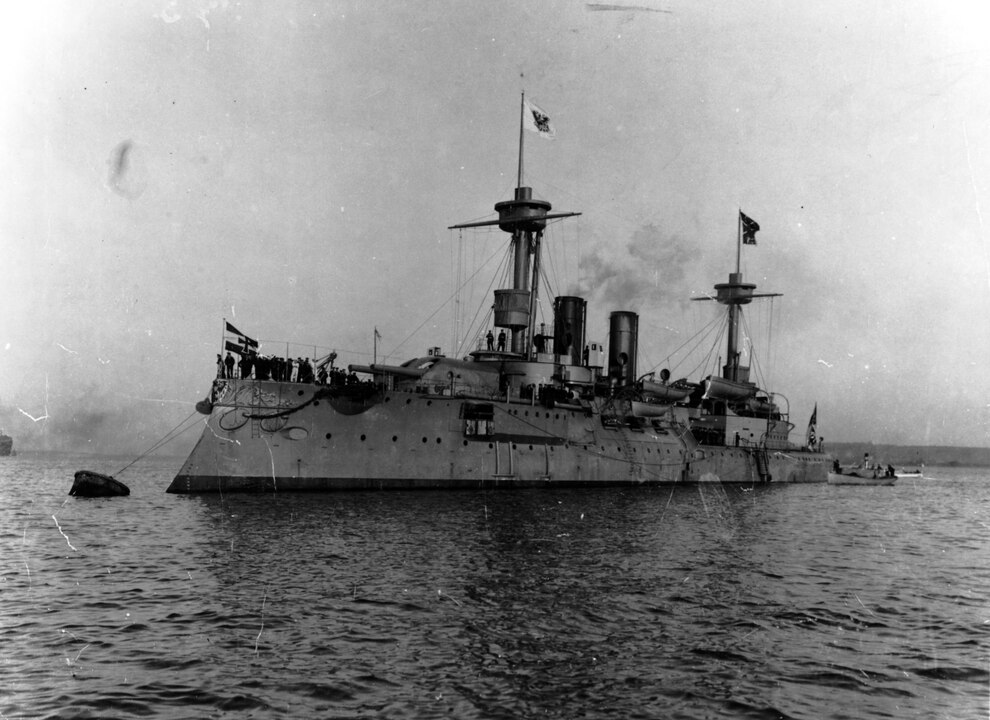
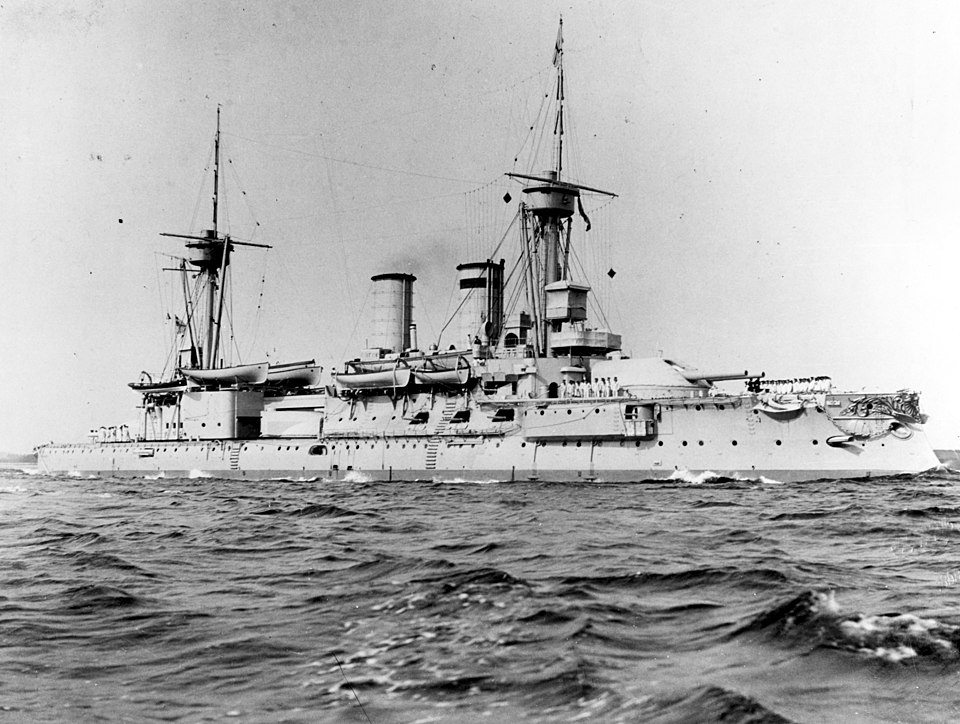
Kaiser Friedrich III class
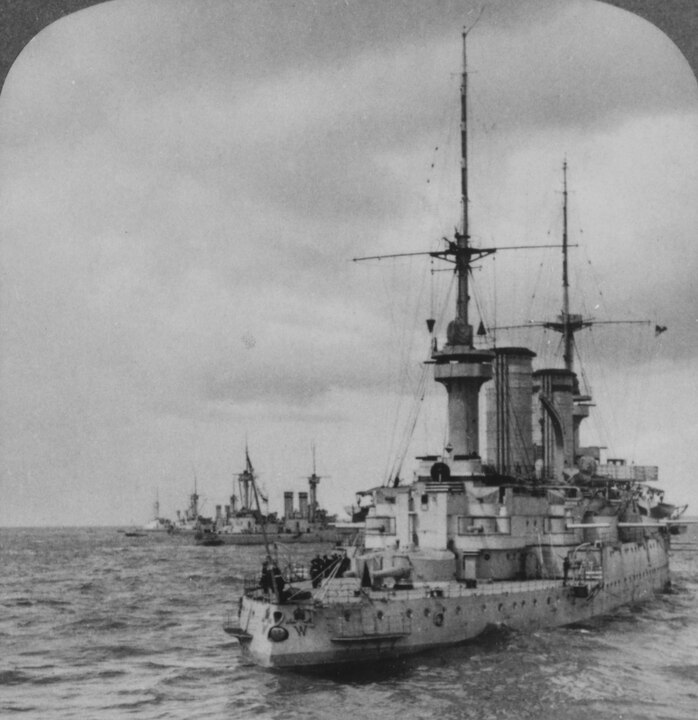
This class of 5 battleships (the “emperors”) included the Friedrich III, Wilhelm II, Wilhelm der Grosse, Karl der Grosse and Barbarossa, all build between 1895 and 1901. Very different from the Brandenburg in all respects, they would formed the
basis of the other following three classes of pre-dreadnoughts. At the start of World War I in July 1914, the ships were recommissioned and assigned to V Squadron; they were tasked with coastal defense in the North Sea but were quickly transferred to the Baltic to support German operations against the Russian Empire. In 1916, never having fired a shot in anger, they were disarmed and used as utility pontoons. Too slow and with insufficient artillery, they were no longer compatible with the German Hochseeflotte, especially after Jutland. Officially they had been known as the Kaiser Friedrich III class. They were used in a variety of secondary roles. They were all discarded in the early 1920s as Germany disarmed under the terms of the Treaty of Versailles.
Name | Class | Commissioned | Decommissioned | Notes |
SMS Kaiser Friedrich III | Kaiser Friedrich III class | 17-10-1898 | 06-12-1919 | Scraped in 1920 |
SMS Kaiser Wilhelm II | Kaiser Friedrich III class | 13-02-1900 | 17-03-1921 | Scraped in 1922 |
SMS Kaiser Wilhelm der Grosse | Kaiser Friedrich III class | 05-05-1901 | 06-12-1919 | Scraped in 1920 |
SMS Kaiser Karl der Grosse | Kaiser Friedrich III class | 04-02-1902 | 19-11-1915 | Scraped in 1920 |
SMS Kaiser Barbarossa | Kaiser Friedrich III class | 10-06-1901 | 06-12-1919 | Scraped in 1920 |


Wittelsbach class
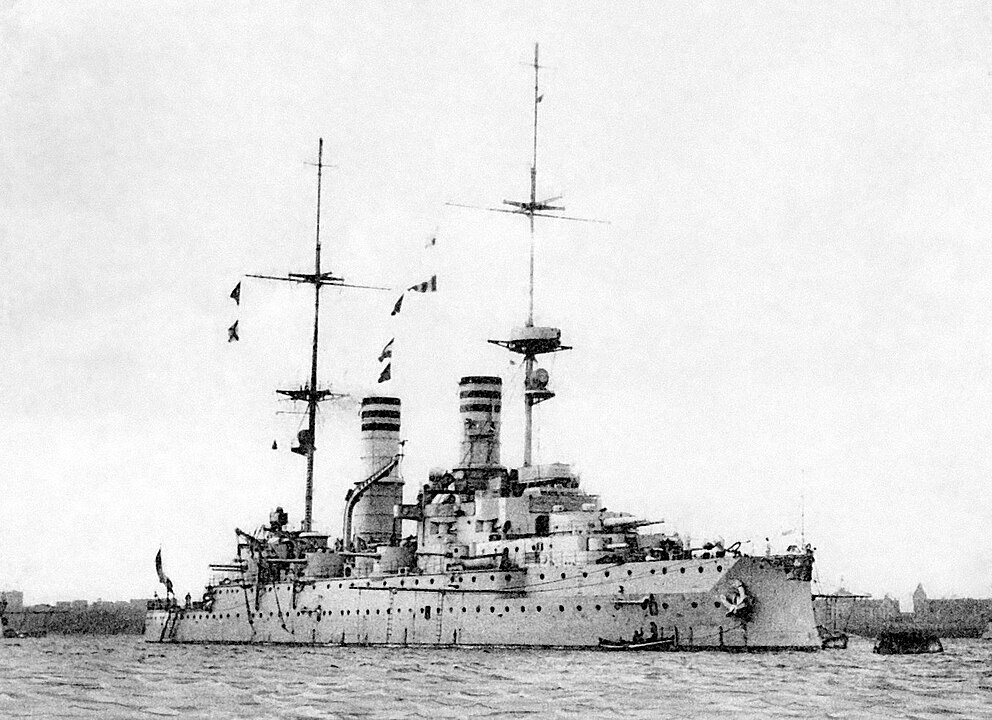
The Wittelsbach-class battleships were a group of five pre-dreadnought battleships built for the German Kaiserliche Marine (Imperial Navy) in the early 1900s. They were the first battleships ordered under the First Navy Law of 1898, part of Admiral Alfred von Tirpitz’s fleet expansion program. The class comprised the lead ship, Wittelsbach, and Wettin, Zähringen, Schwaben, and Mecklenburg. All five ships were laid down between 1899 and 1900 and were finished by 1904. The ships of the Wittelsbach class were similar in appearance to their predecessors in the Kaiser Friedrich III class, but had a more extensive armor belt. Wittelsbach, Wettin, Mecklenburg, and Zähringen were primarily occupied with training exercises and cruises abroad. Schwaben was used as a training ship to modernize the training unit of the German fleet. With the outbreak of World War I in July 1914, the ships returned to active service.
Name | Class | Commissioned | Decommissioned | Notes |
SMS Wittelsbach | Wittelsbach class | 15-10-1902 | 24-08-1916 | Sold for scrap, 07-07-1921 |
SMS Wettin | Wittelsbach class | 01-10-1902 | 11-03-1920 | Sold for scrap, 21-11-1921 |
SMS Zähringen | Wittelsbach class | 25-10-1902 | -- | Sunck as blockship 25-03-1945, Broken up 1949 |
SMS Schwaben | Wittelsbach class | 13-04-1904 | 08-03-1921 | Scraped in 1921 |
SMS Mecklenburg | Wittelsbach class | 25-05-1903 | 24-10-1916 | Scraped in 1921 |
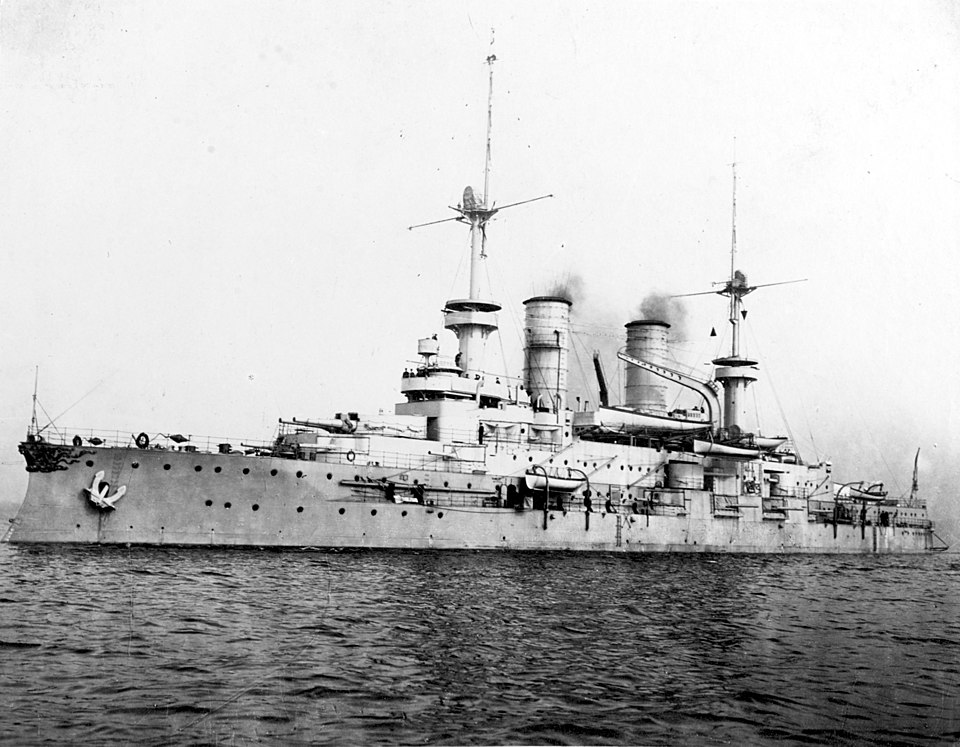
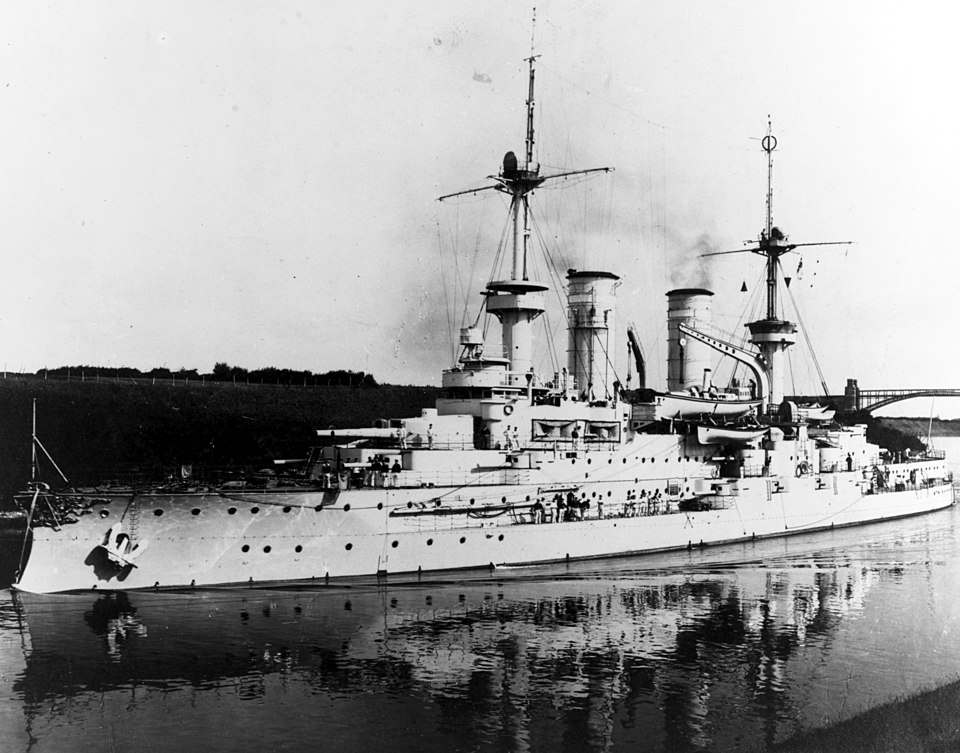
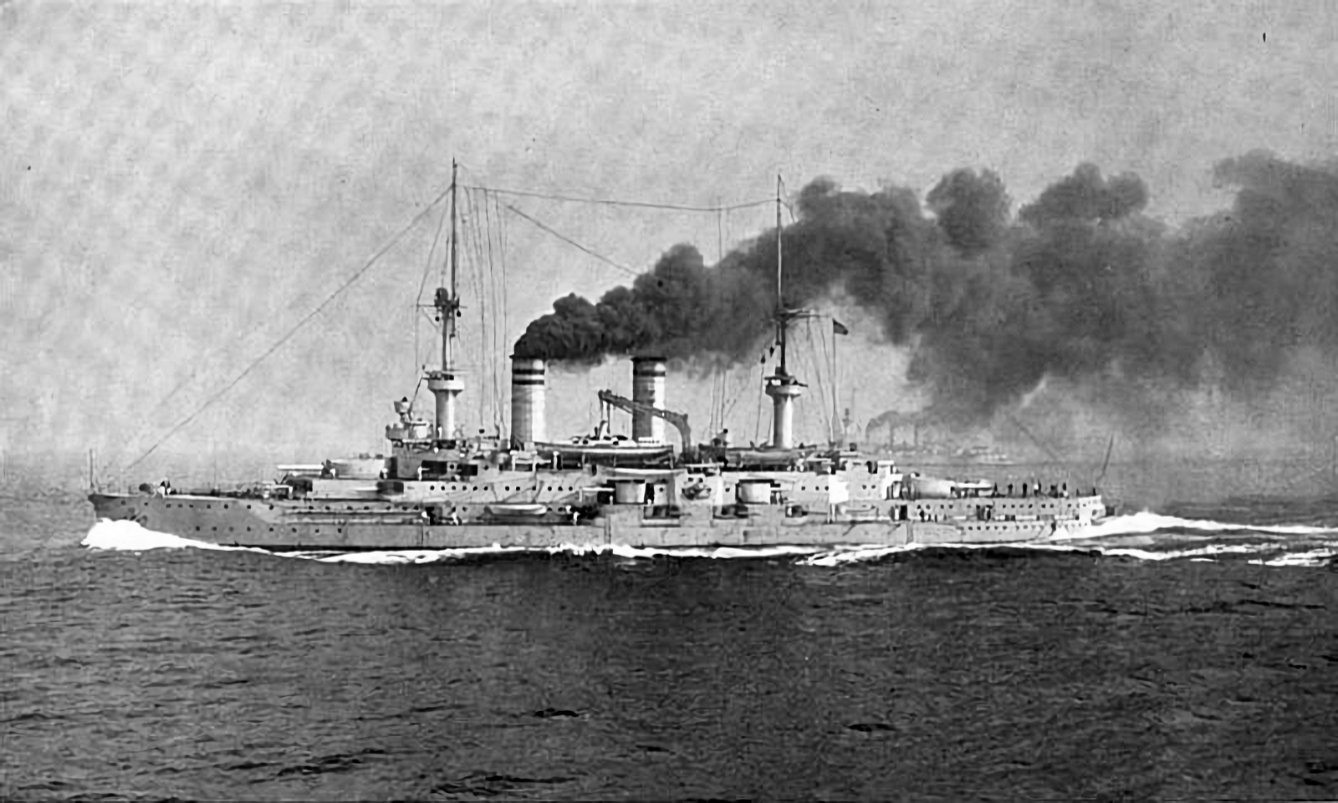
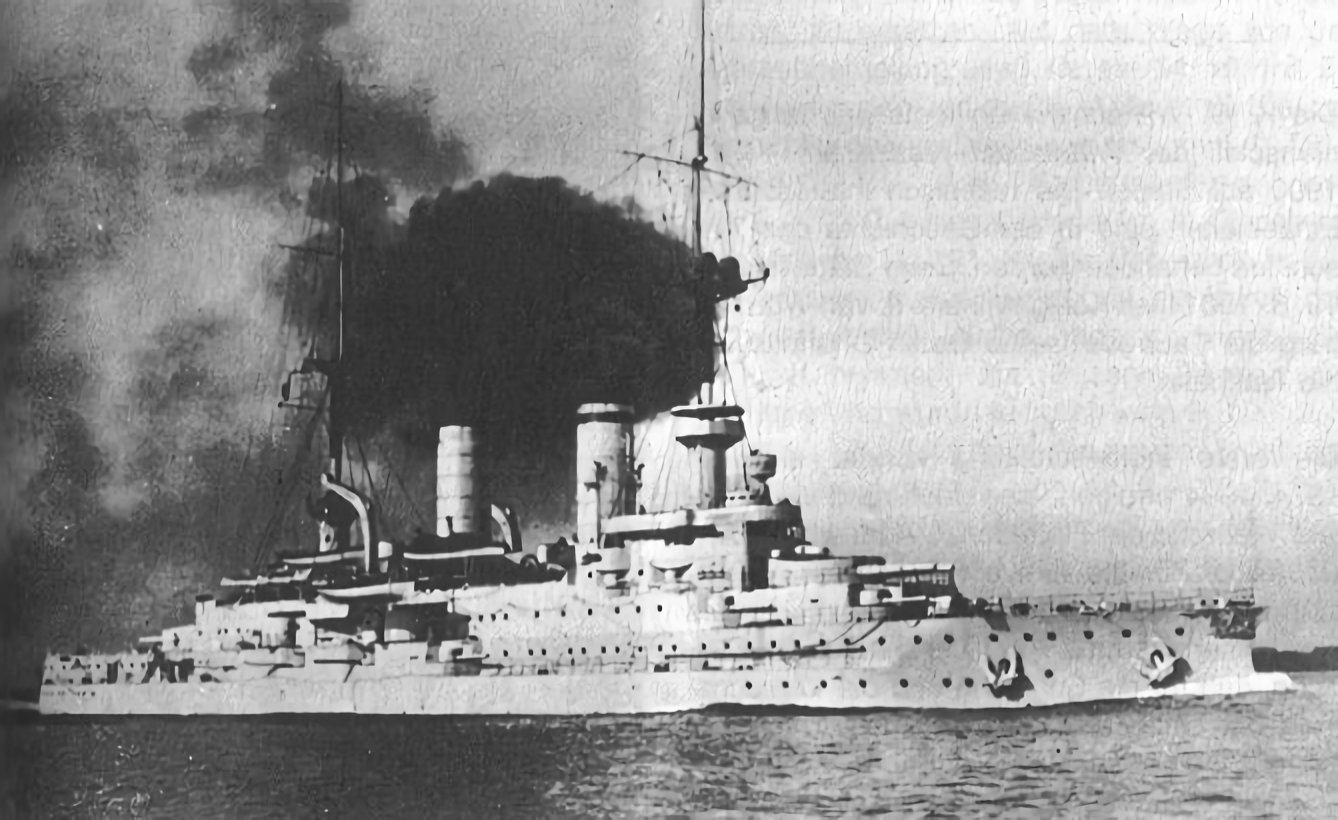
Braunschweig class
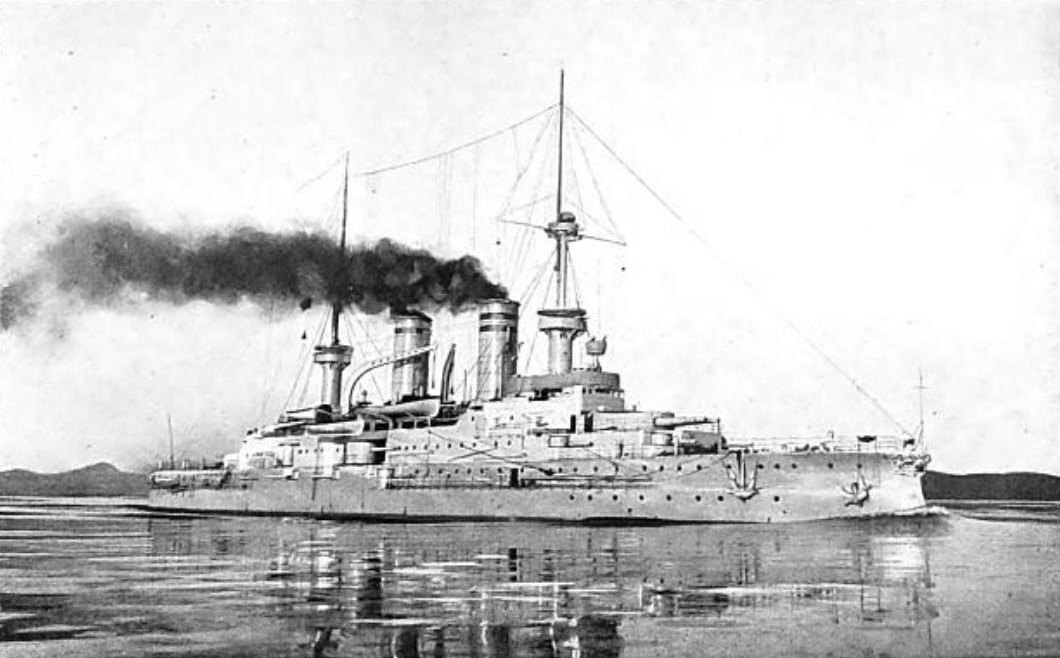
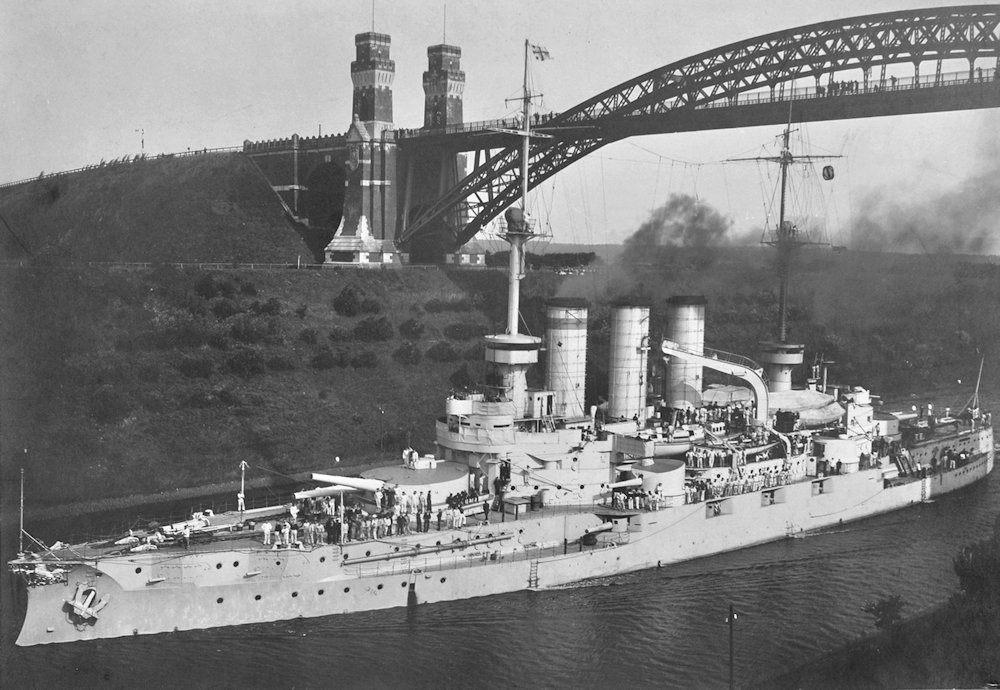
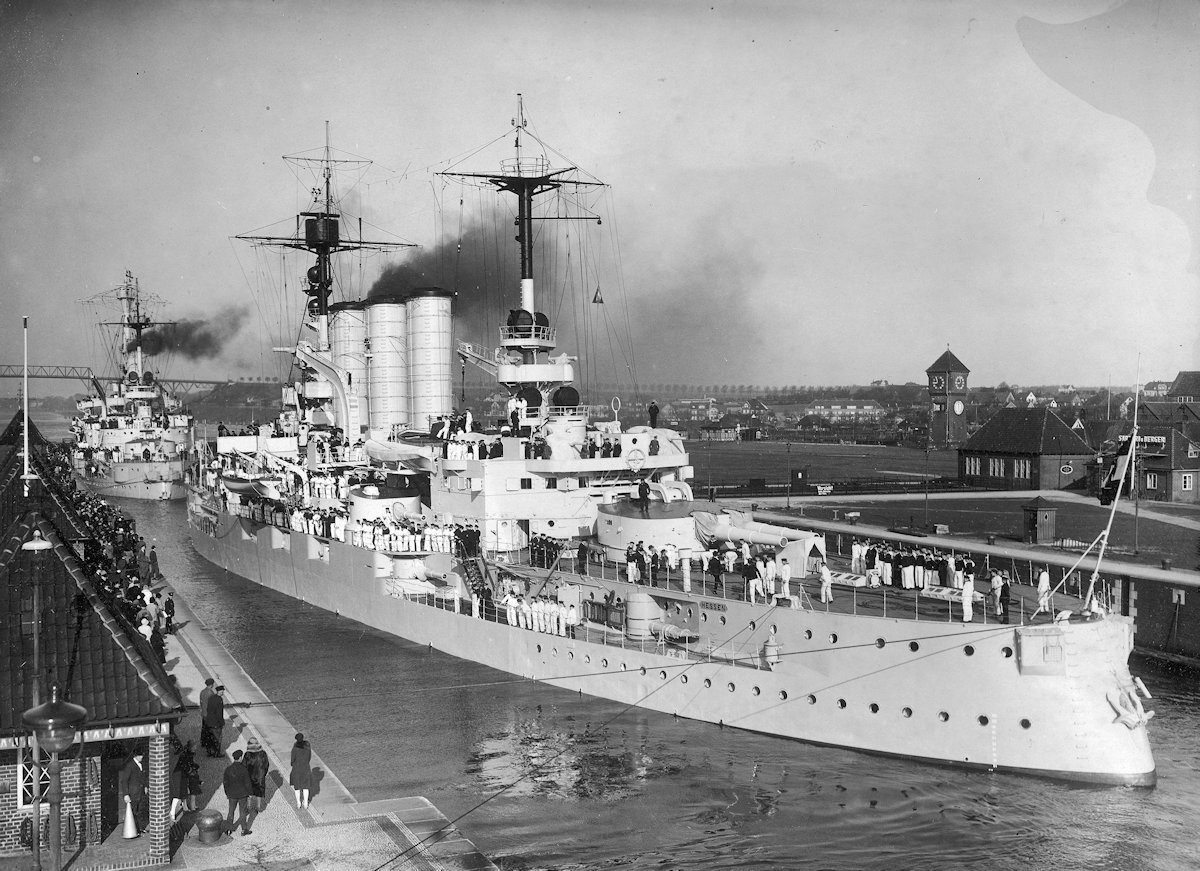
The Braunschweig-class battleships were a group of five pre-dreadnought battleships constructed for the Imperial German Navy (Kaiserliche Marine) as part of Admiral Alfred von Tirpitz’s fleet expansion program under the 1898 Naval Law. These vessels, named SMS Braunschweig, Elsass, Hessen, Preußen, and Lothringen, were laid down between 1901 and 1902 and
commissioned from 1904 to 1906. They were designed as an evolution of the preceding Wittelsbach class. During World War I, the Braunschweig-class ships initially served in the High Seas Fleet’s IV Battle Squadron, primarily conducting training and coastal defense duties in the Baltic Sea after 1915 to counter the Russian fleet. By 1917, most were disarmed and repurposed as training ships, depot vessels, or barracks hulks due to their obsolescence against dreadnought battleships.[1] Post-war, under the Treaty of Versailles restrictions, the ships were mostly scrapped between 1929 and 1932, though Hessen was retained, modernized in 1934 with new fire-control systems, and recommissioned as a training ship until transferred to the Soviet Union in 1946 as the target ship Tsel.
Name | Class | Commissioned | Decommissioned | Notes |
SMS Braunschweig | Braunschweig class | 15-10-1904 | 31-01-1926 | Scraped 31-03-1931 |
SMS Elsass | Braunschweig class | 29-11-1904 | 25-02-1930 | Scraped in 1936 |
SMS Hessen | Braunschweig class | 19-09-1905 | -- | Ceded to the Sovjet Union following WWII |
SMS Preussen | Braunschweig class | 12-07-1905 | 05-04-1929 | Scraped in 1954 |
SMS Lothringen | Braunschweig class | 18-05-1906 | 31-03-1931 | Scraped in 1931 |


Deutschland class
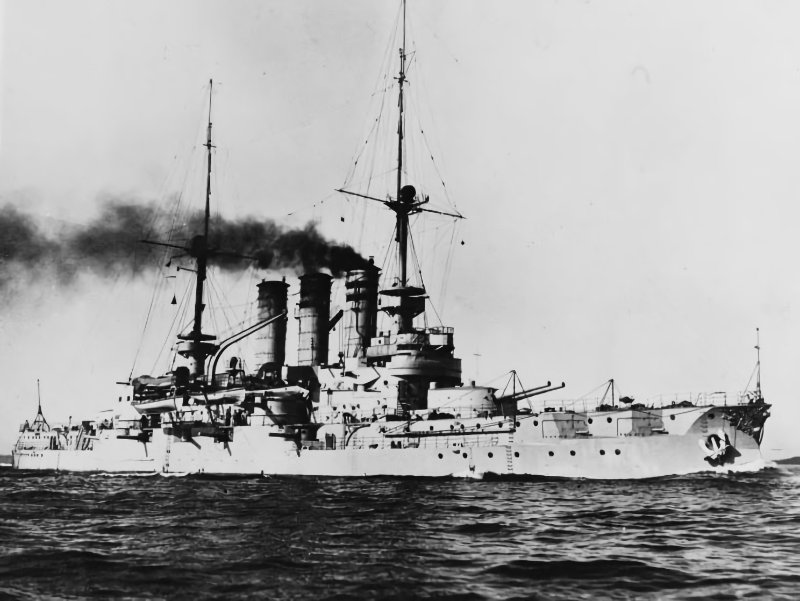
The Deutschland class was a group of five pre-dreadnought battleships built for the German Kaiserliche Marine (Imperial Navy), the last vessels of that type to be built in Germany. The class comprised Deutschland, the lead ship, Hannover, Pommern, Schlesien, and Schleswig-Holstein. The ships closely resembled those of the preceding Braunschweig class, but with stronger. Built between 1903 and 1908, they were completed after the launch of the revolutionary British all-big-gun battleship HMS Dreadnought in 1906. As a result, they were obsolescent before entering service. The ships nevertheless saw extensive service. Germany’s primary naval formation, through the late 1900s and early 1910s, when they were used for training. After Germany’s defeat, the Treaty of Versailles permitted the postwar navy to retain several old battleships for coastal defense, including the four Deutschland-class ships.
Name | Class | Commissioned | Decommissioned | Notes |
SMS Deutschland | Deutschland class | 03-08-1906 | 10-09-1917 | Scraped 1920-1922 |
SMS Hannover | Deutschland class | 01-10-1907 | 15-09-1931 | Scraped 1944-1946 |
SMS Pommern | Deutschland class | 06-08-1907 | -- | Sunk at the battle of jutland, 01-06-1916 |
SMS Schlesien | Deutschland class | 05-05-1908 | -- | Scuttles 05-05-1945, scraped 1949-1970 |
SMS Schleswig Holstein | Deutschland class | 06-07-1908 | 02-05-1917 | Sunk by bombs, raised an beached as target ship |
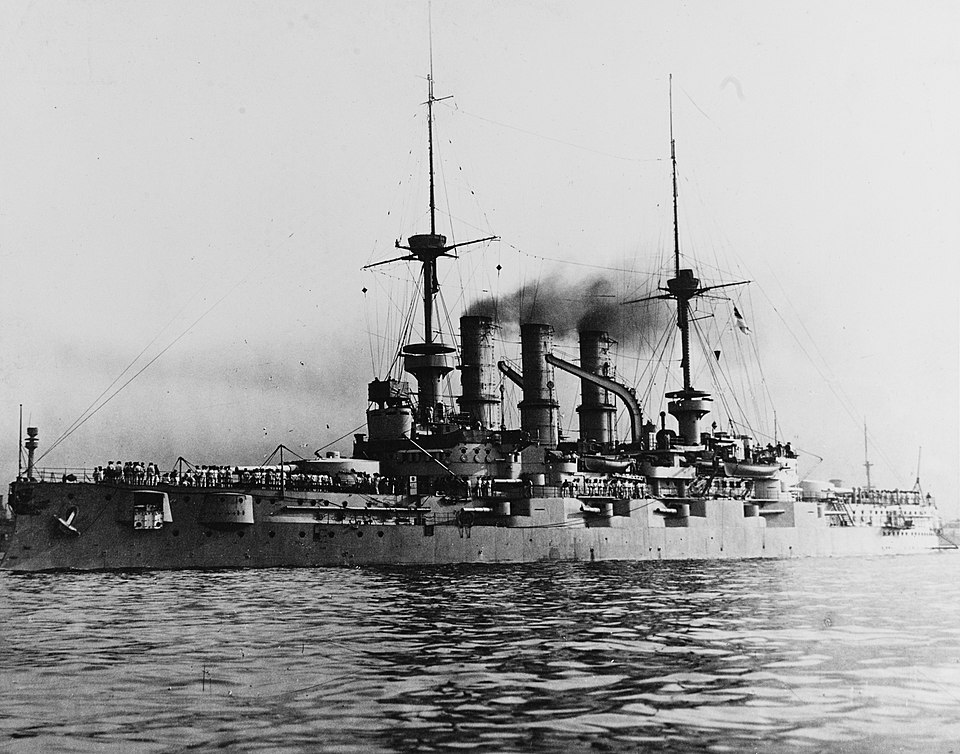
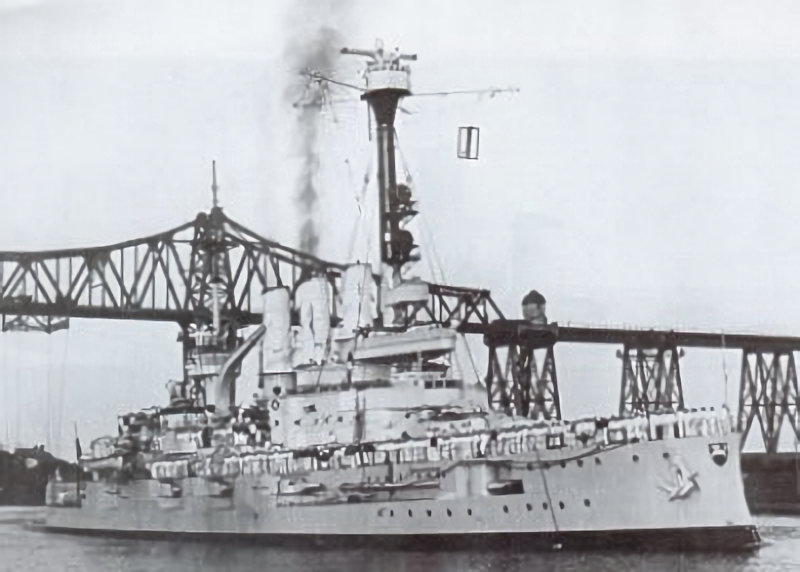
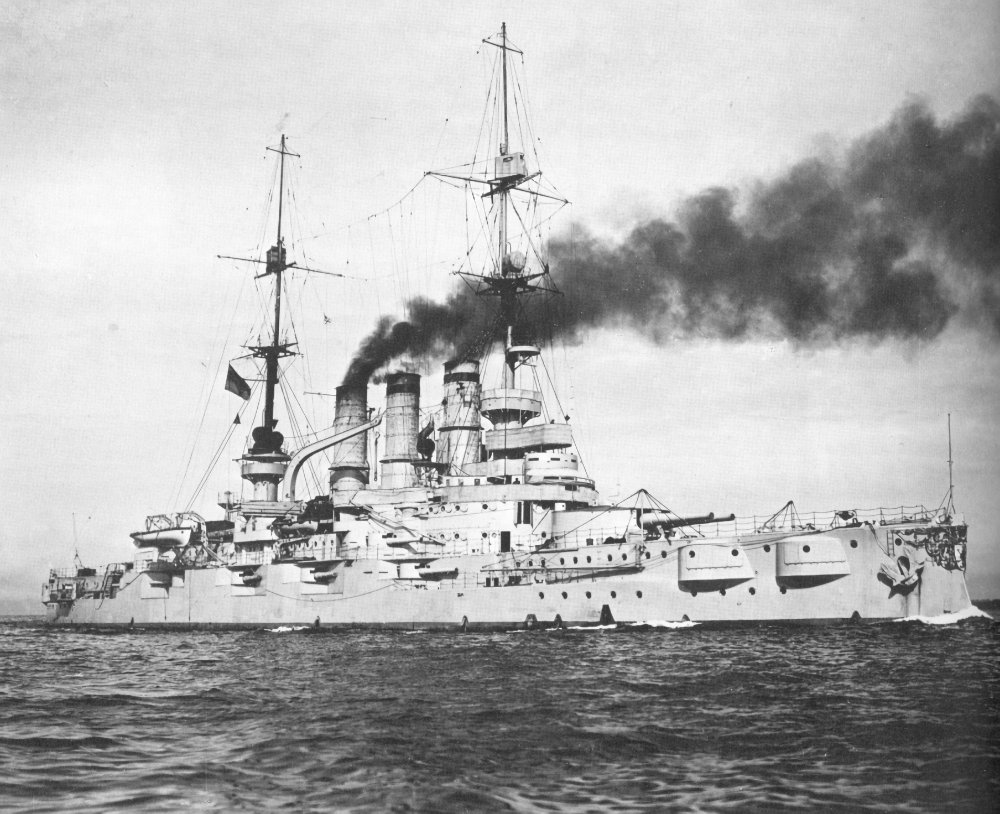
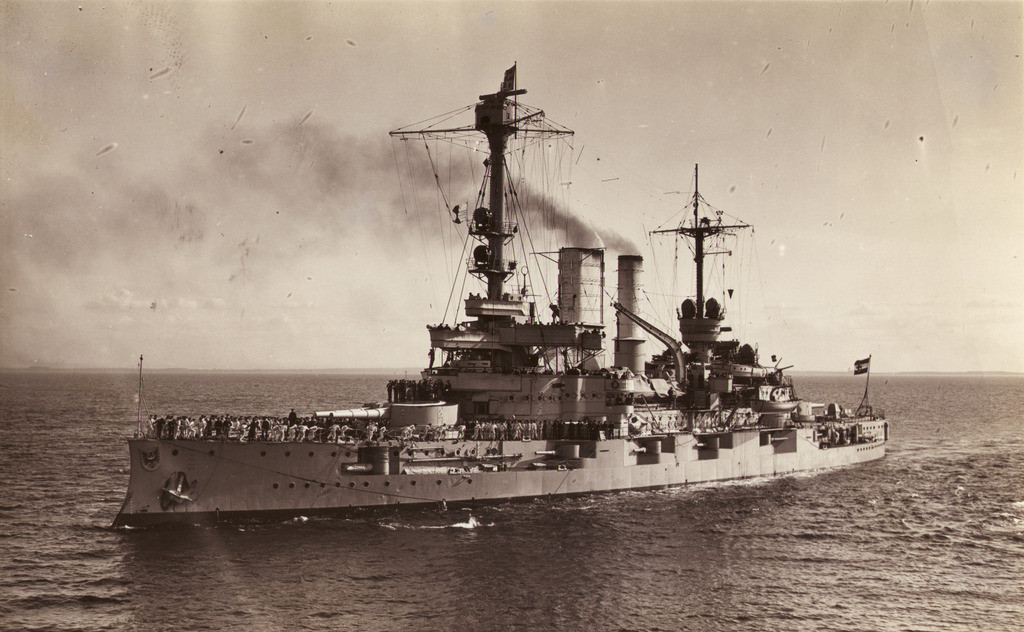

Dreadnought battleships
Nassau class
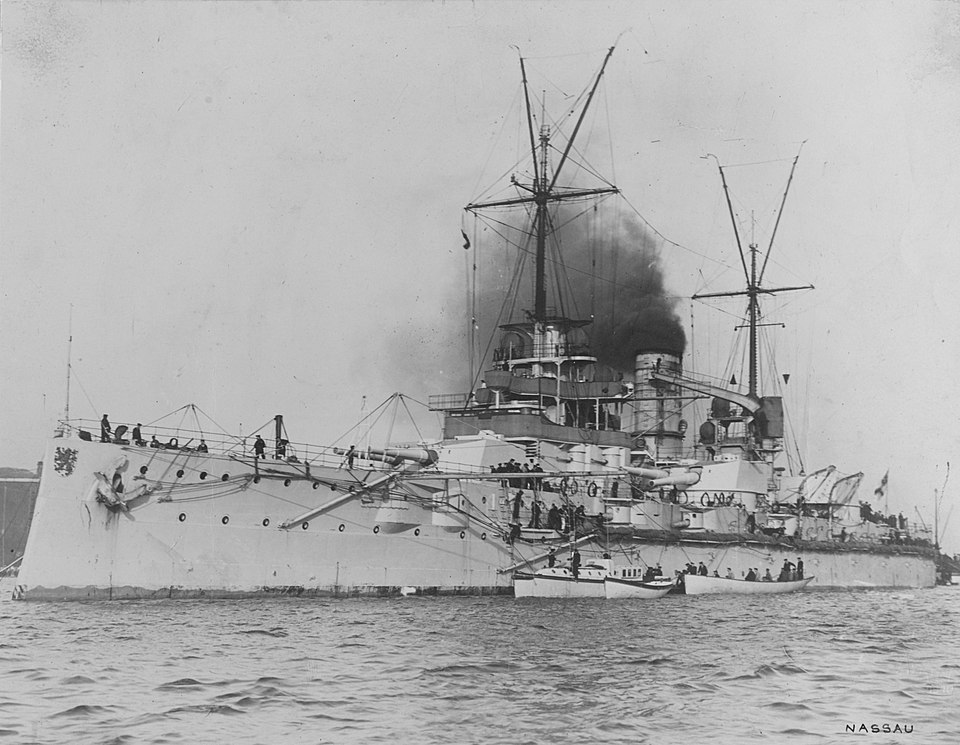
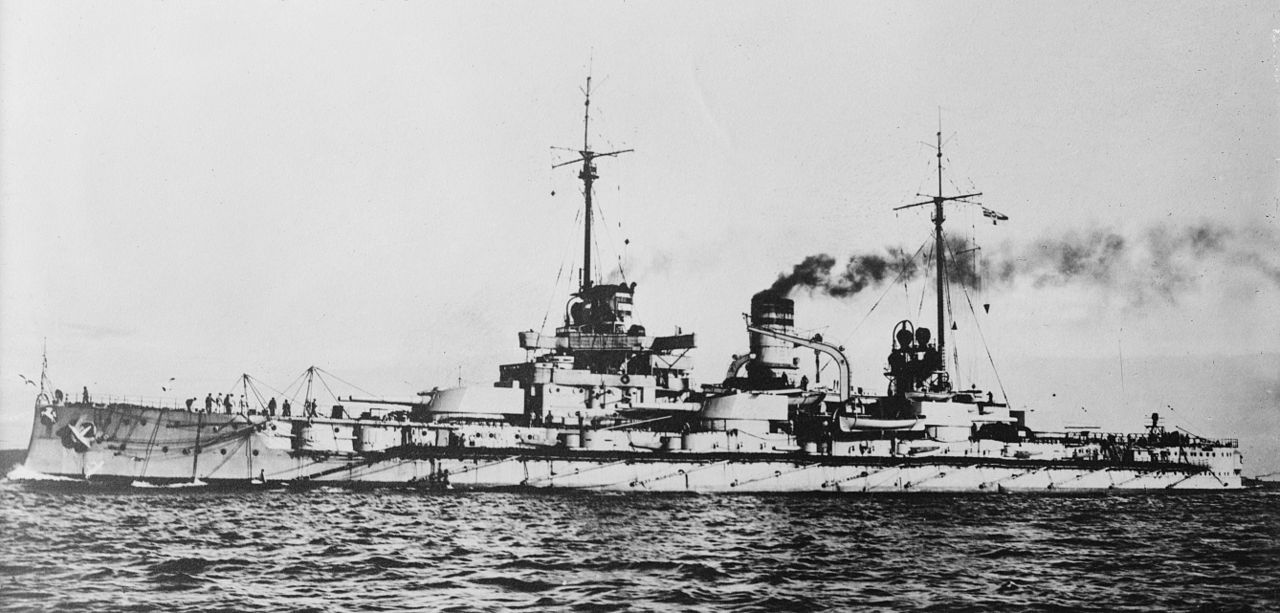
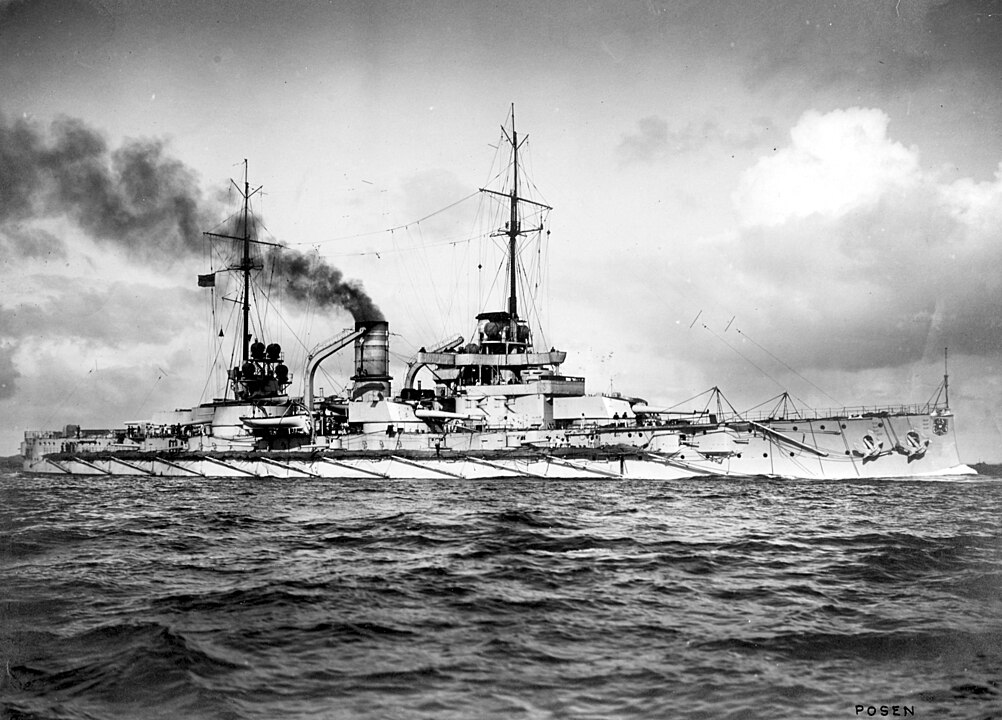
The Nassau class was a group of four dreadnought battleships built for the German Kaiserliche Marine (Imperial Navy) in the early 1900s. The class comprised Nassau, the lead ship, Westfalen, Rheinland, and Posen. All four ships were laid down in mid-1907, and completed by late 1910. They were Germany’s first dreadnought class, and though commonly
perceived as having been built in response to the British Dreadnought, their design traces its origin to 1903; they were in fact a response to Dreadnought‘s predecessors of the Lord Nelson class. After entering service, the Nassau-class ships served as II Division, I Battle Squadron of the High Seas Fleet for the duration of their careers. Following Germany’s defeat, all four ships were ceded as war prizes to the victorious Allied powers and broken up in the early 1920s.
Name | Class | Commissioned | Decommissioned | Notes |
SMS Nassua | Nassau class | 01-10-1909 | -- | Ceded by Japan, Scraped 1920 |
SMS Westfalen | Nassau class | 01-10-1907 | 11-08-1918 | Ceded by allies, Scraped 1924 |
SMS Rheinland | Nassau class | 06-08-1907 | 04-10-1918 | Ceded by allies, scraped 1921 |
SMS Posen | Nassau class | 05-05-1908 | 16-12-1918 | Cede by Great Brittain, scraped 1922 |

Helgoland class
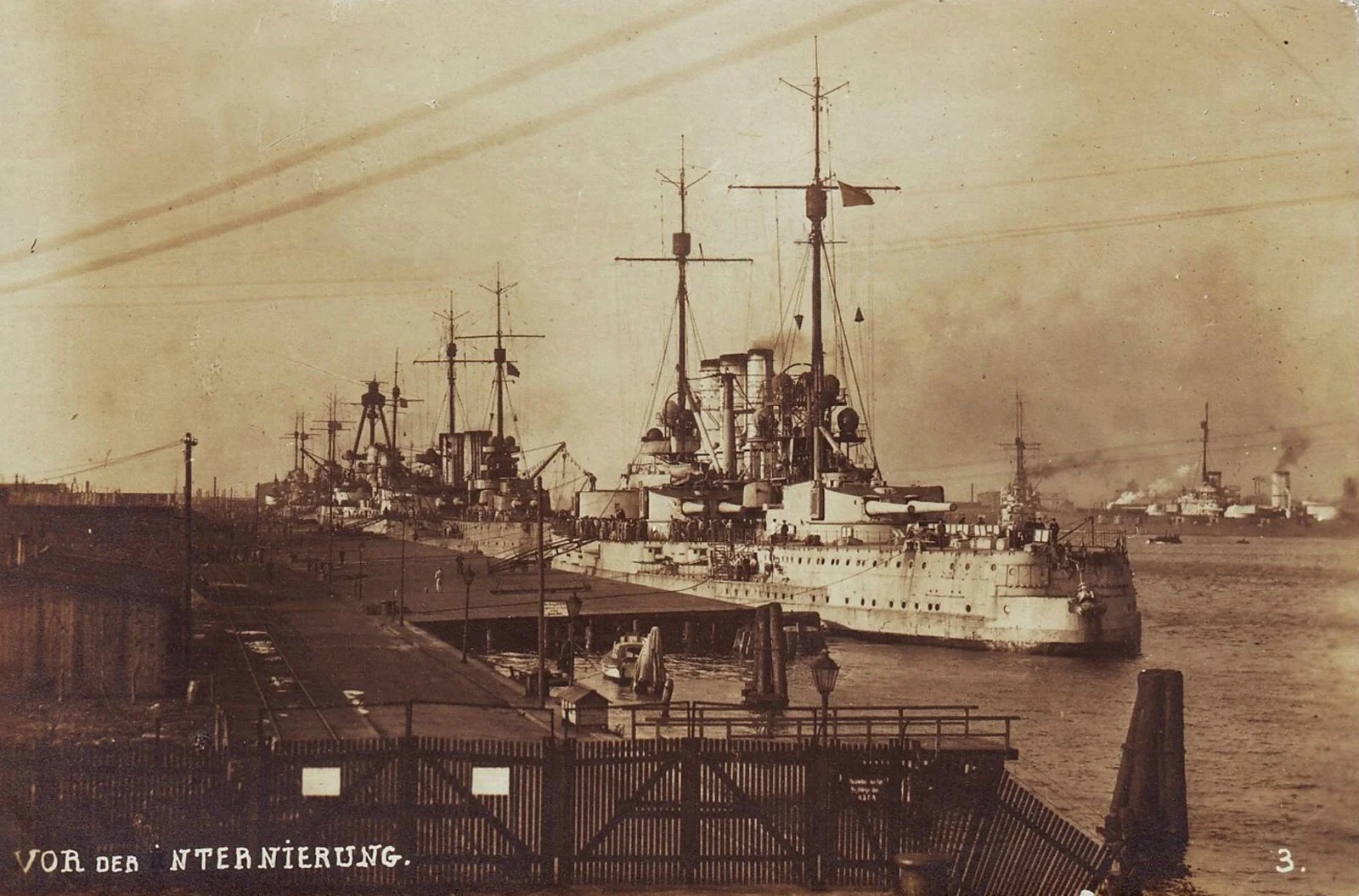
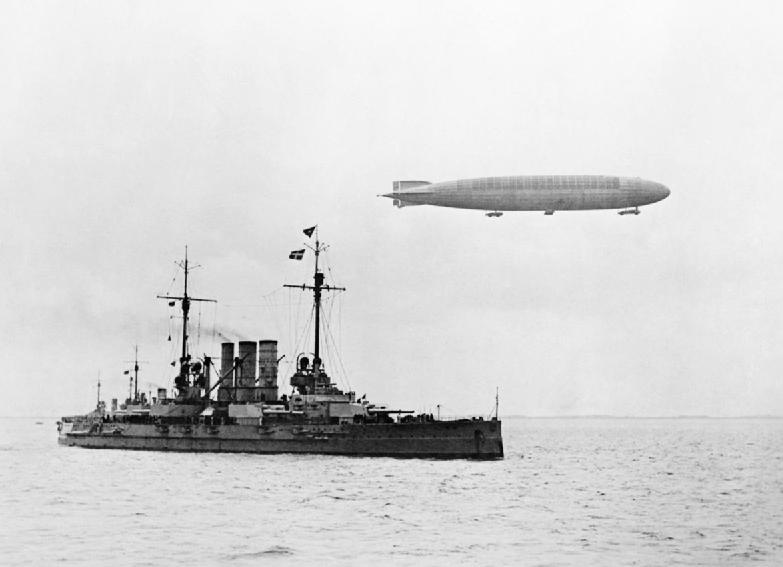
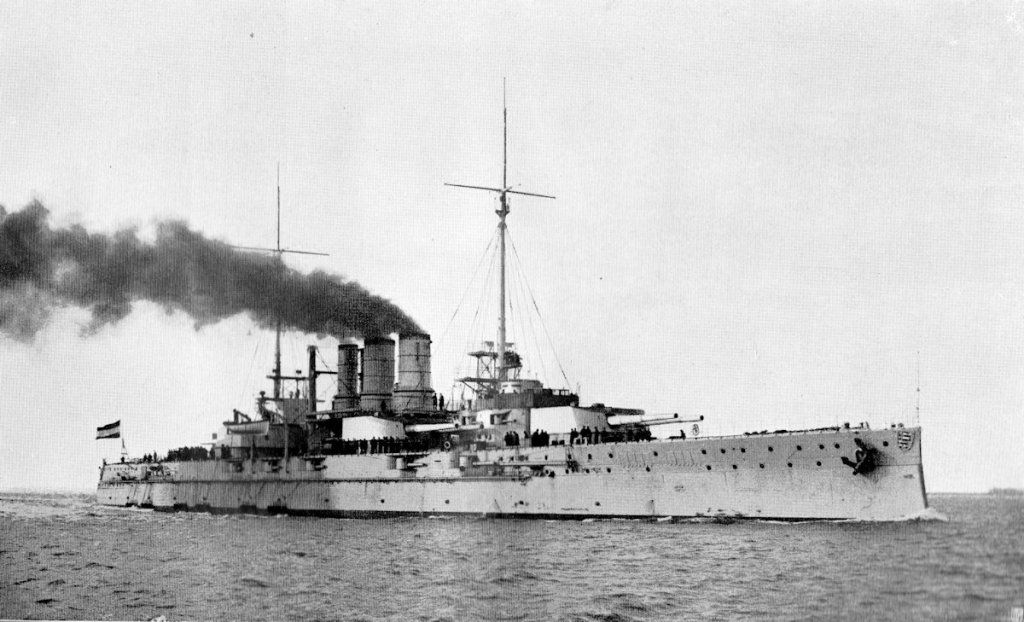
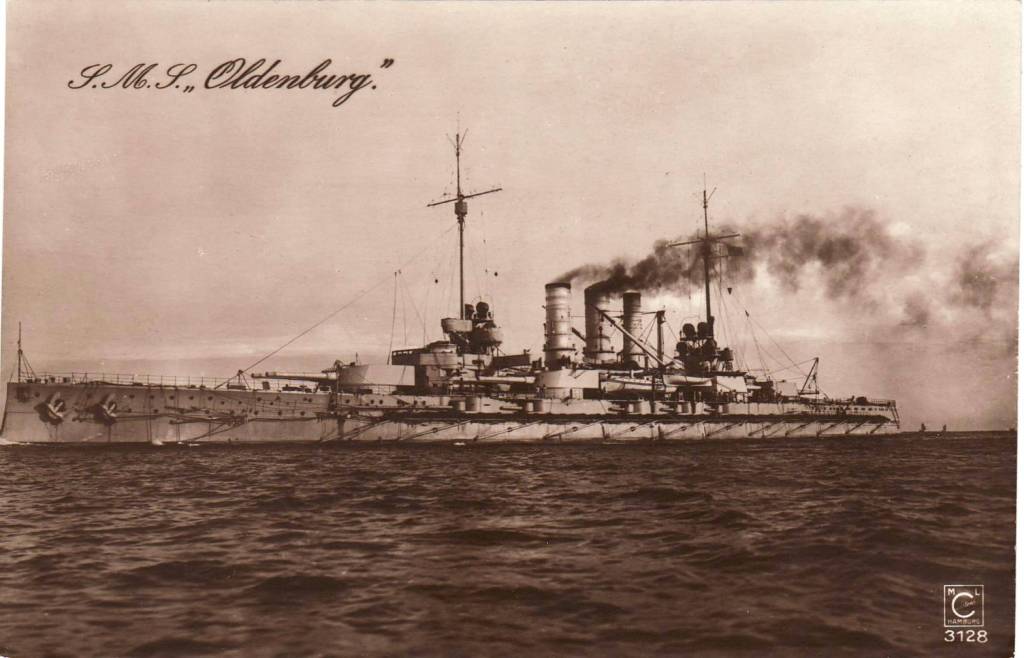
The Helgoland class was the second class of dreadnought battleships to be built for the German Kaiserliche Marine (Imperial Navy). Constructed from 1908 to 1912, the class comprised four ships: Helgoland, the lead ship, Ostfriesland, Thüringen, and Oldenburg. The design was a significant improvement over the previous Nassau-class ships; they had a larger main battery guns and an improved propulsion system. All four survived the war. Ostfriesland was taken by the US Navy and expended as a target. Helgoland and Oldenburg were allotted to Britain and Japan respectively, and broken up in 1921. Thüringen was delivered to France in 1920, and was used as a target ship for the French navy.
Name | Class | Commissioned | Decommissioned | Notes |
SMS Helgoland | Helgoland class | 23-08-1911 | 16-12-1918 | Ceded to Great Britain in 1920. Scraped in 1921 |
SMS Ostfriesland | Helgoland class | 01-08-1911 | 16-12-1918 | Ceded to United States, 1920, Expended as a target, 1921 |
SMS Thüringen | Helgoland class | 10-09-1911 | 16-12-1918 | Ceded to France, 1920, Expended as target, scraped 1923–33 |
SMS Oldenburg | Helgoland class | 01-05-1912 | -- | Ceded to Japan, 1920. Broken up for scrap, 1921 |
Kaiser class
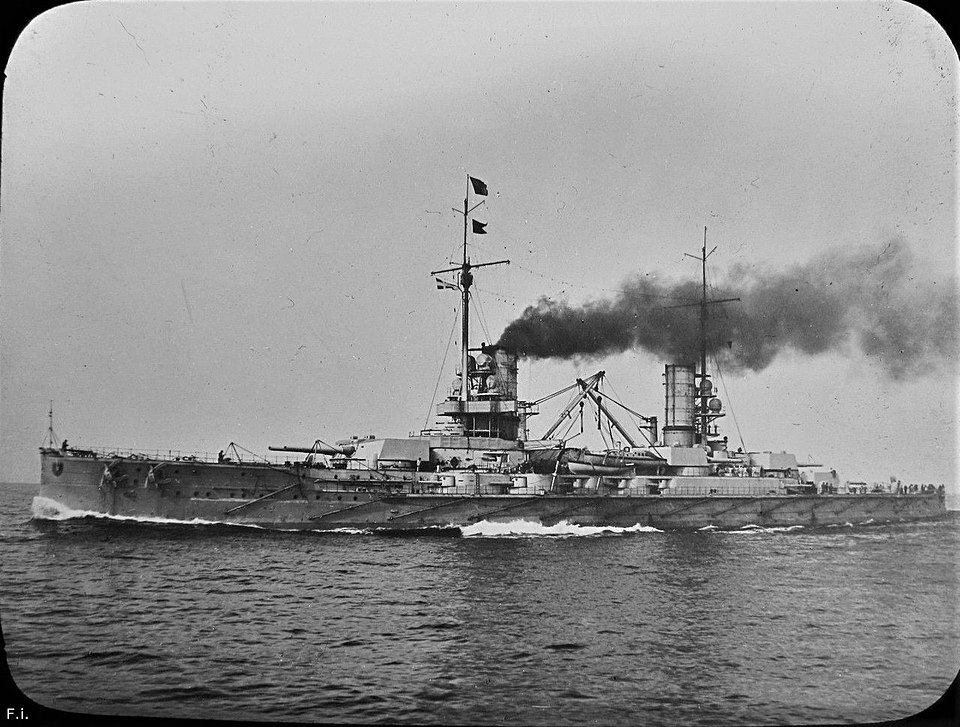
The Kaiser class was a class of five dreadnought battleships that were built in Germany prior to World War I and served in the Kaiserliche Marine (Imperial Navy) during the war. They were the third class of German dreadnoughts, and the first to feature turbine engines and superfiring turrets. The five ships were Kaiser, Friedrich der Grosse, Kaiserin, Prinzregent Luitpold, and König Albert. All five ships saw action in the North Sea during the war. At the end of the war, all five ships were interned at the British naval base in Scapa Flow. On 21 June 1919, they were scuttled to prevent their seizure by the Royal Navy. The ships were subsequently raised and broken up for scrap between 1929 and 1937.
Name | Class | Commissioned | Decommissioned | Notes |
SMS Kaiser | Kaiser class | 01-08-1911 | -- | Scuttled at Scapa Flow, 21-06-1919 |
SMS Friedrich der Grosse | Kaiser class | 15-10-1912 | -- | Scuttled at Scapa Flow, 21-06-1919 |
SMS Kaiserin | Kaiser class | 14-05-1913 | -- | Scuttled at Scapa Flow, 21-06-1919 |
SMS Prinzregent Luitpold | Kaiser class | 19-08-1913 | -- | Scuttled at Scapa Flow, 21-06-1919 |
SMS König Albert | Kaiser class | 31-07-1913 | -- | Scuttled at Scapa Flow, 21-06-1919 |
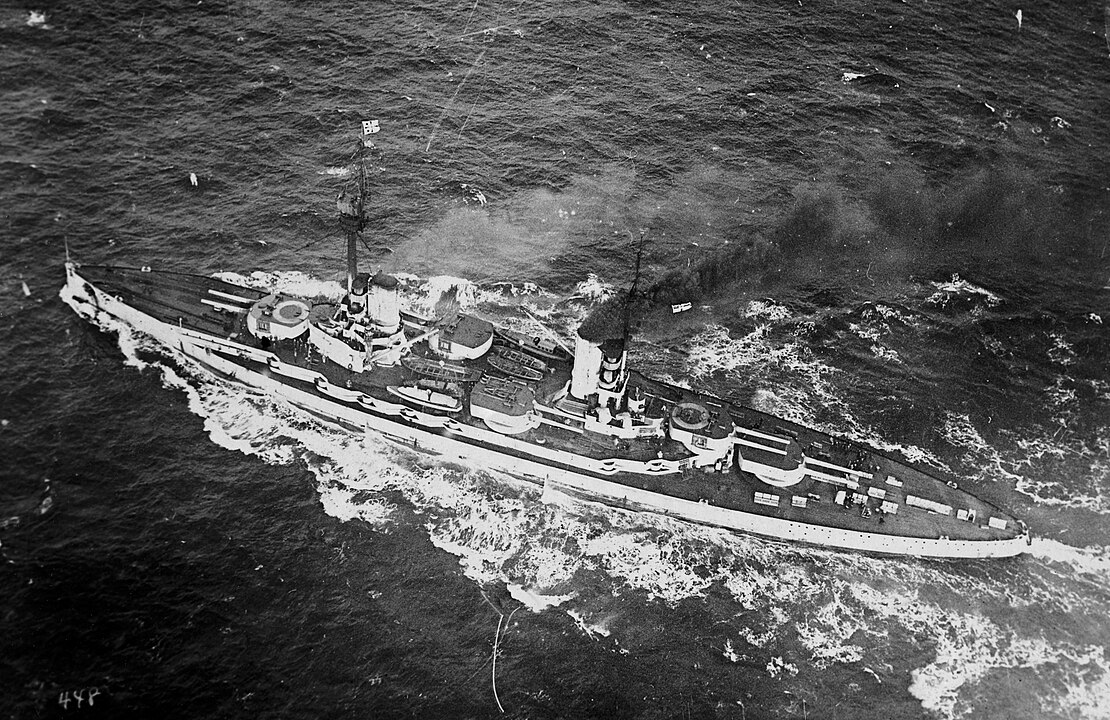

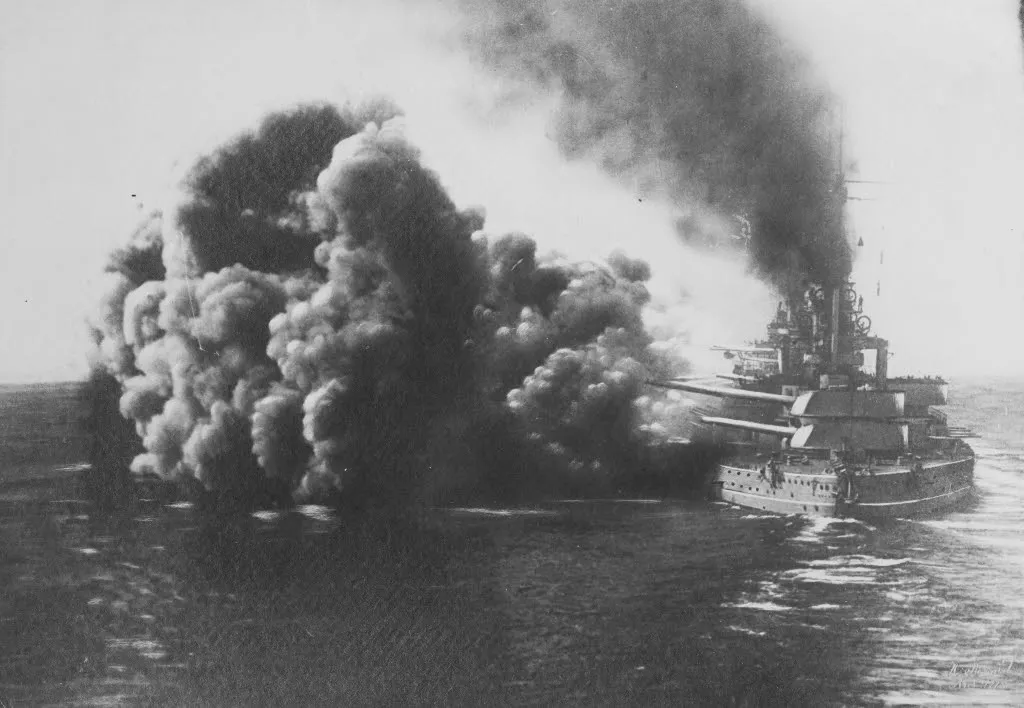
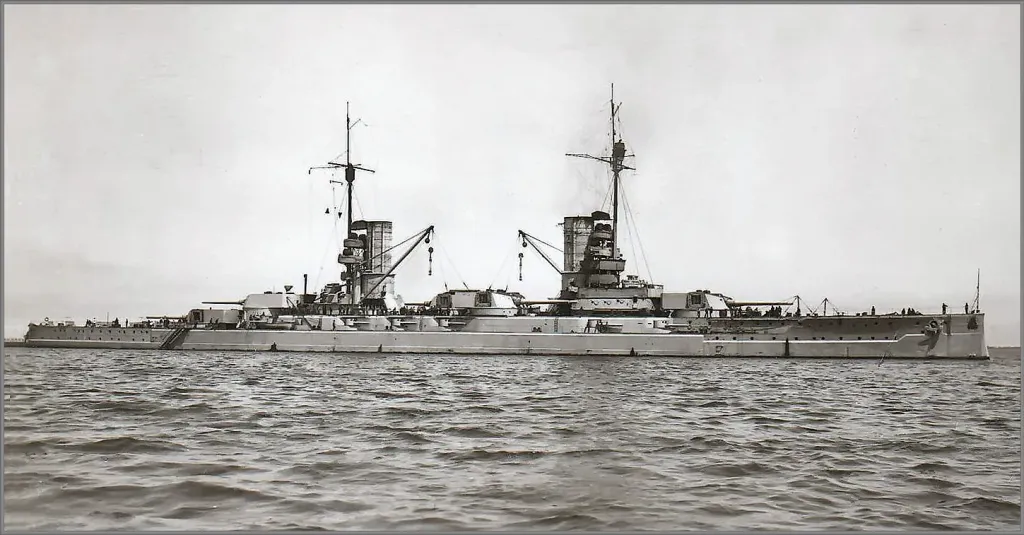
Konig class
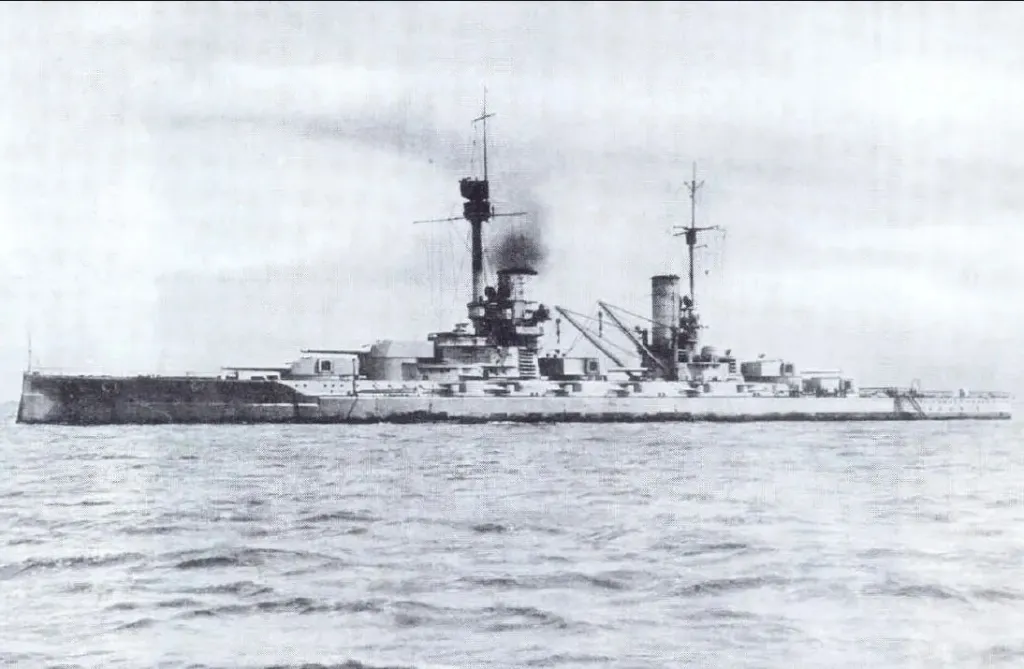
The König class was a group of four dreadnought battleships built for the German Kaiserliche Marine (Imperial Navy) in the early 1910s. The class comprised König, the lead ship, Grosser Kurfürst, Markgraf, and Kronprinz. The design for the ships was derived from the preceding Kaiser class. Diesel engines were planned for the ships, but they could not be readied in time, so all four vessels reverted to steam turbines for their propulsion system. All four ships were interned at Scapa Flow after the war, where they were scuttled on 21 June 1919. Grosser Kurfürst was raised in 1938 and broken up, but the other three vessels remain on the sea floor, where they remain popular diving sites.
Name | Class | Commissioned | Decommissioned | Notes |
SMS König | König class | 10-08-1914 | -- | Scuttled at Scapa Flow, 21-06-1919 |
SMS Grosser | König class | 30-07-1914 | -- | Raised in 1913, Sold for scrape 1938 |
SMS Markgraf | König class | 01-10-1914 | -- | Scuttled at Scapa Flow, 21-06-1919 |
SMS Kronprinz | König class | 08-11-1914 | -- | Scuttled at Scapa Flow, 21-06-1919 |


Bayern class
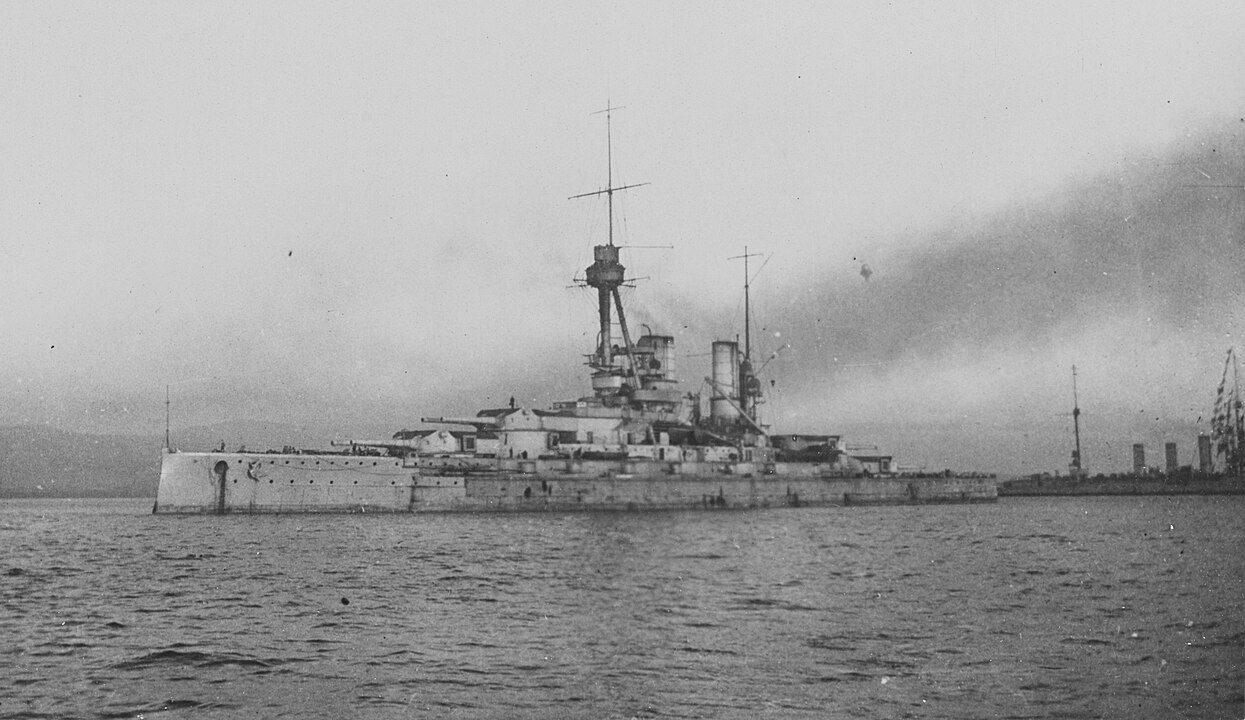
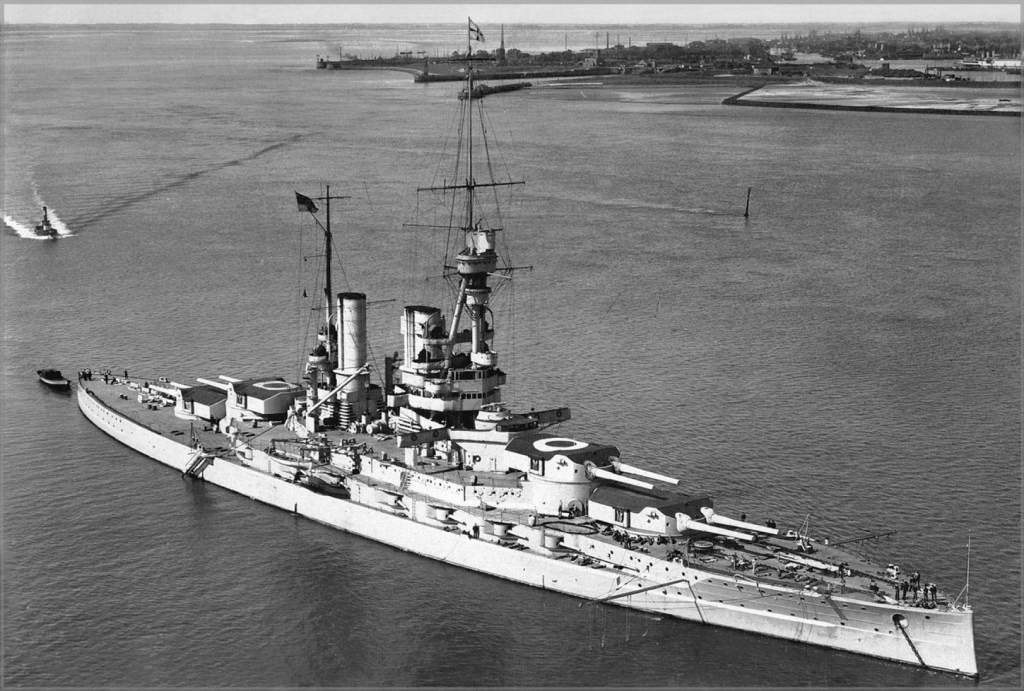
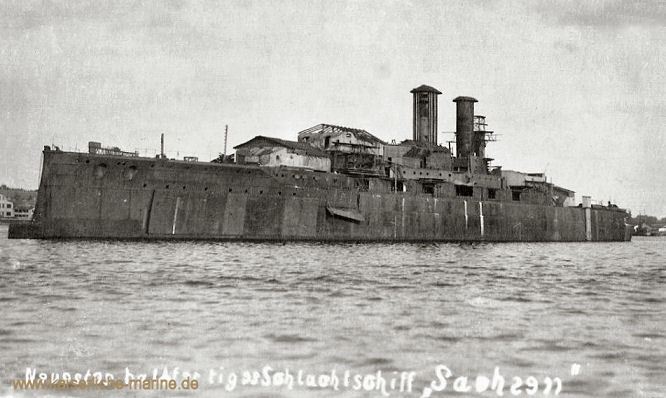
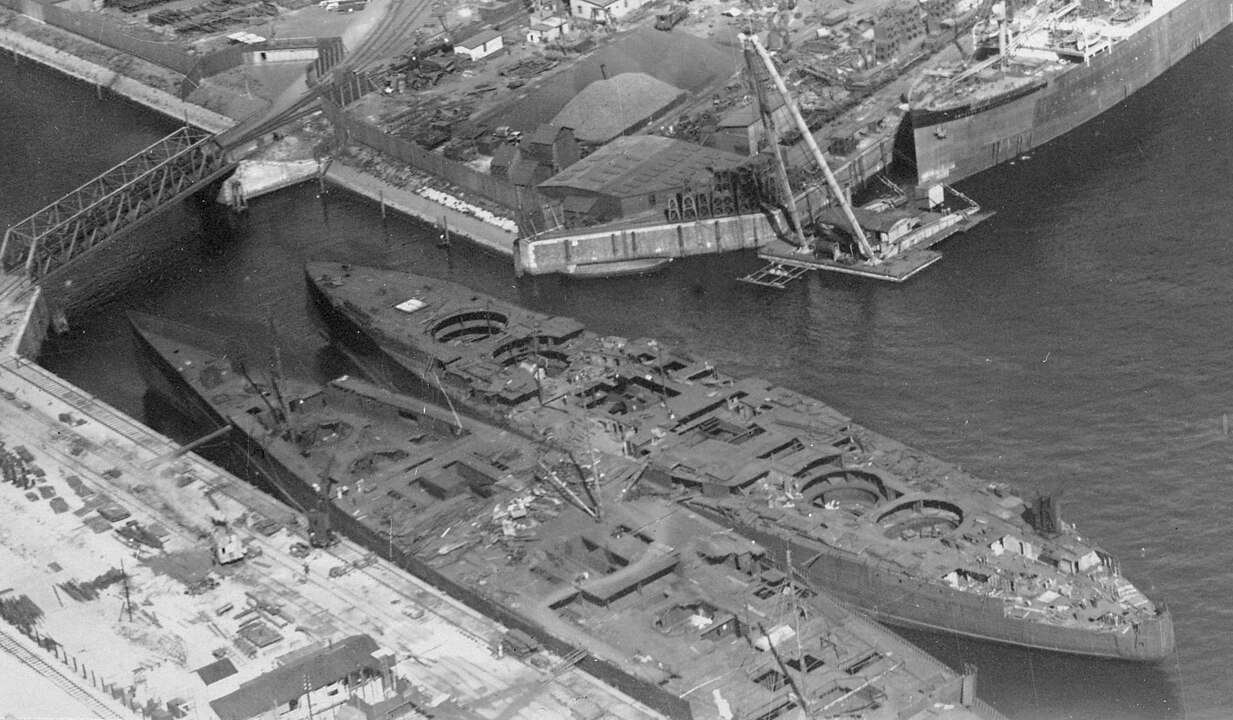
The Bayern class was a class of four dreadnought battleships built for the German Kaiserliche Marine (Imperial Navy). The class comprised Bayern, Baden, Sachsen, and Württemberg. Construction started on the ships shortly before World War I. Only Baden and Bayern were completed, due to shipbuilding priorities changing as the war dragged on. It was determined that U-boats were more valuable to the war effort, and so work on new battleships was slowed and ultimately stopped altogether. As a result, Bayern and Baden were the last German battleships completed by the Kaiserliche Marine.
Name | Class | Commissioned | Decommissioned | Notes |
SMS Bayern | Bayern class | 18-02-1914 | -- | Scuttled Scapa Flow, 21-06-1919, refloated / broken up 1935 |
SMS Baden | Bayern class | 14-03-1917 | -- | Sunk as targetr 16-08-1921 |
SMS Sachsen | Bayern class | 03-11-1919 | -- | Broken up 1921-1923 |
SMS Württemberg | Bayern class | Cenceled | -- | Broken up 1921 |
L20e alpha class
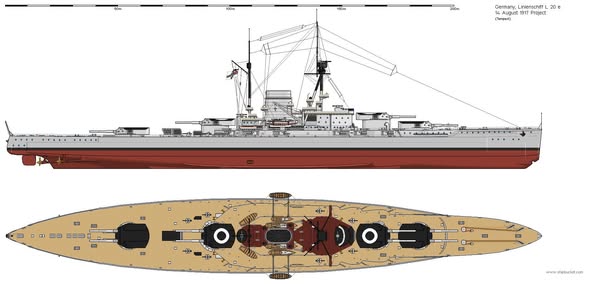
L 20e α was a design for a class of battleships to be built in 1918 for the German Kaiserliche Marine (Imperial Navy) during World War I. Design work on the class of battleship to succeed the Bayern-class battleships began in 1914, but the outbreak of World War I in July 1914 led to these plans being shelved. Work resumed in early 1916 and lessons from the Battle of Jutland, fought later that year, were incorporated into the design. Work on the design was completed by September 1918, but by then there was no chance for them to be built. Germany’s declining war situation and the reallocation of resources to support the U-boat campaign meant the ships would never be built.
Name | Class | Commissioned | Decommissioned | Notes |
SMS L 20e α | L 20e α class | -- | -- | Never build, design study only |
Fast battleships
Scharnhorst class
The Scharnhorst class was a class of German battleships (or battlecruisers) built immediately prior to World War II. The first capital ships of Nazi Germany’s Kriegsmarine, it comprised two vessels, Scharnhorst and Gneisenau. Scharnhorst was launched first, and is considered to be the lead ship. Gneisenau was the first to be laid down and commissioned. They marked the beginning of German naval rearmament after the Treaty of Versailles. The two ships were laid down in 1935, launched in late 1936, and commissioned into the German fleet by early 1939. Scharnhorst and Gneisenau operated together for the early years of World War II. The two ships participated in Operation Weserübung, the German invasion of Denmark and Norway. During the battle of North Cape, a force led by the Royal Navy battleship HMS Duke of York sank Scharnhorst. In the meantime, repair work on Gneisenau had begun, and the ship was in the process of being rearmed. When Scharnhorst was sunk, work on her sister was abandoned. Instead, she was sunk as a blockship in Gotenhafen in 1945; the wreck was broken up for scrap in the 1950s.
Name | Class | Commissioned | Decommissioned | Notes |
SMS Scharnhosrt | Scharnhost class | 07-01-1939 | -- | Sunk at the battle of the North Cape, 26-12-1943 |
SMS Gneisenau | Scharnhost class | 21-05-1938 | 01-07-1942 | Sunk as blockship, 23-03-1945, scraped 1951 |
Bismarck class
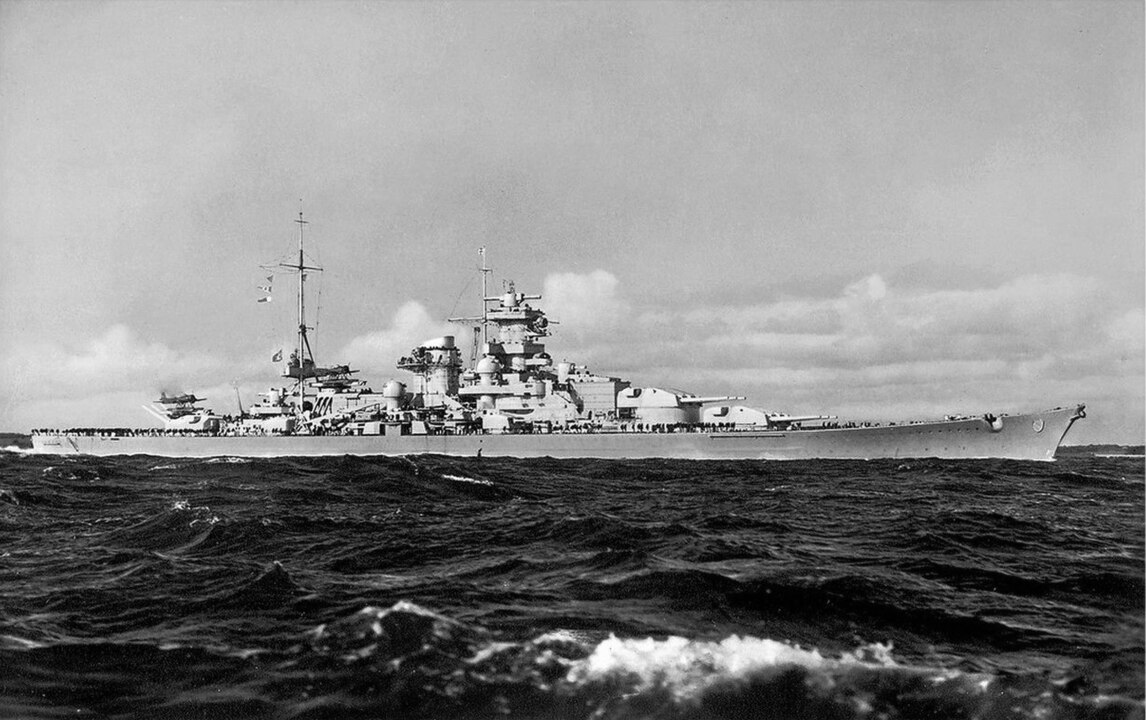
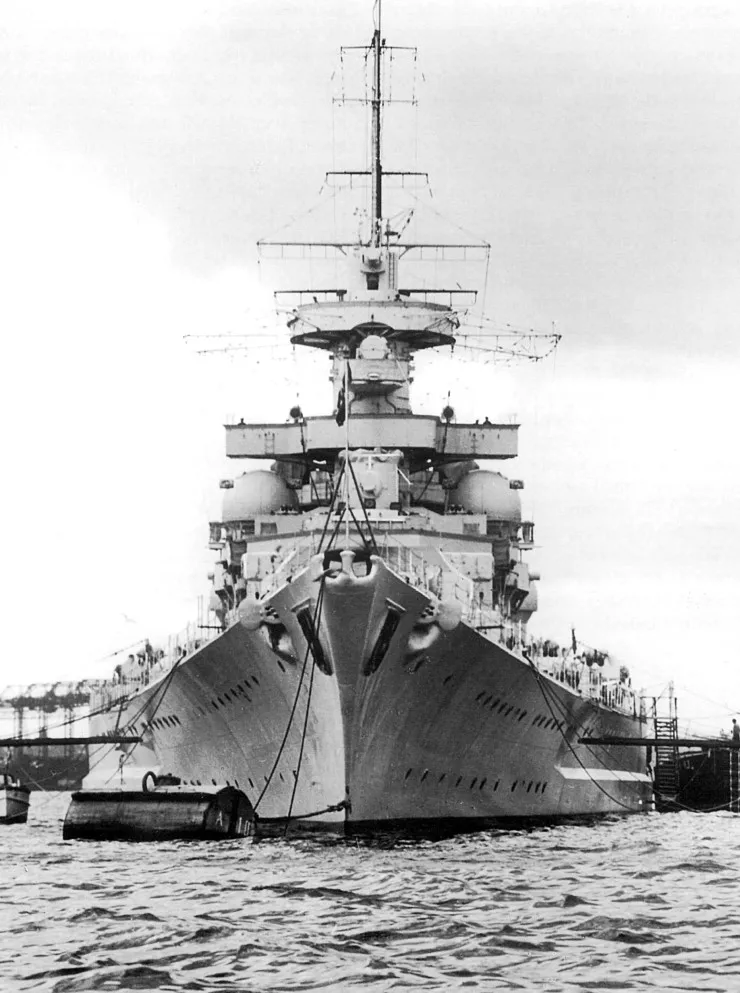
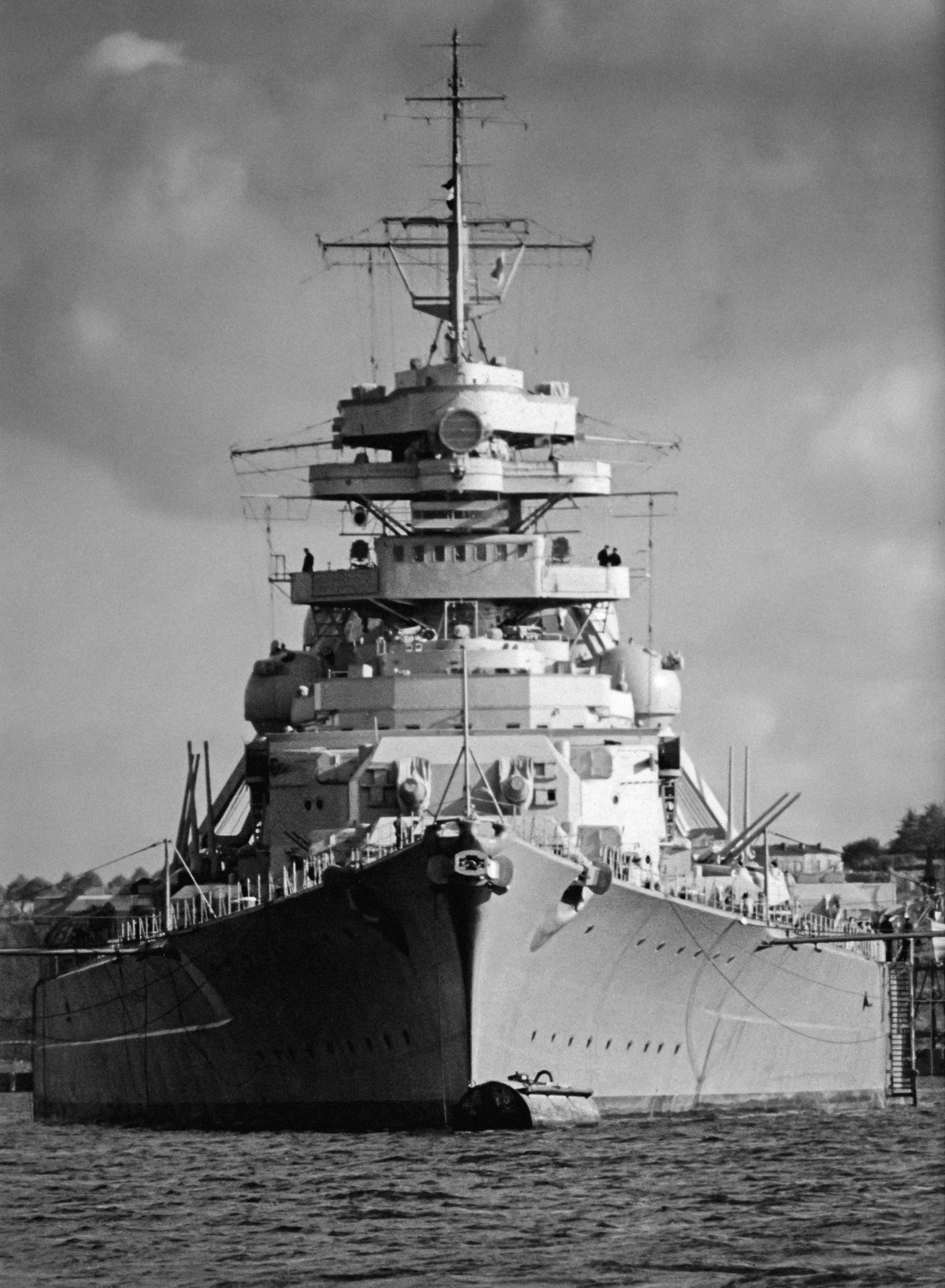
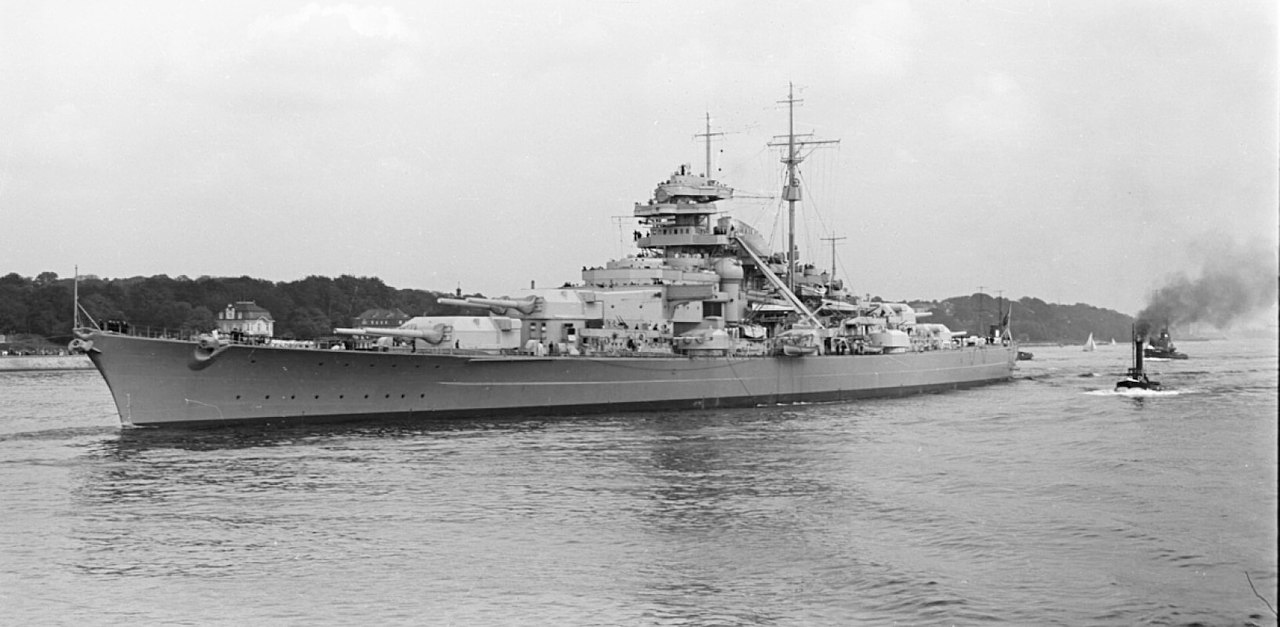
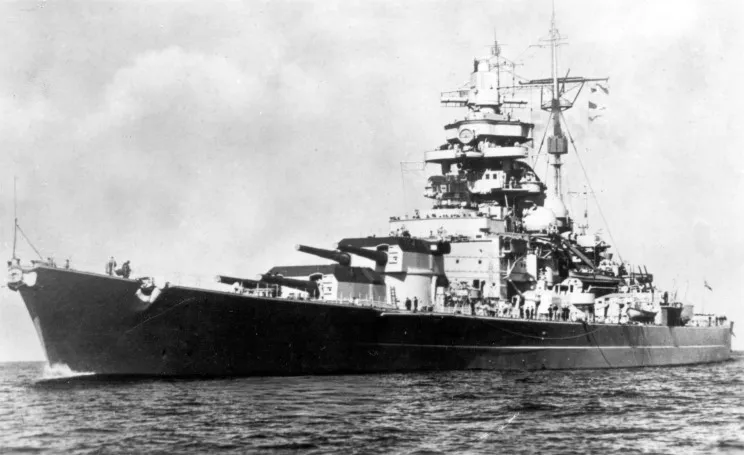
The Bismarck class was a pair of fast battleships built for Nazi Germany’s Kriegsmarine shortly before the outbreak of World War II. The ships were the largest and most powerful warships built for the Kriegsmarine. Bismarck was laid down in July 1936 and completed in September 1940, while the keel of her sister ship, Tirpitz, was laid in October 1936 and work finished in February 1941. The ships were ordered in response to the French Richelieu-class battleships. Both ships had short service careers. Bismarck conducted only one operation, Operation Rheinübung, a sortie into the North Atlantic to raid supply convoys sent from North America to Great Britain. During the operation, she destroyed the British battlecruiser HMS Hood and damaged the new battleship Prince of Wales in the Battle of the Denmark Strait. Bismarck was defeated and sunk in a final engagement after a three-day chase by the Royal Navy. Tirpitz’s career was less dramatic. She was repeatedly attacked by the Royal Navy and Royal Air Force between 1942 and 1944, but she was not seriously damaged in most of these attacks. In 1944, Lancaster bombers hit the ship with two Tallboy bombs, which caused extensive internal damage and capsized the battleship. Tirpitz was broken up for scrap between 1948 and 1957.
Name | Class | Commissioned | Decommissioned | Notes |
SMS Bismarck | Bismarck class | 24-08-1940 | -- | Scuttled 27-05-1945 in the North Atlantic |
SMS Tripitz | Bismarck class | 25-02-1941 | -- | Sunk by Royal Airforce bombers on 12-11-1944 |
H-class (proposal)
The H class was a series of battleship designs for Nazi Germany’s Kriegsmarine in the late 1930s and early 1940s. The first variation, “H-39”, called for six ships to be built, essentially as enlarged Bismarck-class battleships. The “H-41” design
improved the “H-39” ship with larger main guns. Due to the outbreak of World War II in September 1939, none of the ships were ever completed; only the first two of the “H-39” ships were laid down. What work that had been accomplished was halted; the assembled steel remained on the slipway. Contracts for the other four “H-39” type ships had been awarded, but no work was begun on any of them before they were canceled. None of the subsequent designs progressed further than planning stages.
Name | Class | Commissioned | Decommissioned | Notes |
SMS H-39 - H-44 | H class | Canceled | -- | Canceled 30-09-1939 |